

Table of Contents
- Why Organizing Your Anime Figure Collection Matters
- Gundam Model Kit Display Ideas and Thematic Organization
- Best Display Cases for Anime Figures
- Anime Figure Maintenance Tips for Long-Term Preservation
- Maximizing Small Shelf Space and Visual Cohesion
- Safety, Stability, and Earthquake Preparedness
- Budget-Friendly Display Hacks and DIY Solutions
- Managing Your Collection with Inventory Systems
Last Updated: August 18, 2026
Why Organizing Your Anime Figure Collection Matters
Organizing your anime figure collection transforms scattered displays into curated showcases that protect your investment and maximize visual impact. Without a system, figures accumulate haphazardly, dust settles on exposed surfaces, and aesthetic appeal suffers. A structured approach prevents fading from sunlight, stress marks on joints, and plastic degradation while making your collection more enjoyable to view and maintain.
At Utopia Toys and Models, we work with collectors who've invested hundreds or thousands of dollars in their anime figures and Gundam model kits. The ones who see the longest lifespan and greatest satisfaction treat organization as foundational. This guide walks you through every aspect of organizing your anime figure collection, from thematic grouping strategies to preservation techniques that keep figures looking new for years.
Gundam Model Kit Display Ideas and Thematic Organization
Organizing by series or theme creates visual coherence that makes your collection feel intentional. When all Gundam Wing figures sit together, or every Nendoroid from a specific anime occupies a dedicated shelf zone, the display gains narrative structure.
Series-Based Grouping
Start by sorting your entire collection by franchise or series. Create a physical or digital list of each series you own, then count how many figures belong to each. A series with only two or three figures might share shelf space with a thematically related series. A series with ten or more figures deserves dedicated real estate.
Series grouping extends beyond aesthetics. When you know exactly where every Naruto figure lives, restocking after dusting becomes faster. Inventory management simplifies. You can spot gaps in your collection at a glance.
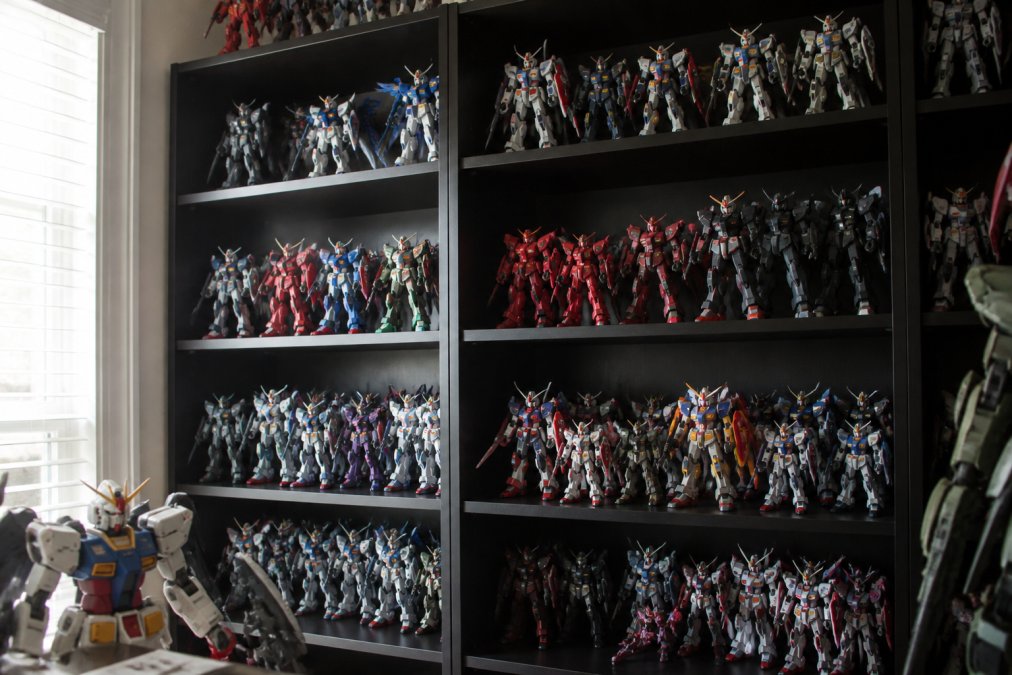
For large series, consider secondary grouping. If you own twenty Mobile Suit Gundam figures, subdividing by era (Original Series, Z, Wing, etc.) prevents the display from feeling overwhelming while maximizing visual impact.
Scale and Size Hierarchy
Scale creates natural tiering opportunities. Nendoroids and smaller PVC figures sit comfortably on lower shelves or forward positions. Larger scale figures, 1/100 Gundam model kits or premium statues, command back or upper shelf real estate. This hierarchy prevents smaller figures from disappearing visually.
Mixing scales intentionally requires thoughtful placement. A 1/144 scale Gundam model kit looks diminished next to a 1/100 scale version. Separating them by shelf or positioning the smaller figure forward on a riser preserves each figure's visual impact.
Height variation within a single shelf prevents flatness. Using acrylic risers and tiering strategies allows you to create depth even in shallow display spaces. A figure at eye level, another elevated six inches behind it, and a third at mid-level creates visual rhythm more engaging than a single-height row.
Best Display Cases for Anime Figures
The right display case protects your collection while showcasing it properly. Glass or acrylic cases with sealed doors offer the best protection, dramatically reducing dust while preventing handling damage. LED lighting built into cases illuminates figures without heat exposure, crucial for preserving paint quality and plastic integrity.
Shelf Depth and Weight Distribution
Shelf depth determines how many figures you can display per unit of wall space. A 12-inch-deep shelf accommodates most standard PVC figures comfortably. A 16-inch depth allows for tiering and background decor.
Weight distribution matters significantly. A single 1/100 scale Gundam model kit can weigh three pounds. Shelves rated for 25 pounds per linear foot handle most collections, but verify capacity before loading. Distribute weight evenly across shelf width and vertically across multiple shelves to avoid uneven stress.
Lighting Techniques for Maximum Impact
LED puck lights mounted above or within display cases create dramatic illumination without heat. Position lights to eliminate shadows while avoiding harsh glare on acrylic surfaces.
Color temperature affects how figures appear. Warm white LEDs (2700K-3000K) create museum-like ambiance. Cool white (4000K-5000K) provides clinical clarity for appreciating fine details. Many collectors use adjustable RGB lighting to match ambient room conditions.
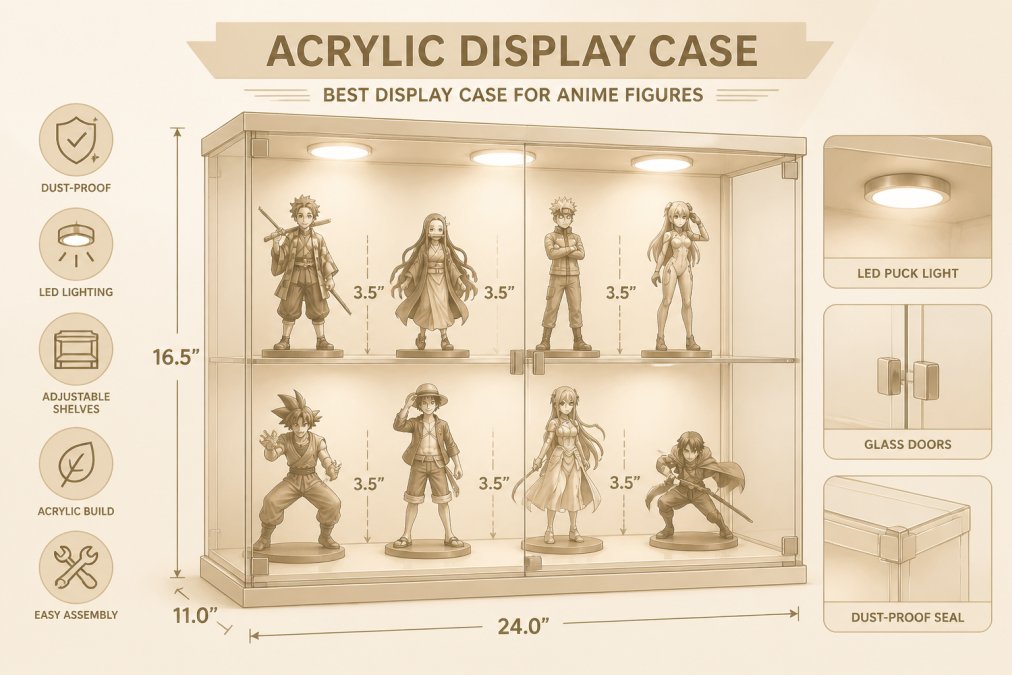
Avoid direct sunlight on display cases. UV rays fade paint, yellow clear plastics, and degrade fabric elements. Apply UV-blocking film to windows or relocate the case. This single change extends figure lifespan by years.
Anime Figure Maintenance Tips for Long-Term Preservation
Preservation separates casual collectors from serious ones. Figures maintained thoughtfully remain vibrant for decades.
Dust Prevention and Regular Cleaning
Dust accumulates on every surface, trapping moisture and promoting plastic degradation. Sealed display cases reduce dust by 80-90% compared to open shelving.
Clean figures monthly using soft microfiber cloths and distilled water. Tap water leaves mineral deposits that dull paint finishes. Avoid paper towels, which scratch paint, and commercial cleaners that damage paint and plastic. For intricate details, soft-bristled brushes designed for electronics work well. A five-minute monthly cleaning prevents heavy buildup that requires aggressive scrubbing later.
UV Protection and Sunlight Damage
Sunlight causes permanent, irreversible color fading. A figure exposed to direct sun for six months shows visible degradation. Reds fade to orange. Whites yellow. Blues turn pale.
Position displays away from windows entirely when possible. If unavoidable, apply UV-blocking film or use UV-filtering acrylic in display cases. These materials block 99% of harmful UV rays while maintaining visibility.
Temperature fluctuations also degrade figures. Rapid heating and cooling cycles stress plastic joints and can cause paint cracking. Maintain display areas between 65-75°F with minimal fluctuation. Avoid positioning displays above heating vents, near air conditioning units, or in direct sunlight.
Maximizing Small Shelf Space and Visual Cohesion
Small spaces demand strategic thinking. A 24-inch-wide shelf holds fewer figures than a 48-inch shelf, but thoughtful organization makes it feel complete rather than cramped.
Acrylic Risers and Tiering Strategies
Acrylic risers elevate figures without consuming additional shelf footprint. A 4-inch riser places a figure 4 inches higher, creating depth when positioned behind ground-level figures.
Build tiering in three layers: ground level, 4-6 inches elevated, and 8-12 inches elevated. This pyramid structure maximizes visibility while maintaining balance. Heavy figures stay at ground level for stability. Medium-weight figures occupy the middle tier. Lightweight figures sit comfortably at the top tier.
Arrange risers in a staggered pattern rather than straight rows. Offset them left and right to create visual interest and improve sightlines so figures at different positions don't block each other.
Color Coordination and Focal Points
Color coordination creates visual flow across your display. Group figures by dominant color to avoid chaotic scattering that makes displays feel disorganized.
Establish focal points by positioning your rarest or most impressive figures prominently. A premium statue or limited-edition variant should occupy a central position at eye level. Surrounding it with complementary but less attention-grabbing figures creates a hierarchy that guides the viewer's eye naturally.
Background decor amplifies visual cohesion. A single-color backdrop (black, white, or neutral gray) makes figures pop. Themed backdrops add narrative context while keeping backdrop color saturation lower than figure colors to avoid competing for attention.
Safety, Stability, and Earthquake Preparedness
Figures represent significant financial and emotional investment. Protecting them from accidental damage requires thoughtful stability measures.
Use museum putty or non-slip adhesive pads on figure bases. These removable products hold figures securely without damaging paint or plastic. Apply a small amount to the base's underside, pressing firmly onto the shelf.
Secure shelving units to wall studs using appropriate brackets. Wall-mounted units remain stable even with significant vibration. For renters unable to drill into walls, heavy-duty tension rods or anti-tip furniture straps provide stability without permanent installation.
Avoid overloading shelves beyond their rated capacity. A shelf rated for 25 pounds per linear foot can hold roughly 50 pounds on a 24-inch shelf. Distribute weight evenly and keep heavy figures away from shelf edges to prevent falls.
Budget-Friendly Display Hacks and DIY Solutions
Professional display cases cost hundreds of dollars. Budget-conscious collectors achieve impressive results with creative alternatives.
Clear plastic storage bins with removable lids function as affordable display cases. They're dust-proof, stackable, and cost $15-30 each. DIY acrylic risers cost a fraction of commercial versions, clear acrylic sheets can be cut to custom dimensions and assembled with acrylic cement for $20-40 compared to $60-100 for commercial equivalents.
LED strip lighting from electronics retailers costs $10-20 and works identically to expensive display case lighting. Battery-powered versions eliminate wiring complexity. Cardboard backdrop panels spray-painted matte black or white create professional-looking backgrounds for under $10 and are replaceable for seasonal changes.
Managing Your Collection with Inventory Systems
As collections grow beyond twenty or thirty figures, tracking ownership becomes challenging. Spreadsheet-based tracking requires minimal setup. Create columns for figure name, series, scale, purchase date, price paid, condition, and location. Add a photo column for visual reference.
Dedicated collector apps like Whatnot or specialized anime figure databases automate tracking and connect you with other collectors. Photograph your entire collection from multiple angles and store photos in a cloud service with searchable tags. This serves dual purposes: documentation for insurance and visual reference for organizing decisions.
Update your inventory when acquiring new figures or reorganizing displays. A current inventory prevents duplicate purchases and helps you remember exactly what you own.
Organizing your anime figure collection represents an investment in preservation, enjoyment, and community participation. Whether you're displaying a modest shelf of twenty figures or a comprehensive collection spanning multiple display units, the principles remain consistent: protect your figures from environmental damage, arrange them thoughtfully for visual impact, and maintain them properly for long-term enjoyment.
At Utopia Toys and Models, we understand that collectors want both the right figures and the right way to display them. Quality figures deserve quality care.
| Preservation Technique | Frequency | Impact |
|---|---|---|
| Dust removal with microfiber cloth | Monthly | Prevents paint degradation and plastic yellowing |
| UV-blocking film installation | One-time | Eliminates 99% of fading from sunlight |
| Temperature monitoring | Ongoing | Prevents stress cracks and joint damage |
| Museum putty application | Per figure | Prevents accidental falls and toppling |
| Inventory update | Quarterly | Prevents duplicate purchases and guides organization |
Protecting your collection requires consistency, not complexity. Dust monthly. Keep figures away from direct sunlight. Maintain stable temperatures. Use museum putty for stability. These simple practices, applied consistently, preserve figures indefinitely.
The organization system you choose matters less than choosing one and maintaining it. Whether you organize by series, scale, color, or a hybrid approach, consistency creates a collection that feels curated rather than chaotic. Start with whatever system feels intuitive, then refine it as your collection grows.
Consider consulting collector communities on Reddit and Discord for real-world organization inspiration. Seeing how experienced collectors arrange their displays provides practical ideas adapted to your space and budget.
The investment in organizing your anime figure collection pays dividends every time you view your display. A well-organized collection tells a story, showcases your taste and dedication, and preserves your figures' condition for decades.
Frequently Asked Questions
What is the best way to organize your anime figure collection?
Start by sorting figures by series, scale, or theme, whichever method feels natural to your collection. Group similar heights together using acrylic risers to create visual hierarchy. Arrange your most prized or rare figures as focal points, then build around them. Use shelf depth strategically: larger figures toward the back, smaller ones forward. This creates depth and ensures all figures are visible without crowding. Keep dust-proof display cases or acrylic covers in mind from the start to reduce maintenance time.
How do you dust and maintain anime figures without damaging them?
Use a soft-bristled brush or microfiber cloth to gently remove dust from figures weekly or bi-weekly. For delicate joints and small details on nendoroids and PVC figures, a can of compressed air works well, hold it upright and use short bursts from 6 inches away. Avoid direct contact with paint or decals. Store figures away from direct sunlight to prevent fading and material degradation. Keep humidity levels between 30-50% to prevent mold and warping. Never use water or harsh chemicals on painted surfaces.
Is it worth keeping anime figure boxes?
Yes, especially if you collect rare or high-value figures. Original boxes preserve resale value significantly, collectors often pay 20-40% more for figures in mint condition with original packaging. Boxes also protect figures from dust and UV damage during storage. However, if space is limited and you plan to keep figures long-term in a display case, prioritize keeping boxes for your rarest or most expensive pieces. Store boxes flat in a cool, dry place away from sunlight.
What should I use to secure figures during earthquakes or accidental bumps?
Museum putty is the most effective solution for figures on shelves, it's removable, doesn't damage paint or bases, and holds figures firmly in place. Apply a small amount to the figure's base and press it onto the shelf. For heavier figures or Gundam model kits, use museum-grade adhesive putty rated for your shelf type. Ensure your shelving unit itself is anchored to the wall using L-brackets, especially if it's tall or holds many figures. Test stability by gently pressing on the shelf edge before displaying your collection.
This article was written using GrandRanker