

Table of Contents
- How to Organize Your Figure Collection by Scale and Series
- Best Display Cases for Action Figures and Scale Models
- How to Store Action Figures Long Term with Proper Protection
- Organizing Collectibles by Theme and Narrative Display
- Lighting Techniques and Heat Management for Displays
- Digital Inventory Tracking and Collection Management
- Maintenance, Cleaning, and Preservation Best Practices
- Budget-Friendly DIY Display Solutions for Small Spaces
How to Organize Your Figure Collection: A Collector's Guide
Last Updated: August 3, 2026
Collectors spend thousands of dollars building figure collections, yet most store them in ways that invite dust, damage, and frustration. Learning how to organize your figure collection transforms scattered displays into a curated showcase that protects your investment while making every piece enjoyable to view. This guide covers the practical systems that actually work: grouping figures by series, scale, and theme; selecting the right display cases; protecting your collection from environmental damage; and managing your inventory digitally.
How to Organize Your Figure Collection by Scale and Series
The first decision when organizing collectibles is understanding your collection's structure. Most serious collectors organize by one of two primary systems: grouping by franchise and series, or grouping by scale and height.
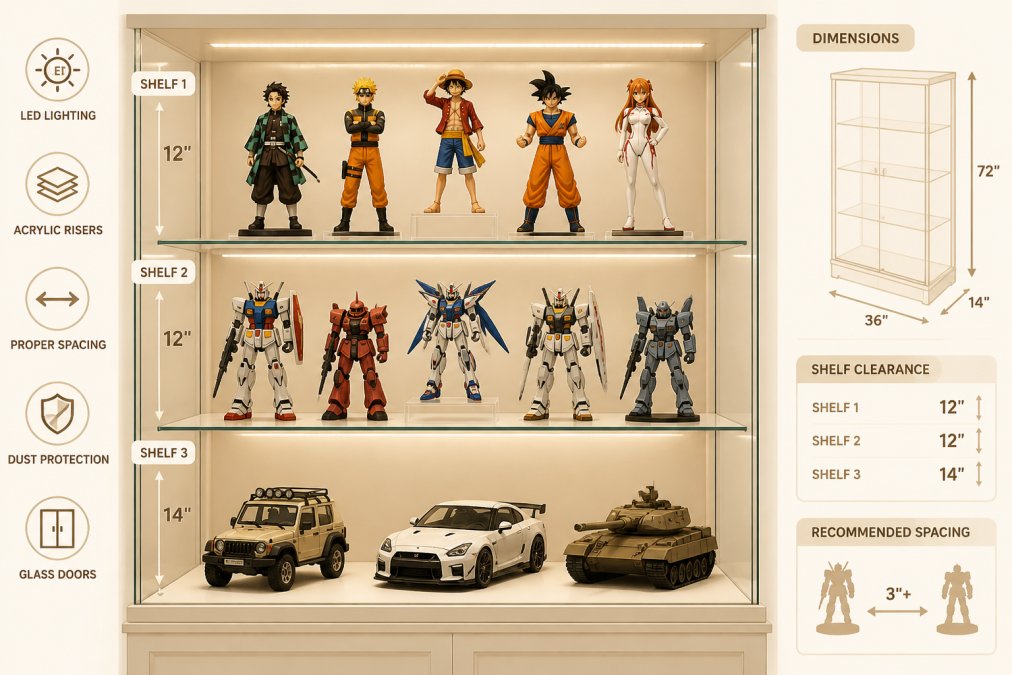
Grouping by Series and Franchise
Organizing by series keeps related figures together, which works especially well if you collect specific anime, manga, or gaming franchises. A collector with multiple Gundam model kits naturally groups them by line, HGUC figures together, RG kits separate, MG models in their own section. The advantage is intuitive browsing: when you want to admire your Neon Genesis Evangelion figures, they're all in one place. It also simplifies acquisition decisions, you know immediately where new releases fit and whether you're completing a set.
The drawback emerges when series vary wildly in scale. You might have 1/7 scale figures next to 1/10 scale ones, creating visual inconsistency even within the same shelf.
Organizing by Scale and Height
Organizing by scale creates visual harmony. All your 1/7 scale figures sit together, then 1/10, then 1/12. This approach produces shelves that feel intentional and balanced, with consistent sight lines and proportional spacing. Scale-based organization also simplifies display case selection, you can dedicate specific shelf depths and lighting to each scale category.
The trade-off is that figures from the same series end up separated. This works fine if you collect for visual enjoyment rather than narrative completeness.
Best Display Cases for Action Figures and Scale Models
The furniture you choose directly determines how well your figures survive, how accessible they are, and how impressive they look.
Acrylic and Glass Curio Cabinet Options
Dedicated display cabinets offer the best dust protection and visual presentation. Acrylic cabinets are lighter and cheaper but scratch easily and yellow over time. Glass cabinets look more professional and resist yellowing but are heavier, more expensive, and fragile.
For most collectors, a mid-range glass curio cabinet with adjustable shelves and built-in LED lighting strikes the right balance. The real advantage of enclosed cabinets is dust exclusion. If you own high-value figures, rare Kotobukiya releases, or limited Bandai Gundam models, an enclosed display case is worth the investment.
Consider cabinet depth carefully. Standard curio cabinets are 12-16 inches deep. For 1/7 scale figures, this works well. For larger scales, you might need 18-20 inches.
Shelving Depth and Spacing Considerations
Open shelving offers flexibility and is significantly cheaper, but requires more maintenance. Standard bookshelf depth is 10 inches, which barely accommodates 1/7 scale figures. Deeper shelves (14-18 inches) provide breathing room for acrylic risers and dioramas.
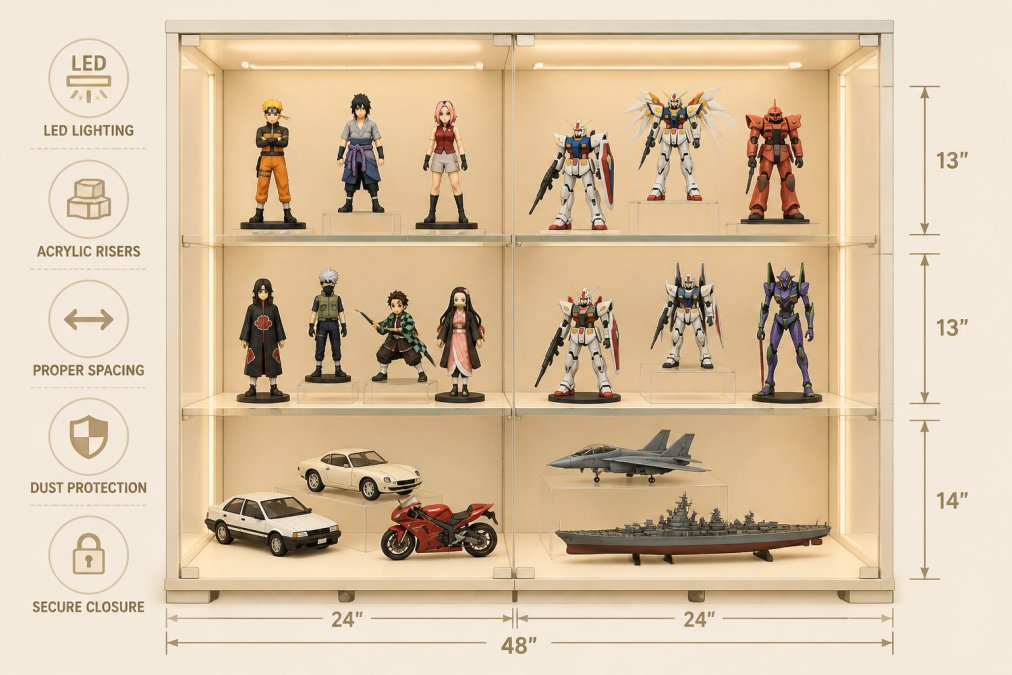
Spacing between shelves matters more than most collectors realize. Aim for 12-15 inches between shelves to allow 1-2 inches of riser height plus comfortable viewing angles. Weight capacity is critical, a full shelf of 10-15 figures plus risers and props can exceed 10 pounds. Invest in metal shelving or quality wood shelves rated for at least 50 pounds per shelf.
How to Store Action Figures Long Term with Proper Protection
Long-term storage requires environmental control and protective materials. Whether you're storing overflow figures or preserving valuable pieces, the goal is preventing physical damage, color fading, and material degradation.
Dust Protection and Environmental Control
Dust settles on exposed figures constantly. For displayed figures, regular gentle dusting with microfiber cloths prevents buildup. For stored figures, airtight containers are essential. Clear plastic storage boxes with tight-sealing lids keep dust out while allowing visibility.
Environmental control matters more than most collectors realize. Figures degrade in extreme temperature swings and high humidity. Ideally, store figures in climate-controlled spaces. Humidity above 60% promotes mold and corrosion of metal accessories. Humidity below 30% makes paint brittle. If you live in a humid climate, use silica gel packets in storage containers and replace them monthly.
Temperature should stay between 60-75°F. Extreme heat softens plastic and warps figures. Extreme cold makes paint crack and joints become stiff.
UV Protection and PVC Degradation Prevention
Sunlight damages figures faster than any other environmental factor. UV radiation causes paint fading, discoloration of white plastic (which yellows), and accelerates PVC degradation. PVC degradation, a chemical breakdown of the plastic itself, releases plasticizers that create a sticky residue on figure surfaces.
Prevent UV damage by keeping displayed figures away from direct sunlight. Position cabinets and shelves away from windows, or use UV-blocking window film. If you use LED lighting in displays, confirm it's full-spectrum LED without UV components.
For stored figures, keep boxes in dark spaces. Opaque plastic containers are better than clear ones. If you notice sticky residue on figures, isolate them immediately, the degradation can transfer to nearby pieces. Wrap affected figures in acid-free tissue and store them separately with fresh silica gel.
Organizing Collectibles by Theme and Narrative Display
Beyond simple categorical organization, the most impressive displays tell stories. Thematic arrangement transforms a collection from "here are my figures" into "here's a moment I've created."
Creating Focal Points and Visual Hierarchy
A strong display has a clear focal point, one figure or group that draws the eye first. Everything else supports that focal point through scale, lighting, or positioning.
Focal points work through contrast. A rare or large figure naturally draws attention. Position it at eye level, slightly forward on the shelf, and light it more brightly than surrounding pieces. Height variation amplifies focal point impact. Use acrylic risers to elevate key figures above others. A 2-3 inch height difference is enough to establish hierarchy without looking awkward.
Color coordination strengthens thematic displays. Figures from the same anime often share a color palette. Grouping them together feels intentional.
Building Diorama-Style Arrangements
Dioramas elevate displays from "figure collection" to "miniature scene." You don't need elaborate custom backgrounds, simple props, fabric, or painted backdrops create narrative context.
Dioramas work best with figures of the same scale. Mixing 1/7 and 1/12 scale in a single diorama breaks immersion. Props amplify storytelling. Model kits, weapon accessories, and environmental pieces create context. Lighting transforms dioramas. Directional LED strips create shadows and depth that flat overhead lighting can't achieve.
Lighting Techniques and Heat Management for Displays
Lighting makes or breaks a display visually, but it also affects figure preservation. The wrong lighting degrades figures while making them look worse.
LED Lighting Safety and Temperature Control
LED lighting is the only sensible choice for figure displays. Incandescent and halogen bulbs emit significant heat, which accelerates PVC degradation and paint fading. LEDs emit minimal heat and no UV radiation.
Not all LEDs are equal. Warm white LEDs (2700-3000K) create inviting, gallery-like lighting that brings out figure details and colors. Most serious collectors prefer 3000K warm white for display purposes. Aim for 300-500 lumens per shelf, enough to see details without creating glare.
Install LED strips along the underside of each shelf, angling light downward and slightly forward. This creates shadow depth that makes figures appear three-dimensional. Ensure adequate airflow around displays. Enclosed cabinets should have ventilation holes or gaps.
| Lighting Setup | Color Temperature | Best For | Heat Output |
|---|---|---|---|
| LED strip (warm white) | 2700-3000K | Most displays | Minimal |
| LED spot lights | 3000-4000K | Focal points | Minimal |
| Halogen (avoid) | 3000K | Not recommended | High |
| Incandescent (avoid) | 2700K | Not recommended | Very high |
Digital Inventory Tracking and Collection Management
As collections grow beyond 50-100 figures, tracking what you own becomes essential. Digital inventory systems let you know exactly what you have and prevent duplicate purchases.
Database Templates and Categorization Systems
A simple spreadsheet works for most collectors. Create columns for: figure name, series, scale, purchase date, purchase price, current condition, location (which shelf), and notes. For larger collections (500+ figures), consider free database tools like Airtable or Google Forms that let you add custom fields and create filtered views.
Condition tracking matters for valuable figures. Use a simple scale: Mint (unopened), Near Mint (opened, never displayed), Excellent (displayed, no damage), Good (minor wear), Fair (visible damage). Location tracking prevents the frustration of forgetting which shelf holds a specific figure. Use shelf codes (Shelf A-1, Shelf B-3) and update them when you rearrange.
Many collectors use photography as part of inventory management. Photograph each figure against a neutral background with consistent lighting. Store photos in a cloud folder organized by series or scale. This creates a visual reference library and documents condition over time.
Maintenance, Cleaning, and Preservation Best Practices
Regular maintenance keeps figures looking impressive and prevents degradation. Dusting is the most important maintenance task. Use soft microfiber cloths, never paper towels or rough fabrics, which scratch paint. Dust gently in the direction of the figure's details.
Avoid touching painted surfaces with bare hands. Skin oils transfer to paint, creating dull spots and attracting dust. Handle figures by unpainted areas, joints, bases, or hair when necessary. Wear cotton gloves for valuable figures.
For figures with fabric clothing, avoid contact with water or cleaning solutions. If fabric gets dusty, use a soft brush only. Joints and moving parts benefit from occasional maintenance. If a joint becomes stiff, a tiny amount of silicone-based lubricant (not oil-based) helps. Apply sparingly, as excess lubricant attracts dust.
Store spare parts and accessories in labeled containers. Weapons, alternate hands, and extra accessories are easy to lose.
Budget-Friendly DIY Display Solutions for Small Spaces
Professional display cases and shelving systems are expensive. DIY solutions deliver impressive results at a fraction of the cost.
Floating shelves are the cheapest option. A simple wooden shelf (12-18 inches deep, 24-36 inches wide) mounted to wall studs costs under $50 in materials. Install 3-4 shelves vertically and you've created 8-12 linear feet of display space for $200-300.
IKEA Kallax units are popular among collectors. A 4x4 Kallax bookshelf costs around $60-80 and provides 16 display compartments. Many collectors customize Kallax units with paint, LED strips, and fabric backdrops.
Acrylic risers are essential for budget displays. Buy clear acrylic blocks from craft stores (usually $1-3 each). Stack them to create height variation and visual interest. LED strip lights from electronics retailers cost $15-25 for 16 feet and can be cut to fit any shelf.
Backdrops don't require custom printing. Fabric from craft stores, painted cardboard, or printed poster paper create context without expense. A $10 fabric backdrop transforms a generic shelf into a themed display.
| Budget Approach | Initial Cost | Pros | Cons |
|---|---|---|---|
| Floating shelves | $200-400 | Permanent, clean look | Requires wall mounting |
| IKEA Kallax | $60-150 | Affordable, modular | Limited customization |
| Open shelving + risers | $100-250 | Flexible, expandable | Requires regular dusting |
| Acrylic cabinet (basic) | $150-300 | Dust protection | Limited space |
| Wall-mounted glass cabinet | $300-600 | Professional look | Expensive, fragile |
Organizing your figure collection transforms what could be a chaotic storage problem into a source of genuine pride. Whether you choose series-based organization, scale-based hierarchy, or thematic dioramas, the key is intentionality, making deliberate choices about how figures are grouped, displayed, and preserved.
At Utopia Toys and Models, we understand that serious collectors invest thousands in their figures. That's why we offer a wide variety of collectible toys and Gundam models, featuring products from top brands like Bandai and Kotobukiya. Start with how to organize your figure collection using the systems outlined here, then invest in display furniture and lighting that protects your investment while showcasing it beautifully. The American Society of Appraisers provides guidance on documenting collectible collections for insurance purposes, which is especially valuable if you own high-value figures worth protecting.
The Library of Congress offers archival preservation standards that apply to collectible storage, including humidity and temperature control recommendations that extend figure lifespan significantly. Your collection deserves care equal to its value, organize it thoughtfully, protect it properly, and enjoy it for years to come.
Frequently Asked Questions
What's the best way to organize a large figure collection in a small space?
Use vertical shelving with acrylic risers to maximize display area without consuming floor space. Organize by series or scale to reduce visual clutter and create a cohesive look. Wall-mounted display cases work well for small rooms. Group similar-sized figures together and consider rotating displays seasonally to showcase different parts of your collection while keeping things fresh and manageable.
How do I organize my figure collection using a digital inventory system?
Create a spreadsheet or use free database templates to track each figure's name, series, scale, condition, and location within your display. Add photos of each piece for quick reference. This system helps you avoid duplicate purchases, track which figures need maintenance, and plan future acquisitions. Many collectors use simple Google Sheets templates organized by series, scale, or acquisition date for easy searching.
What's the difference between organizing by scale and organizing by series?
Organizing by scale groups figures by their size (1/4, 1/6, 1/10, etc.), creating a visually balanced display where similar heights sit together. Organizing by series groups figures from the same franchise or line together, which appeals to fans and tells a narrative story. Many collectors use a hybrid approach: organize shelves by series, but within each series, arrange figures by scale for better visual flow and easier display planning.
How do I protect my figure collection from dust and UV damage during long-term storage?
Store figures in display cases with glass or acrylic doors to prevent dust accumulation. Keep them away from direct sunlight to avoid UV damage and PVC degradation. Maintain stable temperature and humidity levels between 60-70°F and 40-50% humidity to prevent warping. Use acid-free storage materials if boxing figures for extended periods. LED lighting inside cases generates minimal heat and won't damage figures like older incandescent bulbs would.
This article was written using GrandRanker