

Table of Contents
- Why Cleaning Collectible Figures Matters
- Best Tools for Dusting Action Figures
- Step-by-Step Process for Cleaning Collectible Figures
- How to Prevent Dust on Anime Figures
- Cleaning Sticky Residue Off Figures
- Avoiding Common Cleaning Mistakes
- Material-Specific Cleaning Guide
- Long-Term Storage vs. Display
Last Updated: August 10, 2026
Why Cleaning Collectible Figures Matters
Dust accumulation dulls paint detail and traps moisture against delicate surfaces. Leaving dust to sit makes it harder to remove safely over time and accelerates material breakdown, especially on PVC figures prone to plasticizer breakdown.
Proper cleaning isn't just about aesthetics, it's about preservation. The figures you're investing in, whether they're limited-edition Bandai Gundam kits or rare Kotobukiya statues, deserve maintenance that extends their life by years. Most people use the wrong approach: compressed air seems logical until you understand the risks, harsh cloths damage paint, and aggressive scrubbing causes scratches. This guide walks you through exactly how to clean collectible figures safely, with tools you likely already have at home.
Best Tools for Dusting Action Figures
Your cleaning arsenal doesn't need to be expensive or specialized. The best tools are simple, gentle, and designed to remove particles without creating static electricity or applying excessive pressure.
Microfiber Cloths and Soft-Bristled Brushes
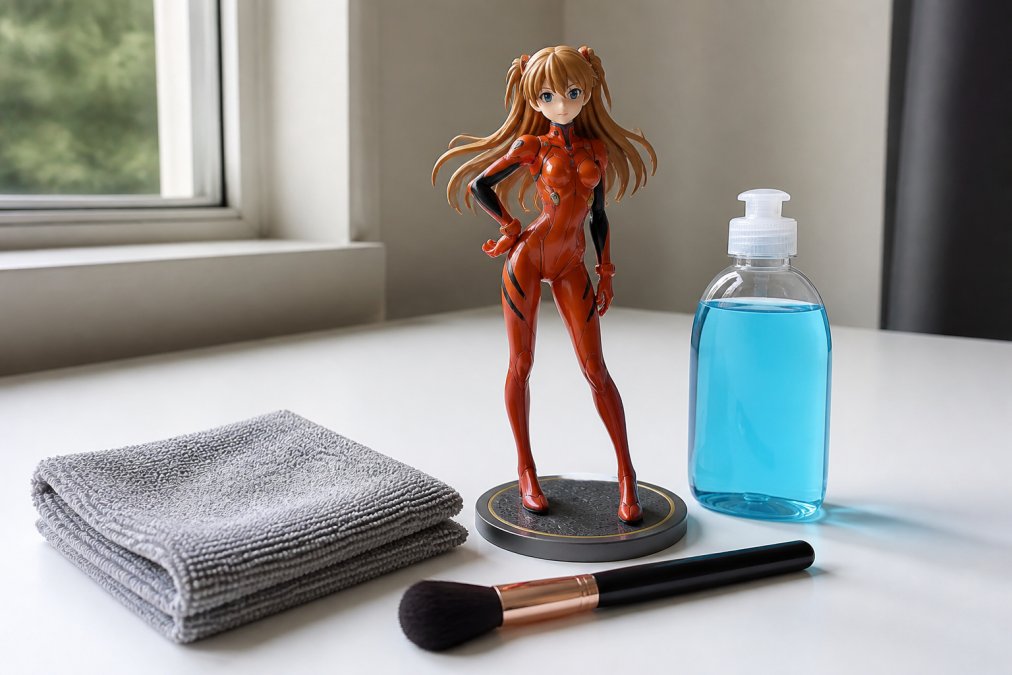
A lint-free microfiber cloth is your primary tool. Microfiber traps dust particles mechanically without requiring liquid, making it ideal for initial dry dusting. Pair it with a soft-bristled brush, think makeup brush or soft toothbrush. Natural bristles work better than synthetic because they're gentler and create less static electricity.
For PVC figures and resin statues, choose brushes with bristles under 0.15mm in diameter. Thicker bristles can leave marks on soft paint finishes. Many collectors use old makeup brushes because they're designed for delicate skin and transfer that gentleness to your figures.
What to Avoid: Compressed Air and Harsh Materials
Compressed air is a trap. The pressure forces dust into crevices and can dislodge small parts. More critically, it creates static electricity buildup, which attracts dust back onto the figure immediately after cleaning.
Avoid paper towels, tissues, and rough cloths. Paper creates lint and can catch on paint edges. Rough fabrics like cotton t-shirts leave microscopic scratches invisible at first but visible under close inspection. Never use abrasive materials like sponges, steel wool, or scrub brushes.
Isopropyl alcohol can strip protective coatings and cause paint to dull. Reserve it only for sticky residue removal on specific spots, never as a general cleaning agent.
Step-by-Step Process for Cleaning Collectible Figures
A methodical approach prevents mistakes. The process takes 10-15 minutes per figure and requires only mild dish soap, warm water, microfiber cloths, and a soft brush.
Step 1: Prepare Your Workspace
Set up on a soft surface, a towel, mousepad, or foam mat prevents accidental drops from damaging your figure. Fill two small bowls with warm water (not hot). One bowl is for cleaning solution, the other for rinsing. Remove any removable parts like detachable bases, weapons, or accessories to clean separately.
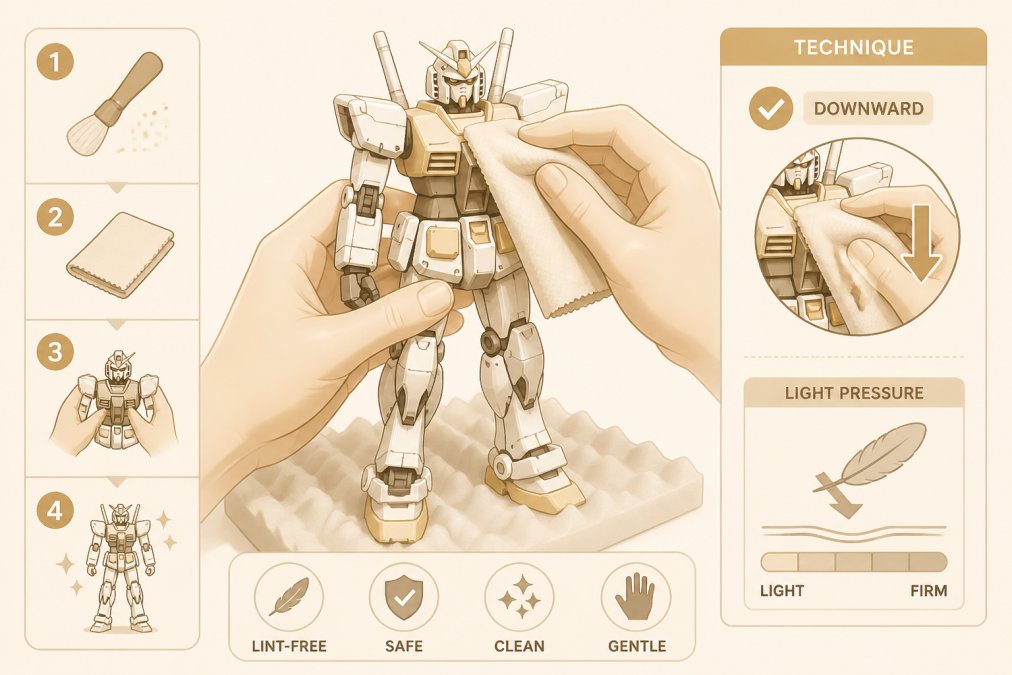
Step 2: Dry Dust with a Microfiber Cloth
Start with the microfiber cloth and no liquid. Gently wipe the entire figure using light pressure. Work from top to bottom so gravity helps particles fall away. Use a soft-bristled brush on textured areas, hair, fabric details, armor plating, where cloth alone can't reach. This dry-dusting step removes 80% of the dust without water.
Step 3: Clean with Mild Dish Soap and Warm Water
If dry dusting doesn't achieve the cleanliness you want, add two drops of mild dish soap to one bowl of warm water. Dip the soft-bristled brush into the soapy water and gently scrub textured areas. Don't soak the figure. Work in small sections, rinsing each area immediately with the second bowl of clean water using a damp cloth.
For smooth surfaces, use the damp cloth directly. Wring it out thoroughly so it's damp but not dripping. Water pooling on a figure can seep into joints and cause swelling or paint damage.
Step 4: Address Sticky Residue
Sticky residue on older PVC figures indicates plasticizer breakdown, which is normal on figures over 5-10 years old. If mild soap and water don't remove it, use isopropyl alcohol on a small cloth, dabbing gently on the affected area only. Do not soak or scrub.
Never use harsh solvents like acetone or paint thinner. These strip protective coatings and can melt plastic components.
Step 5: Dry and Air Properly
Never use heat to dry figures. Hair dryers, ovens, or direct sunlight accelerate plastic degradation and can warp joints. Pat the figure dry gently with a clean, dry microfiber cloth. Then place it in a location with good air circulation, not in a sealed display case immediately after cleaning. Let it air dry for 30-60 minutes before returning it to storage or display.
How to Prevent Dust on Anime Figures
Prevention is easier than remediation. The right display environment reduces cleaning frequency to once every 2-3 months instead of weekly.
Display Cabinet and Environmental Control
A closed display cabinet with a tight seal reduces dust accumulation by 70-80% compared to open shelving. Position your display away from high-traffic areas, air vents, and fans. Air movement carries dust particles. Avoid displaying figures directly on surfaces that are cleaned frequently, as cleaning routines generate temporary dust clouds.
Humidity and UV Protection
Humidity control matters more than most collectors realize. High humidity (above 60%) accelerates plasticizer breakdown on PVC figures and can cause paint to bubble or peel. Low humidity (below 30%) can cause resin to become brittle.
Maintain your display environment between 40-55% relative humidity. A basic hygrometer costs under $15. If humidity is high, use a small desiccant pack inside your display cabinet. If it's low, you may need a small humidifier in the room.
UV damage is permanent. Sunlight fades paint and can cause yellowing on clear plastic. Never display figures in direct sunlight. Indirect natural light is fine; direct UV is not. Temperature fluctuations cause expansion and contraction of plastic, so avoid displaying figures near heating vents, air conditioning units, or windows that get cold at night.
Cleaning Sticky Residue Off Figures
Sticky residue is one of the most frustrating problems collectors encounter.
Understanding Plasticizer Breakdown
PVC plastic contains plasticizers, chemicals that make the plastic flexible. Over time, especially in warm or humid conditions, plasticizers migrate to the surface and create that sticky, tacky feeling. This is a natural aging process on PVC figures. Resin figures don't have this problem because resin doesn't contain plasticizers.
Safe Removal Techniques
For mild stickiness, a microfiber cloth alone sometimes works. Wipe gently and repeatedly. If that doesn't work, dampen a cloth with isopropyl alcohol (70% concentration, not 90%+). Dab the sticky area gently. Do not soak or scrub.
Some collectors use a cloth dampened with distilled water instead. This is gentler and works for light stickiness, though it's less effective for heavy residue. Never repeat the same cleaning method more than 2-3 times in succession. If alcohol isn't working, switching to water or simply accepting mild stickiness is better than over-cleaning and damaging the paint.
After removing sticky residue, increase air circulation around the figure and store it in a cool, dry location. If your environment is humid, the stickiness will return, this is normal.
Avoiding Common Cleaning Mistakes
Most damage to collectible figures comes not from dust but from incorrect cleaning attempts. The biggest mistake is impatience. Collectors often apply too much pressure or use aggressive methods to clean quickly. A five-minute aggressive cleaning can cause permanent damage that a 15-minute gentle cleaning would have avoided.
Using tap water instead of distilled water introduces minerals that can leave spots on figures. Tap water also contains chlorine that can affect paint over time. Distilled water is inexpensive and worth using for final rinses.
Mixing cleaning methods in a single session causes problems. If you need multiple approaches, complete one method fully, let the figure dry completely, and wait 24 hours before trying another method.
Cleaning in direct sunlight or bright artificial light can hide scratches and damage. Always inspect your work under the same lighting where you'll display the figure.
Storing figures immediately after cleaning while they're still slightly damp is a common error. Moisture trapped in joints or under paint causes swelling and damage. The 45-60 minute air-dry period is non-negotiable.
Cleaning articulated joints the same way you clean smooth surfaces causes stiffness. Joints need gentle, minimal water exposure. If a joint is stiff after cleaning, you likely got water inside it. Let it air dry for several days and the stiffness usually resolves.
Material-Specific Cleaning Guide
Different materials require different approaches.
PVC Figures and Resin Statues
PVC figures are the most common and the most vulnerable to damage. PVC is softer than resin, more prone to paint scratching, and susceptible to plasticizer breakdown. The key difference: PVC tolerates less water exposure than resin. Keep wet cleaning brief and dry thoroughly. If your PVC figure shows any swelling or warping after cleaning, you used too much water.
Resin statues are harder and more durable. They tolerate longer water exposure and more aggressive brushing. However, resin can be brittle, so dropping a resin figure is more likely to cause breakage than a PVC figure.
Articulated Joints and Delicate Parts
Articulated joints are the most vulnerable areas. Water can seep into the joint mechanism and cause stiffness or corrosion of metal parts inside. Clean articulated joints with a damp cloth, not by submerging or running water over them. Dab gently around the joint seam.
Small accessories, weapons, hands, and hair pieces should be cleaned separately and dried completely before reattaching. Paint details on small parts are often delicate. Use only the softest brush available and minimal water. Many collectors skip wet cleaning on small accessories entirely, using only dry microfiber cloth.
Clear plastic windows or visors need special care. They scratch easily. Use only microfiber cloth and never dry-brush them. If they need wet cleaning, use distilled water and a soft cloth, then dry immediately.
Long-Term Storage vs. Display
How you store figures between display rotations affects their condition long-term. For display, the environment matters more than cleaning frequency. A well-sealed display cabinet with controlled humidity needs cleaning only every 2-3 months.
For storage, the priority is moisture and temperature control. Figures stored in sealed plastic bins can develop condensation and moisture damage. Use acid-free tissue paper or cloth to wrap figures individually. Include desiccant packets in the storage container to absorb moisture.
Store figures in a cool, dry location. Attics and basements fluctuate in temperature and humidity, not ideal. A closet in climate-controlled living space is better. Never store figures in their original packaging long-term if that packaging is sealed. Original boxes often trap moisture. If you're keeping packaging for future sale, store the figure separately and the box separately, both with desiccant.
Rotate your display collection periodically. Figures in storage don't accumulate dust, so rotating every 6 months gives you a reason to inspect and gently clean each figure, which maintains the collection overall.
Keeping your collectible figures in pristine condition requires a methodical approach, but the effort is minimal compared to the reward. At Utopia Toys and Models, we offer a wide variety of collectible toys and Gundam models, featuring products from top brands like Bandai, Funko, and Kotobukiya. The cleaning process takes minutes, the prevention strategies cost almost nothing, and the result is a collection that looks as good in five years as it does today. Start with the dry microfiber cloth method this week, set up your display environment properly, and you'll notice the difference immediately.
Frequently Asked Questions
What's the safest way to clean collectible figures without damaging them?
Start with dry dusting using a microfiber cloth to remove loose particles. For deeper cleaning, use a mixture of mild dish soap and warm water applied with a soft cloth, then air dry completely. Avoid compressed air, harsh chemicals, and abrasive materials. Always work gently around articulated joints and delicate painted details to preserve sculpture integrity.
How do I remove sticky residue from PVC figures?
Sticky residue often results from plasticizer breakdown in PVC materials. Use isopropyl alcohol on a lint-free cloth to gently dab affected areas, or apply a mild degreasing solution. Test on a hidden spot first. For hardened residue, soften it with warm water and a soft brush before wiping. Avoid scraping, which causes surface scratches and damages the protective coating.
Does dust actually damage figures over time?
Yes. Dust accumulation can scratch surfaces during handling, trap moisture that promotes degradation, and cause paint transfer and discoloration. Regular gentle cleaning and preventative care extend your figure's lifespan. Storing figures in a display cabinet with humidity control and UV protection significantly reduces dust damage and preserves their condition for years.
How often should I clean my anime figure collection?
Clean figures every 2-4 weeks with a gentle dry dusting using a microfiber cloth. Deeper cleaning with mild soap and water is needed only quarterly or when visible dust buildup or sticky residue appears. The frequency depends on your display environment. Figures in enclosed display cases need less frequent cleaning than those on open shelves.
This article was written using GrandRanker