

Table of Contents
- Assess Your Space and Collection Size
- Choose Storage Solutions: Acrylic Display Cases for Figures
- Vertical Storage and Wall-Mounted Display Shelves
- Blind Box Display Ideas and Rotation Systems
- Protect Your Collection: Dust-Proof and UV Protection
- How to Store Blind Box Boxes and Packaging
- Organize by Theme and Inventory Management
- Common Mistakes to Avoid When Organizing in Small Spaces
Last Updated: August 26, 2026
Assess Your Space and Collection Size
Start by measuring your room and taking inventory of your blind box figures before buying storage. Count your current figures, note their sizes, and identify which pieces you display regularly versus which stay boxed. This prevents purchasing oversized solutions that won't fit through your doorway or will dominate your room.
Plan for 20-30% expansion capacity when selecting shelving or display cases. If you have 50 figures now, choose solutions that can accommodate 60-70 figures comfortably. This prevents the frustrating cycle of outgrowing storage every six months.
Consider your room's layout carefully. Windows, radiators, doors, and electrical outlets all affect where you can place display solutions. Natural light will fade your figures over time, and heat from radiators damages collectibles (peer-reviewed research). Map out these constraints before committing to wall-mounted shelves or large acrylic display cases. Document your space with photos and measurements, including ceiling height, wall dimensions, and obstacle locations. This simple step saves hours of frustration and prevents expensive mistakes.
Choose Storage Solutions: Acrylic Display Cases for Figures
Acrylic display cases are the gold standard for protecting blind box figures while keeping them visible. These clear compartment storage cases showcase your collection without exposing figures to dust, sunlight, or accidental damage.
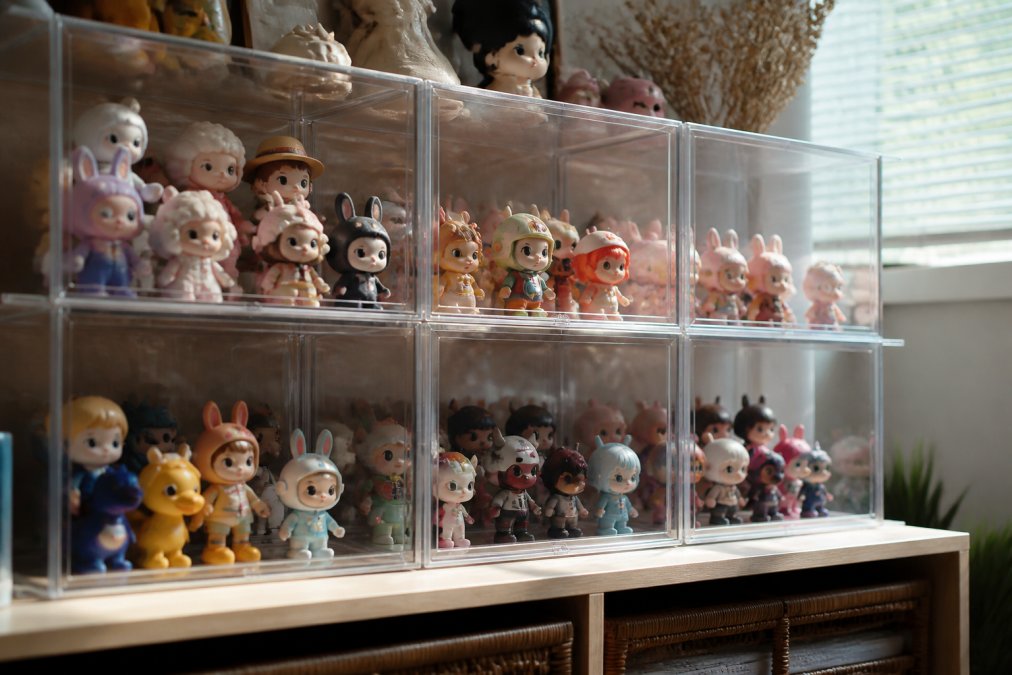
Look for cases with multiple compartments designed specifically for miniature figurines. Small compartments prevent figures from sliding around during transport. Cases with adjustable shelving offer flexibility as your collection changes. Quality acrylic won't yellow or cloud over time like cheaper plastic alternatives.
Size matters significantly. A case that's too large dominates the room; one that's too small forces awkward stacking. Measure your available wall or shelf space, then select cases that fit naturally. Many collectors find that 3-4 smaller cases arranged together work better in tight spaces than one large case.
Stackable acrylic risers work well inside larger cases or on shelves, creating vertical depth and preventing figures from being hidden behind taller pieces. Higher-quality cases have better seals, clearer acrylic, and more refined construction, worth the investment if you're protecting valuable figures.
Vertical Storage and Wall-Mounted Display Shelves
Vertical storage is your best friend in a small room. Wall-mounted display shelves transform unused vertical space into prime real estate for your collection.
Floating Shelves for Small Spaces
Floating shelves create clean lines and open up floor space, making your room feel larger while displaying your collection. Look for shelves with weight ratings that exceed your needs, if you're hanging 30 figures, choose shelves rated for at least 50-75 pounds (osha.gov).
Installation matters enormously. Use a quality level and locate studs in your walls before installing. If studs aren't positioned where you want shelves, use heavy-duty toggle bolts or wall anchors rated for your expected load. Cheap installation shortcuts lead to shelves that fail and damage your figures.
Leave at least 8-10 inches between shelves if displaying figures standing upright. Stagger shelves at different heights to create visual interest and accommodate different figure sizes. Consider the wall behind your shelves, a neutral background makes your figures pop.
Modular Shelving Systems
Modular shelving systems offer flexibility that fixed shelves don't provide. Brands like Kallax or Expedit let you configure shelves exactly as you need them and rearrange sections as your collection grows. They work particularly well in corners or along walls and create a focal point without dominating the room.
Assembly and installation are straightforward, making them ideal if you rent or prefer not to drill into walls. Distribute your collection across multiple shelves to maintain stability and prevent the unit from tipping.
Blind Box Display Ideas and Rotation Systems
Displaying every figure simultaneously isn't practical in small rooms, but a rotation system lets you enjoy your entire collection without overwhelming your space. Rotate featured figures every month or season to keep your display fresh.
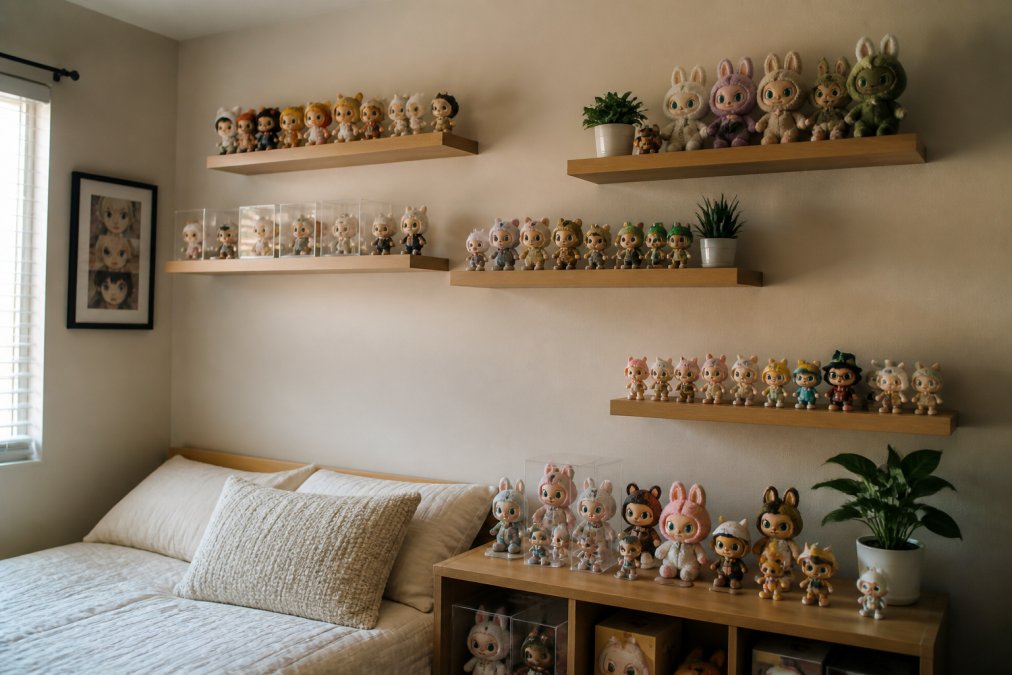
Create a curated display that tells a story. Group figures by theme, color, or series. A display featuring only red and black figures looks intentional. Thematic displays are more visually compelling than random arrangements.
Implement a simple inventory system to track which figures are displayed and which are in storage. A spreadsheet or handwritten list prevents you from forgetting about stored figures and helps when rotating pieces.
Arrange figures with height variation to prevent monotony. Use acrylic risers or small stands to elevate some pieces. Taller figures toward the back, smaller ones toward the front. Position your best or most valuable figures where you'll see them naturally as you move through the space.
Protect Your Collection: Dust-Proof and UV Protection
Dust accumulation is inevitable but problematic for blind box figures with intricate details. Dust-proof display cases and acrylic covers prevent this problem entirely. UV protection is equally important, sunlight fades paint and discolors plastic over time. If your shelves are near windows, UV-blocking acrylic or display cases are essential.
Climate control affects figure preservation significantly. Keep your collection in a stable environment between 60-70 degrees Fahrenheit with humidity around 40-50% (si.edu). Avoid placing figures near heating vents, air conditioning units, or windows where temperature swings are greatest. Never store figures in basements or attics where temperature and humidity fluctuate wildly.
Handle your figures minimally and wear clean hands. Oils from your skin transfer to paint and plastic. When rotating figures or cleaning, use soft brushes or microfiber cloths. Never use water or harsh chemicals on painted figures unless absolutely necessary.
How to Store Blind Box Boxes and Packaging
Many collectors keep original boxes because they protect figures and preserve resale value. Flat boxes stack efficiently when placed horizontally. Store them in labeled bins or on shelves above your display area.
Create a filing system for boxes using clear plastic bins labeled by series or character. This organization prevents you from tearing open multiple boxes hunting for the right one when rotating figures. Keep boxes in a dry location away from direct sunlight. For long-term storage, consider acid-free tissue paper between layers to prevent moisture transfer and color bleeding.
Organize by Theme and Inventory Management
Organizing by theme transforms your display from random collection to curated showcase. Group figures by series, character type, color scheme, or aesthetic. Thematic organization also makes rotating figures easier because related pieces work well together.
Implement a simple inventory system using a spreadsheet or dedicated app. Record each figure's name, series, condition, purchase date, and current location. Include a photo if possible. Create a "wish list" separate from your current inventory to prevent duplicate purchases and help you prioritize spending.
Categorize figures by display priority. Mark your absolute favorites as "featured," figures you enjoy but rotate less frequently as "secondary," and figures you keep for collection completeness as "storage." This categorization guides your rotation schedule.
Common Mistakes to Avoid When Organizing in Small Spaces
Overcrowding shelves is the most common mistake. Figures crammed together look chaotic and risk damage from falling against each other. Leave breathing room between pieces. A shelf with 15 figures spaced apart looks better and is safer than the same shelf with 25 figures packed tightly.
Ignoring lighting is a critical oversight. Poor lighting makes even beautiful displays look dull. Position shelves where they receive adequate light, either from room lighting or supplemental LED strips. Many collectors find that adding small LED strip lights to shelves dramatically improves how their collection looks.
Choosing storage solutions before assessing your space leads to expensive mistakes. Measure first, buy second. Neglecting dust protection is penny-wise, pound-foolish. Protecting figures from dust costs far less than cleaning or repairing damage.
Storing figures in unsuitable locations damages your collection. Attics, basements, and garages experience temperature and humidity swings that harm plastic and paint. Keep your collection in climate-controlled living spaces. Failing to inventory your collection leads to duplicate purchases and forgotten figures. A simple list prevents these expensive mistakes.
Organizing blind box figures in small rooms requires planning, but it's absolutely achievable. Start by assessing your space honestly, invest in quality storage solutions like acrylic display cases and floating shelves, and implement a rotation system that lets you enjoy your entire collection. Utopia Toys and Models understands the collector's challenge, we stock the high-quality acrylic display cases, protective solutions, and organizational tools that help you showcase your blind box figures beautifully, even in tight spaces. Visit Utopia Toys and Models to find the storage solutions that match your collection's needs and your room's constraints.
Frequently Asked Questions
What is the best way to organize blind box figures in a small bedroom?
Start by assessing your total collection size and available wall and shelf space. Use vertical storage with wall-mounted floating shelves to maximize square footage without consuming floor space. Combine acrylic display cases for figures with stackable organizers to group figures by theme or collection. Rotate displays monthly to reduce visual clutter while keeping all figures accessible. This approach lets you showcase your blind box collection while maintaining a functional living space.
How do you keep blind box figures dust-free in small rooms?
Acrylic display cases for figures are the most effective solution for dust protection in compact spaces. Enclosed cases with sliding or hinged doors prevent dust accumulation while displaying your collection. For wall-mounted shelves, use acrylic risers or small glass covers over individual figures. Keep the room humidity between 30-50% to prevent moisture damage, and avoid placing figures near windows with direct sunlight. Dust monthly with a soft microfiber cloth if figures are on open shelves.
What should I do with blind box boxes after opening them?
Store blind box boxes flat in stackable plastic bins under your bed, in a closet, or on a high shelf to preserve resale value and maintain collection documentation. Keep original packaging organized by series or brand for easy reference. If space is extremely limited, photograph the boxes before storage and keep a digital inventory. Some collectors flatten boxes and store them vertically in magazine holders. Preserve boxes for 6-12 months before deciding whether to recycle, they may be needed if you sell figures later.
Can I use wall-mounted storage for blind box figures in a rental apartment?
Yes, but use damage-free mounting solutions like adhesive strips or tension rods instead of drilling into walls. Floating shelves with removable adhesive backing work well for renters. Alternatively, use freestanding bookcases against walls, stackable organizers, or over-the-door storage racks. These options let you organize your blind box collection without violating lease agreements. When you move, simply remove the fixtures and patch any residue, your deposit stays intact.
This article was written using GrandRanker