

Table of Contents
- Prepare Your Figures Before Storage
- How to Prevent Sticky Anime Figures
- Best Storage Containers for Collectibles
- Climate Control and Environmental Factors
- Storing Gundam Model Kits and Display Pieces
- Long-Term Storage Setup and Monitoring
- Common Storage Mistakes to Avoid
- Conclusion
Last Updated: August 21, 2026
Prepare Your Figures Before Storage
Before committing your collection to long-term storage, take time to properly prepare each piece. This foundational step determines how well your figures will survive months or years without deterioration.
Start by cleaning each figure thoroughly with a soft, dry microfiber cloth to remove dust and surface debris. For stubborn dirt, use a slightly damp cloth, but avoid submerging figures or using harsh chemicals. Pay special attention to crevices and joints where dust accumulates. Allow figures to air dry completely before packing, any residual moisture invites mold growth and accelerates degradation.
Clean and inspect each figure
Inspect every figure carefully before storage. Look for existing damage: loose joints, paint chips, cracks, or discoloration. Document these conditions with photos taken under consistent lighting. This record becomes critical if you need to file an insurance claim or dispute damage that occurs during storage.
Check for signs of PVC plasticizer leaching, which causes that sticky residue many collectors dread. If you notice any stickiness on the figure's surface, isolate it immediately, don't pack it with other pieces. The off-gassing from one compromised figure can transfer to adjacent figures through direct contact or shared air space.
For Gundam model kits and built pieces, inspect glue joints and paint applications. Built kits are more vulnerable than unbuilt ones because paint and adhesives create additional surfaces prone to degradation.
Document condition and value
Create a detailed inventory of your collection before storage. For each figure, record the manufacturer, product name, scale, purchase date, and current condition. Include photos from multiple angles: front, back, sides, and any notable details. This documentation serves multiple purposes: insurance coverage, future sales verification, and personal reference.
Estimate the replacement value of each piece based on current market prices. If your collection exceeds a certain threshold, consider adding it to your homeowner's or renter's insurance policy. Many standard policies don't adequately cover collectibles. Keep receipts, certificates of authenticity, and appraisals in a separate, secure location, not with the figures themselves.
How to Prevent Sticky Anime Figures
The sticky residue that plagues anime figure collectors stems from PVC plasticizer migration. Polyvinyl chloride contains chemical plasticizers that keep the material flexible during manufacturing. Over time, especially in warm environments, these plasticizers leach from the plastic surface, creating a sticky, oily coating.
Understanding PVC plasticizer and off-gassing
PVC plasticizer migration accelerates in heat and humidity. Figures stored in attics, basements, or garages without climate control are at highest risk. Not all figures are equally vulnerable. Cheaper figures with lower-quality PVC tend to off-gas faster than premium collectibles from established manufacturers like Bandai or Kotobukiya. Blind box figures, which often use thinner plastic, are particularly prone to stickiness.
The chemical process is irreversible once stickiness appears on the figure itself. However, you can prevent off-gassing from affecting other pieces by creating barriers and maintaining proper environmental conditions.
Isolation and wrapping techniques
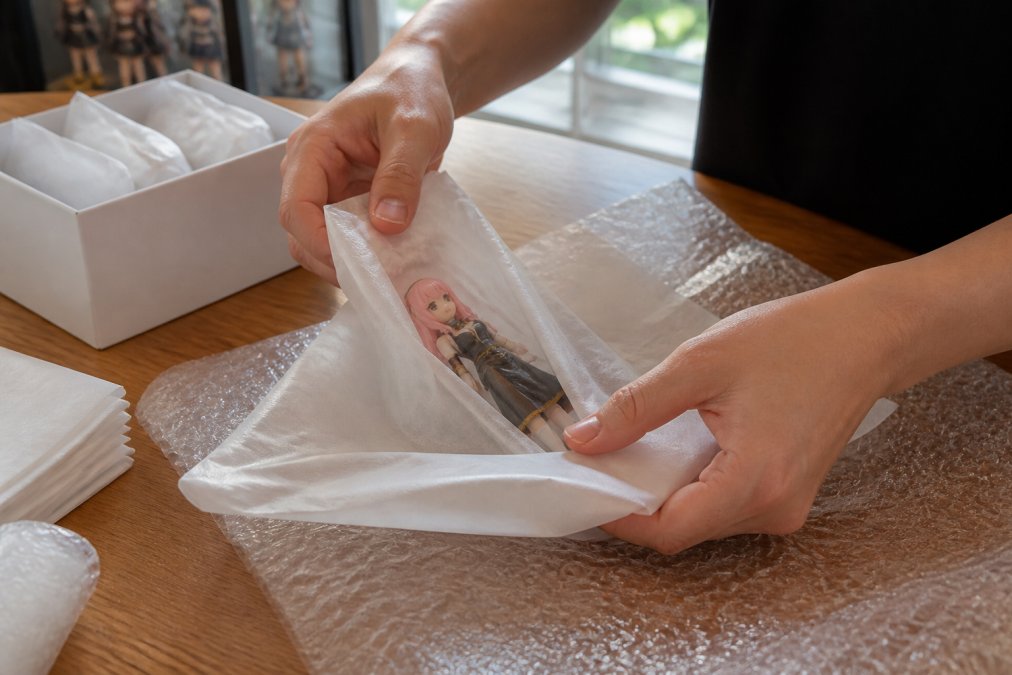
Isolation is your primary defense. Never store figures that show any signs of stickiness directly against other pieces. Wrap them individually in acid-free tissue paper first, then enclose them in their own sealed plastic bag or airtight container. This creates a barrier that prevents off-gassing from migrating to adjacent figures.
For figures without stickiness, use acid-free tissue paper as your first layer. Wrap each figure loosely, tight wrapping can trap moisture. Follow with bubble wrap for cushioning and protection from impacts. Avoid regular plastic wrap or non-archival plastic bags. Instead, use polyethylene or polypropylene storage bags designed for archival use. These materials are inert and won't contribute to degradation.
For particularly valuable figures or those showing early signs of stickiness, place a small desiccant packet inside the wrapping before sealing. This absorbs any moisture that might be trapped during wrapping and further slows off-gassing.
Best Storage Containers for Collectibles
Your choice of storage container directly impacts how well figures survive long-term storage. The wrong container can trap moisture, allow light damage, or fail to protect against physical impacts.
Airtight bins and crush-proof options
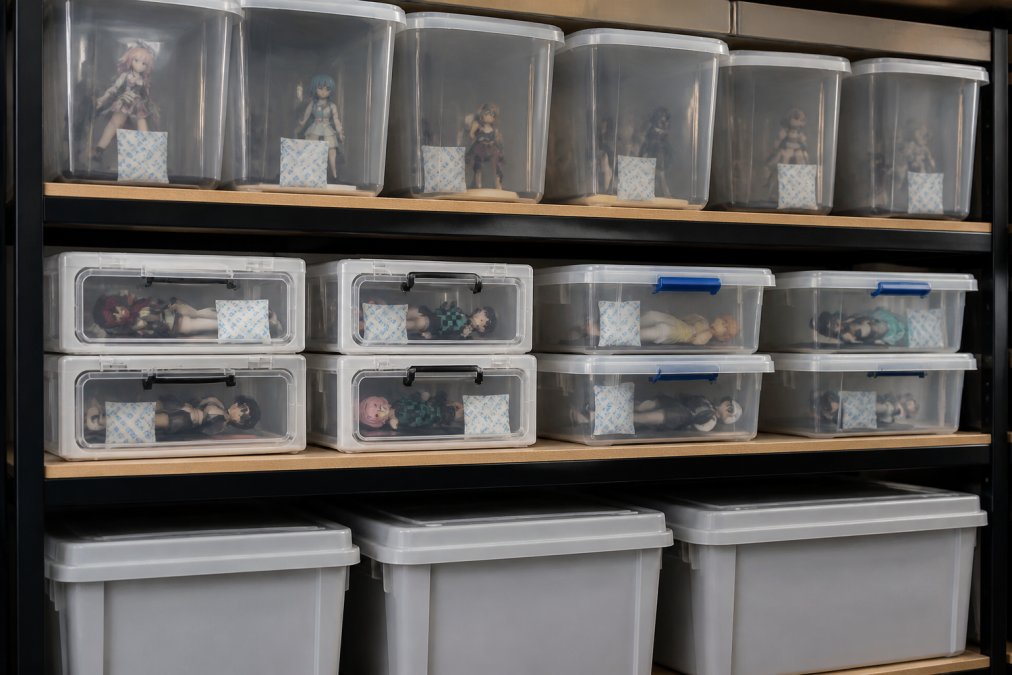
Airtight plastic bins provide excellent protection when combined with proper desiccant management. Look for bins made from polypropylene or high-density polyethylene, which are chemically inert and won't off-gas themselves. Crush-proof containers offer additional protection if you're stacking storage or storing figures in tight spaces. These rigid plastic bins maintain their shape under pressure and resist denting.
Size your containers appropriately. Most collectors find that medium-sized bins (roughly 15 x 10 x 8 inches) strike the right balance for storing wrapped figures.
Acid-free tissue and archival materials
Acid-free tissue paper is non-negotiable for wrapping. Standard tissue paper contains acids that can migrate to figures and cause discoloration or surface damage over decades. Archival-grade tissue costs slightly more but is worth the investment for figures you plan to store for years.
Bubble wrap designed for archival use is also important. Look for bubble wrap labeled as archival or acid-free. Avoid packing peanuts, crinkled paper, or other filler materials. These create dust, can trap moisture, and don't provide consistent protection.
Consider adding acid-free boxes as an additional organizational layer. These boxes keep wrapped figures grouped by series or size, making inventory management easier. Label boxes clearly on the outside so you can locate specific figures without opening containers unnecessarily.
Climate Control and Environmental Factors
Storage environment is the single most critical variable for long-term figure preservation. Temperature fluctuations, humidity swings, and light exposure cause cumulative damage that becomes visible only after months or years.
Temperature and humidity management
Stable temperature is more important than absolute temperature (loc.gov). Figures can tolerate cool storage (50-65°F) or room temperature (65-75°F) equally well, as long as temperature remains consistent. What damages figures is cycling, warm during the day, cold at night, or seasonal swings. These fluctuations cause plastic and paint to expand and contract, leading to cracks, paint flaking, and joint loosening.
Humidity should stay between 30-50% (si.edu). Too dry, and paint becomes brittle. Too humid, and mold grows and metal parts corrode. Basements and attics are typically poor choices because humidity fluctuates dramatically. Climate-controlled storage units, interior closets in conditioned homes, or under-bed storage in temperature-controlled bedrooms work better.
If you're storing figures in a basement or garage, invest in a small dehumidifier. Run it continuously during storage periods.
Protecting from direct sunlight and UV exposure
Direct sunlight causes paint fading and plastic discoloration. Even indirect sunlight through windows can damage figures over months. Never store figures near windows, skylights, or in rooms with bright overhead lighting left on continuously.
UV exposure is cumulative and irreversible. Once paint fades from UV damage, you cannot restore it. Store figures in dark spaces: interior closets, storage units without windows, or opaque containers kept in dimly lit areas. If you must store figures in a room with windows, use blackout curtains or keep containers in a closed cabinet.
Storing Gundam Model Kits and Display Pieces
Model kits require different storage considerations than pre-built figures, especially if you've invested time in assembly, painting, and customization.
Built versus unbuilt kit storage
Unbuilt kits in sealed boxes are relatively straightforward to store. Keep them in their original packaging if possible, manufacturers design boxes to protect contents during storage and shipping. Stack boxes carefully to avoid crushing, and follow the same temperature and humidity guidelines as figures.
Built kits are more fragile. Glued joints can become brittle over time, especially if exposed to temperature fluctuations. Paint and weathering effects can crack or peel if the kit is jostled. Store built kits in individual boxes or containers with padding on all sides. For particularly valuable or detailed builds, consider displaying them in glass cases during storage.
Pest prevention and moisture control
Rodents and insects are attracted to storage spaces, particularly basements and garages. They damage figures by chewing through packaging and leaving droppings that attract mold. Prevent infestations by sealing all gaps in your storage space and storing figures off the floor.
Desiccant packets are your primary tool for moisture control. Place packets inside sealed containers. Silica gel desiccants are affordable and effective. Replace them every 6-12 months if your storage space is humid. Avoid mothballs and other chemical deterrents, these emit fumes that can damage figures and paint.
Long-Term Storage Setup and Monitoring
Proper setup isn't a one-time task. Ongoing monitoring ensures your storage system remains effective throughout the months or years your figures are stored.
Desiccant selection and placement
Silica gel packets are the standard choice for figure storage. They're inexpensive, non-toxic, and effective at absorbing moisture. Place one packet per sealed container, or one larger packet per storage bin. Indicating desiccants change color (usually from blue to pink) as they absorb moisture, making it obvious when replacement is needed.
Refresh desiccants every 6-12 months depending on your storage environment's humidity. In naturally dry spaces, annual replacement is sufficient. In humid environments, check every 3-6 months. You can dry silica gel in a low oven (200°F for 1-2 hours) and reuse it, saving money on replacements (the FDA).
Inventory tracking and insurance documentation
Maintain your inventory in a spreadsheet or dedicated collection management app. Include columns for figure name, manufacturer, purchase date, condition notes, and estimated value. Photograph your collection every 6-12 months to catch any storage problems early and maintain updated documentation for insurance purposes.
Store insurance documents separately from the figures themselves. Keep copies with your homeowner's insurance agent. Digital copies in cloud storage provide backup if physical documents are damaged.
Common Storage Mistakes to Avoid
Don't skip the preparation phase. Figures that aren't thoroughly cleaned before storage attract mold and insects. Dust trapped in crevices provides food for pests and absorbs moisture.
Avoid storing figures directly on concrete floors, even in sealed containers. Concrete wicks moisture from the ground. Use shelving, pallets, or storage racks to keep containers elevated.
Don't assume your storage space is stable. Check temperature and humidity regularly, especially during seasonal transitions. Never store figures in attics without insulation and ventilation, they experience extreme temperature swings and humidity fluctuations.
Avoid mixing different figure types in the same container without separation. A single figure with off-gassing issues can damage dozens of others if they're in close contact. Don't forget to monitor your collection. Set a calendar reminder to check your storage space every 6-12 months.
Storing anime figures long term requires planning, but the effort protects your investment and preserves your collection for years. Start with thorough cleaning and condition documentation, isolate figures prone to PVC plasticizer off-gassing, and maintain stable temperature and humidity in your storage space. Use archival-quality wrapping materials, proper containers, and desiccants to create an environment where figures remain stable.
At Utopia Toys and Models, we understand the value collectors place on their figures. Whether you're storing rare Bandai Gundam kits, premium Kotobukiya figures, or blind box collectibles, the principles remain the same: environmental control, isolation, and regular monitoring. Start implementing these practices now, and your collection will be in excellent condition whenever you decide to display or sell it.
Frequently Asked Questions
How do you prevent plasticizer migration in anime figures?
Plasticizer migration occurs when PVC material breaks down and releases sticky residue. Prevent it by wrapping figures in acid-free tissue paper, using airtight storage containers, maintaining stable temperatures between 60-75°F, and including desiccant packets to absorb moisture. Avoid direct contact between figures and plastic bags, which accelerate off-gassing. Store in a climate-controlled environment away from heat fluctuations.
What is the best way to store anime figures long term?
Store anime figures in airtight, crush-proof containers in a climate-controlled space away from direct sunlight and temperature fluctuations. Wrap each figure individually in acid-free tissue paper or archival materials. Include desiccant packets to control humidity levels. Keep the storage area between 60-75°F with relative humidity below 50%. Document each figure's condition with photos and maintain an inventory list for insurance purposes.
Do anime figures degrade over time?
Yes, anime figures degrade over time due to environmental stressors like UV exposure, temperature fluctuations, humidity, and chemical off-gassing from PVC plasticizer. Degradation appears as sticky residue, surface oxidation, discoloration, and material brittleness. The rate depends on storage conditions, figures kept in proper climate-controlled environments with UV protection degrade much slower than those exposed to sunlight and humidity fluctuations. Proper preventative care significantly extends a figure's lifespan.
Is it worth keeping anime figure boxes?
Yes, original packaging preserves collector grade status and resale value significantly. Boxes protect figures from dust, light, and physical damage during storage. Store boxes separately in a dry, temperature-stable location, using acid-free tissue paper inside to prevent degradation. If space is limited, photograph the box condition before storage and keep the original packaging sealed in an archival container. This maintains collectibility while maximizing storage efficiency.
This article was written using GrandRanker