

Table of Contents
- What Are Chase Figures and Rarity Tiers?
- How Chase Figures Are Inserted Into Cases
- How to Weigh Blind Boxes for Chase Figures
- Full Case vs. Single Blind Box Purchases
- Packaging Clues and Silhouette Recognition
- The Psychology Behind Blind Box Marketing
- Safe Secondary Market Trading and Authentication
- Smart Collecting Strategies for Chase Figures
- Frequently Asked Questions
Last Updated: August 31, 2026
What Are Chase Figures and Rarity Tiers?
Chase figures are rare variant collectibles inserted into blind box cases at lower frequencies than standard figures. They're limited editions with unique paint jobs, special poses, or exclusive molds that command premium prices on the secondary market.
Blind box manufacturers organize distributions into rarity tiers based on pull rates. Common figures might appear in 1 out of every 12 boxes, while chase figures can hit 1 in 72 boxes or lower (peer-reviewed research). Some ultra-rare chase figures appear only once per full case of 144 units. Manufacturers rarely publish exact pull rates, which fuels collector speculation and secondary market demand.
How Rarity Tiers and Odds Work
Rarity tiers follow a predictable pyramid. At the base sit common figures with high volume and low desirability. Moving up, you find uncommon variants with slightly different coloring or accessories, then rare figures with more significant paint variations or mold differences. At the apex sit chase figures.
Manufacturers control odds through production runs. They'll produce 100,000 units of a common figure but only 2,000 of a chase variant. When you buy a blind box, you're pulling from a randomized assortment within a sealed case containing a fixed ratio of common, uncommon, rare, and chase figures.
Pull rates vary dramatically by product line. Some maintain a 1-in-12 common, 1-in-24 uncommon, 1-in-48 rare, 1-in-72 chase distribution. Limited edition releases sometimes feature different odds than standard production runs, which is why collectors track release dates and manufacturing batches obsessively.
Secret Figures vs. Chase Figures
Secret figures are unlisted variants intentionally hidden from official product photography and marketing materials. Chase figures are officially acknowledged rare variants, even if manufacturers don't publish exact odds.
Some products blur this distinction. A manufacturer might release an official lineup of 12 figures, then include a 13th secret figure in cases without marketing it. That secret figure often has higher rarity than standard chase figures because most collectors don't know to hunt for it. Experienced collectors track community databases and social media to identify newly discovered secret figures, then adjust their purchasing strategy accordingly.
How Chase Figures Are Inserted Into Cases
Blind box manufacturers control chase figure distribution at the case level. A case typically contains 144 units (the FTC). Within that case, the manufacturer pre-allocates how many chase figures will appear.
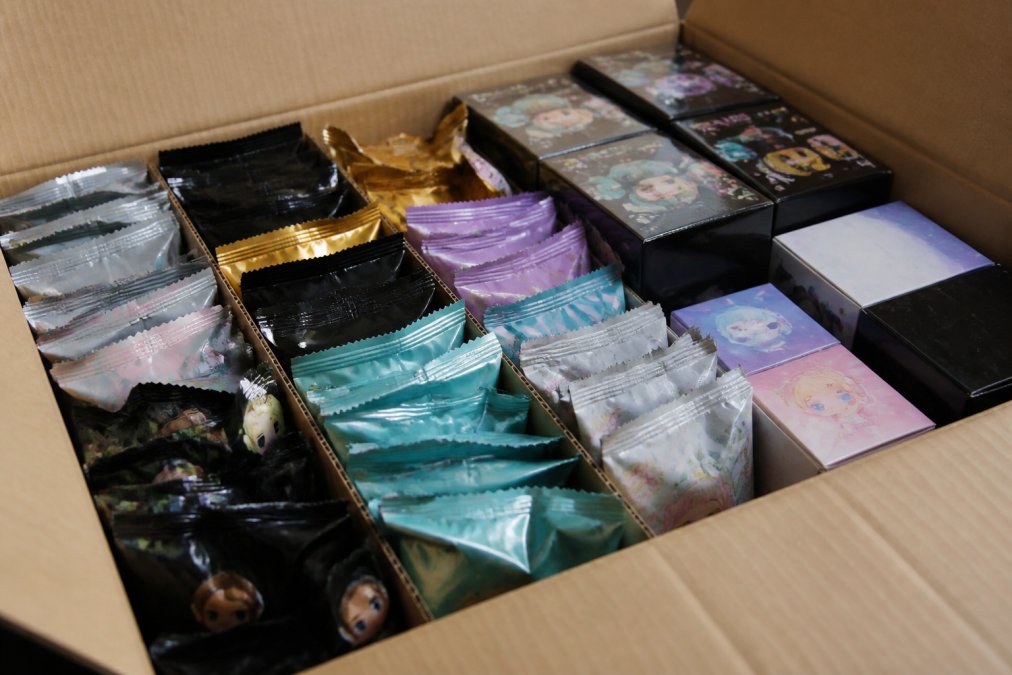
The insertion process happens during final packaging. Quality control teams receive specifications for case assortment ratios and physically place figures into boxes according to a predetermined randomization pattern, then seal the cases. This means chase figures aren't randomly distributed across all production; they're deliberately placed into specific cases based on manufacturing batches.
A full case isn't a random grab-bag of 144 boxes. It's a predetermined assortment where the manufacturer has already decided how many chase figures it will contain. The randomization happens within the case structure, not across all global production.
Case Assortment and Distribution Ratios
Manufacturers publish case assortments for transparency, though the information often stays within the collector community. A typical assortment might read: "12 common, 4 uncommon, 2 rare, 1 chase per case." This tells you exactly what to expect if you buy a full case.
If a case contains 144 boxes and only 1 chase figure, your odds of hitting that chase are roughly 1 in 144. That single chase figure is placed into one specific box during manufacturing. The randomization is within the boxes, not across them.
Retailers sometimes know the assortment breakdown before cases arrive. Experienced hunters use this data to decide whether a case is worth purchasing. A case with two chase figures is more attractive than one with zero, even though the odds remain probabilistically challenging.
How to Weigh Blind Boxes for Chase Figures
The weighing method is popular in the blind box community. The theory is simple: different figures have different weights due to paint application, material density, or mold variations. By weighing individual boxes, collectors attempt to identify which ones contain rare variants.
Many collectors report success with this method, claiming 70-80% accuracy (peer-reviewed research).
Why Weighing Has Technical Limitations
While weighing can detect some variance, it's far less reliable than collectors claim. Manufacturing tolerances create natural weight variation within a single figure mold. Two common figures from the same production run might weigh slightly different due to paint application inconsistencies or plastic density variation.
Chase figures don't always weigh more. Some variants use lighter materials or thinner paint applications. The weight difference between a common and a chase might be 1-2 grams across a 50-gram figure, within the margin of error for most consumer scales.
Manufacturing batches compound the problem. A case produced in January might have different weight distributions than one from March, even for identical figure lineups. Manufacturers are aware of the weighing phenomenon and intentionally add weight to common figures or reduce weight on chase figures to disrupt the strategy. Any weighing "system" has a shelf life of weeks or months before manufacturing changes render it obsolete.
Identifying Chase Figures by Box Codes and Barcodes
Barcodes and serial numbers offer slightly more reliable identification than weighing. Some manufacturers encode production batch information into barcodes. Collectors have reverse-engineered these codes to identify which batches contain higher chase concentrations.
Serial numbers sometimes correlate with figure variants. Collectors who've purchased thousands of boxes have mapped these patterns and created databases. The limitation is consistency. Not all manufacturers use meaningful serial number systems, and patterns change with new production runs.
Barcode analysis requires access to manufacturer databases or crowd-sourced community data. The most dedicated collectors maintain spreadsheets with hundreds of data points, correlating barcodes to confirmed figure pulls.
Full Case vs. Single Blind Box Purchases
Single box purchases offer low financial risk but terrible odds for hitting chase figures. Full cases cost significantly more upfront but provide a guaranteed assortment and better per-unit odds.
A single box typically contains one random figure from the complete lineup. If chase figures represent 1% of all production, your odds on a single box are roughly 1 in 100. Most collectors buy 10-20 individual boxes before hitting a chase.
Full cases guarantee you'll receive the case assortment. If the case contains one chase figure, you're guaranteed to get it. If it contains zero, you won't. This certainty appeals to serious collectors who want to complete sets or secure specific variants.
Are Full Case Purchases Guaranteed?
A full case guarantees you'll receive the predetermined assortment for that specific case, but it doesn't guarantee you'll get the chase figures you want. If a case contains one chase figure and it's a variant you already own, you're out of luck.
This is where secondary market trading becomes essential. Collectors buy full cases, identify which figures they need, and trade duplicates with other collectors. Retailers sometimes offer case guarantees, "Buy this case and you're guaranteed to hit at least one chase figure," but these are marketing claims. The manufacturer has already decided what's in the case during production.
Packaging Clues and Silhouette Recognition
Silhouettes visible through translucent packaging are the most accessible identification method for most collectors. Many blind box manufacturers use semi-transparent or frosted plastic that allows you to see the figure's outline without revealing details.
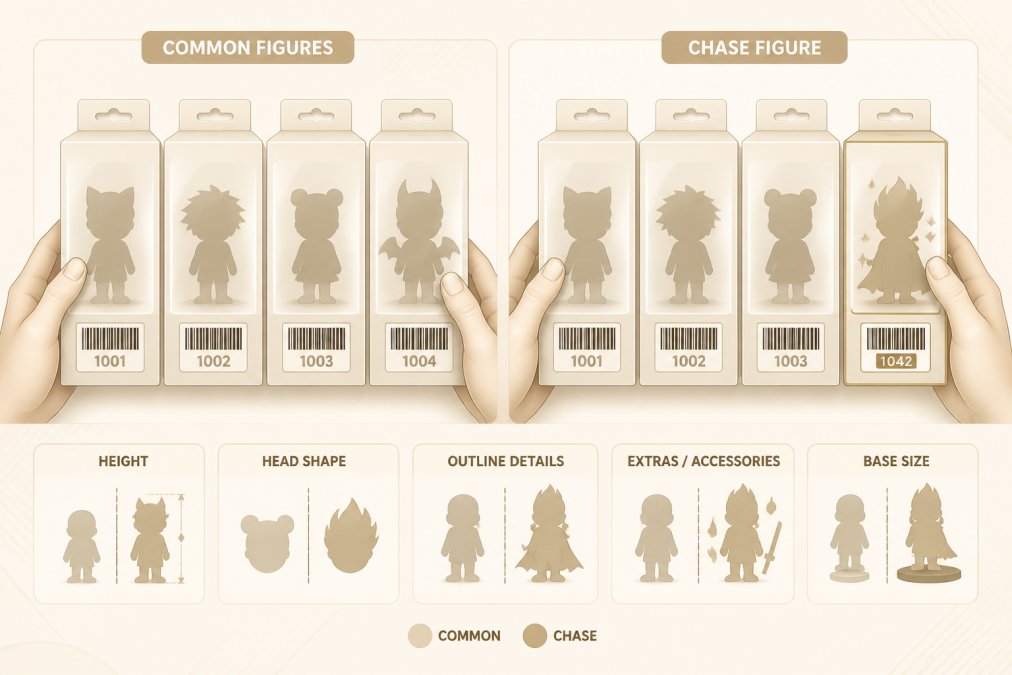
Experienced collectors can identify figures by silhouette alone. Chase figures often have unique silhouettes, different poses, additional props, or noticeably different proportions, making them identifiable through packaging. The reliability depends on how distinct each figure is.
Packaging variations also signal figure type. Manufacturers sometimes use different colored boxes or packaging styles for different rarity tiers. A gold-stamped box might indicate a rare or chase figure, while standard white packaging indicates commons. These visual cues vary by product line, but experienced collectors track them meticulously.
The Psychology Behind Blind Box Marketing
Blind boxes succeed because they tap into powerful psychological drivers: scarcity, randomness, and social proof.
Scarcity is real. Chase figures genuinely are rare, creating authentic desirability. Randomness creates unpredictability. Each box you open is a small gamble with a chance of payoff. Social proof amplifies demand. When collectors share their chase figure pulls on social media, other collectors feel compelled to buy more boxes.
The secondary market feeds this psychology. Chase figures sell for 5-10x their original retail value. A $15 blind box containing a chase figure might resell for $75-150. This creates a perception that hunting blind boxes is financially rewarding, even though most pulls are losses.
Manufacturers understand this completely. They design chase figure scarcity, packaging, and marketing to maximize psychological engagement and create compulsive collecting behavior.
Safe Secondary Market Trading and Authentication
The secondary market for blind boxes is substantial and largely unregulated. Chase figures command premium prices, which attracts counterfeits and fraud.
Authentication requires understanding legitimate packaging, manufacturing marks, and paint quality. Counterfeit figures often show visible paint inconsistencies, incorrect mold details, or packaging errors.
Legitimate sellers provide detailed photos showing packaging, paint quality, and manufacturing marks. Reputable secondary market platforms like Mercari and specialized forums have community reputation systems. Buy from sellers with extensive positive feedback and verified transaction history.
Price verification matters. If a chase figure is selling for $80 on average but one listing shows $20, that's a red flag. Cross-reference prices across multiple platforms to understand market rates.
If you do purchase from secondary markets, use platforms with buyer protection and request high-resolution photos before committing.
Smart Collecting Strategies for Chase Figures
Start by researching pull rates and case assortments before purchasing. Communities like Reddit's r/blindbox and specialized collector forums maintain databases of reported pull rates. Use this data to identify product lines with reasonable chase odds.
Set a budget and stick to it. Decide how much you'll spend monthly and allocate it strategically. Full case purchases often provide better per-unit value than single boxes.
Join collecting communities. The blind box community is collaborative. Collectors share pull data, trading networks, and authentication tips freely. These communities identify new secret figures and track manufacturing changes.
Diversify your purchases across multiple product lines rather than obsessing over a single series. Spreading your budget reduces the risk of hitting zero chase figures.
Track your pulls meticulously. Record every box you open, what figure you received, and the date. Over time, this data helps you understand your personal luck variance and provides perspective on spending.
Consider the secondary market as part of your strategy. Trade duplicate commons with other collectors rather than discarding them. If you pull a chase figure you don't want, sell it and use the proceeds to fund future purchases.
Blind box collecting is fundamentally about managing uncertainty while chasing genuine rarity. The strategies we've covered, understanding odds, recognizing packaging clues, and navigating secondary markets, give you practical tools to collect smarter. When you're ready to build your collection with reliable access to sealed cases and verified inventory, Utopia Toys and Models offers a curated selection of blind box cases from top brands like Funko and Kotobukiya, with transparent stock status and fast shipping. Start your hunt with confidence through our in-stock assortment and pre-order options designed for serious collectors.
Frequently Asked Questions
What are the rarest blind box items and how rare are chase figures?
Chase figures are the rarest variants in a blind box line, typically appearing at pull rates between 1 in 50 to 1 in 200 depending on the manufacturer and release. Rarity tiers vary by brand, some lines include common figures, variants, secret figures, and chase figures in a distribution ratio designed to create collecting urgency. Limited edition chase figures are intentionally scarcer than standard variants, making them the most sought-after pulls in any blind box collection.
How can I identify chase figures by box codes and barcodes?
Barcode and serial number analysis can provide clues, but manufacturers intentionally use identical or similar barcodes across variants to maintain randomization. Some collectors examine batch codes or manufacturing dates on the barcode, but these don't reliably predict chase figures. The most reliable method is purchasing from verified sellers who've documented pull rates and case assortments, rather than relying on barcode patterns alone.
Is there a guaranteed way to get chase figures from a full case purchase?
Full case purchases don't guarantee specific chase figures. While buying a full case increases your odds of pulling variants and chase figures through sheer volume, manufacturers distribute chase figures randomly across cases. A full case typically contains 12-24 packs, and you might pull zero, one, or multiple chase figures depending on randomization. The odds improve with full cases, but guaranteed pulls are not standard practice in the industry.
Why doesn't weighing blind boxes reliably identify chase figures?
Weighing blind boxes has technical limitations because manufacturers design packaging and distribution to prevent weight-based detection. Chase figures often weigh the same as common variants due to identical packaging, or manufacturers intentionally vary weights unpredictably. Additionally, modern blind box production uses randomization technology that defeats simple weight-based sorting. While some collectors report minor weight variations, this method is unreliable and risks damaging merchandise through repeated handling.
This article was written using GrandRanker