

Last Updated: November 17, 2026
Quick Summary
A 1:6 Hot Toys scale figure is a one-sixth reduction of a real person, so every 6 inches of character becomes 1 inch of figure. Most sixth scale figures land around 12 inches tall, which corresponds to a 6-foot character. Divide real-world height by six to check any figure's size.
- A 72-inch character becomes a 12-inch figure; a 66-inch character becomes an 11-inch figure.
- The neck peg is the real compatibility gate for head sculpts, so confirm the neck joint style matches.
- Hands are the most interchangeable part across brands; boots, belts, and armor plates are the least.
- A sixth scale figure in a neutral stance needs roughly 4 to 5 inches of shelf depth.
- Shelf spacing of at least 14 inches fits a 12-inch figure on a stand.
Table of Contents
- What 1:6 Scale Means for Hot Toys Figures
- How Hot Toys Scale Compares to 1:4, 1:10, and 1:12
- Hot Toys Accessory Compatibility Across Figure Lines
- Mixing Hot Toys With Other Sixth Scale Brands
- 1:6 Scale Figure Display Tips for Shelf Space and Posing
- Best Display Cases for 1:6 Scale Figures: A Fit Checklist
- Choosing Your First Sixth Scale Figure at Utopia Toys and Models
- Frequently Asked Questions
What 1:6 Scale Means for Hot Toys Figures
A 1:6 scale Hot Toys figure is a one-sixth reduction of a real person, so every 6 inches of character becomes 1 inch of figure. That ratio is the foundation of the entire Hot Toys scale system, and understanding it tells you what will fit, what will not, and what to expect before you open the box. Most fit problems trace back to a misunderstanding of the ratio rather than a defective product.
The Scale Ratio and Real-World Proportions
Scale ratio is the relationship between a figure's size and the real-world subject it represents. A 1:6 scale figure is one-sixth the size of the person depicted, which means proportion, not just height, scales down.
That distinction matters. A sixth scale figure is not a shrunken statue with the same wall thickness and chunky joints. Sculptors rebuild anatomy at the smaller size, so a head sculpt, a pair of hands, and a tailored outfit all follow the same 1:6 ratio to stay visually consistent.
How Figure Height Maps to Character Height
Most sixth scale figures land around 12 inches tall, which corresponds to a 6-foot character. The conversion is simple: divide real-world height by six.
- 72 inches (6 ft 0 in) character → 12 inch figure
- 66 inches (5 ft 6 in) character → 11 inch figure
- 78 inches (6 ft 6 in) character → 13 inch figure
That is why a taller character's figure sits noticeably above a shorter one on the same shelf. If you are planning a group display, check the character's listed height first, then do the division. A common mistake is assuming every figure in a line is the same height; they are not, and the difference can be an inch or more.
Figure height by character height at 1:6 scale
How Hot Toys Scale Compares to 1:4, 1:10, and 1:12
Compare the ratios and the trade-offs become obvious.
| Scale | Detail Level | Shelf Space | Best For |
|---|---|---|---|
| 1:4 | Highest | Large, deep shelves | Statement centerpieces |
| 1:6 | High | Standard shelving | Detailed posing and outfits |
| 1:10 | Moderate | Compact shelves | Building a large roster |
| 1:12 | Basic | Very tight spaces | Dioramas and vehicles |
Hot Toys Accessory Compatibility Across Figure Lines
Accessory compatibility is where scale stops being theory and becomes a practical headache. The short answer: parts fit when the body, the connection point, and the era of release all line up. Everything else is a gamble.
Hands, Head Sculpts, and Body Revisions
What most guides miss is that the neck peg is the real compatibility gate for head sculpts. Before you swap a head between figures, confirm the neck joint style matches. A common mistake is buying a loose head sculpt for a body from a different production run and discovering the peg diameter differs by a fraction of an inch, which is enough to make it unusable without modification.
Outfits, Armor, and Rooted Hair Limits
Fabric outfits and armor are cut to a specific body's proportions, so a tailored suit built for one figure rarely drapes correctly on another with different shoulder width or leg length. Rooted hair adds a second constraint: it limits head mobility and can interfere with a collar or helmet. If you plan to pose a figure in a dynamic action stance, sculpted hair usually holds up better than rooted hair, which tends to shed and tangle with repeated handling.
Mixing Hot Toys With Other Sixth Scale Brands
Cross-brand mixing works best when you treat the body as the deciding factor, not the brand name. Most sixth scale makers build to the same 1:6 ratio, so a figure from one line and an accessory from another can look right together on the shelf. The connection points are where things break down, and they break down part by part. The matrix below is the practical version of the rule of thumb.
Component-by-Component Compatibility Matrix
| Component | Compatibility Across Brands | What to Check Before You Buy |
|---|---|---|
| Head sculpts | Low to moderate | Neck peg style and diameter; whether the sculpt includes a neck or expects one |
| Hands | High | Wrist peg diameter and length; ball vs. pin style |
| Feet and boots | Low | Ankle peg size; whether the boot is hollow or solid |
| Fabric outfits | Low to moderate | Shoulder width, chest depth, and inseam of the target body |
| Armor and hard parts | Low | Exact limb circumference and attachment points |
| Weapons and props | High | Grip size relative to the hand; scale of the prop itself |
| Stands and bases | High | Footprint and whether the crotch cradle is adjustable |
Hands are the most interchangeable part across brands, which is why loose hand sets sell well. Boots, belts, and armor plates are the least interchangeable, because they depend on exact limb dimensions that vary by a fraction of an inch between body types. A head sculpt from another maker may fit if the neck peg matches, but the skin tone and sculpt scale also have to line up or the swap reads as wrong on the shelf.
Why Two Figures Labeled 1:6 Still Differ
The scale label describes the ratio, not the body. Two figures both sold as 1:6 can differ in overall height by an inch or more, and they routinely differ in shoulder width, chest depth, and limb length. A 12-inch figure built on a narrow-shoulder body and a 12-inch figure built on a broad-shoulder body will not share a tailored jacket, even though both are nominally the same scale. Because body proportions affect both clothing fit and how a figure holds a pose, choosing articulated figures for display also means considering whether their build and articulation suit the look you want.
Release Eras and Body Revisions
Our rule of thumb: match the body first, then the costume, then the accessories. When you buy a third-party figure or a loose part, ask which body type it was designed for, and compare that to the figure you plan to pair it with. If the seller cannot tell you the body type, treat the part as a gamble rather than a fit.
1:6 Scale Figure Display Tips for Shelf Space and Posing
Plan for depth before you plan for width.
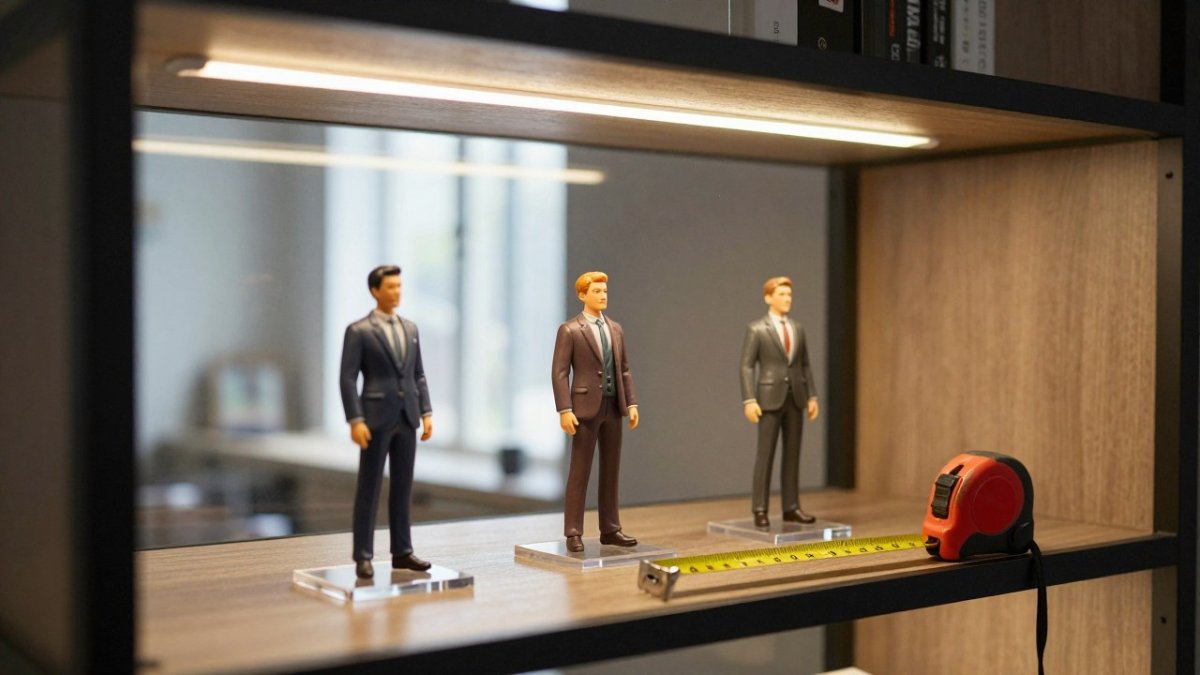
A few display habits that save you grief:
- Use clear acrylic stands so poses read cleanly and figures do not lean on each other.
- Keep figures out of direct sunlight to protect paint and fabric.
- Rotate a figure's pose every few months to avoid stressing a single joint.
- Leave a finger's width between figures so capes and weapons do not tangle.
Posing is where articulation earns its keep. Test a pose at the joint before you commit, and never force a limb past its natural stop. If a joint resists, the pose is wrong, not the figure.
Best Display Cases for 1:6 Scale Figures: A Fit Checklist
A display case fits a sixth scale collection when its interior depth clears your deepest pose, its shelf spacing clears your tallest figure plus a stand, and its door swing clears the room. Run this checklist before you buy:
- Interior depth of at least 8 inches for dynamic poses, 5 inches for neutral stances
- Shelf spacing of at least 14 inches for a 12-inch figure on a stand
- Adjustable shelves so you can re-space as the collection grows
- UV-filtered glass or acrylic to slow fading
- A door that opens without hitting nearby furniture
- Ventilation, so sealed cases do not trap humidity
Doing the Shelf-Spacing Math
Shelf spacing is where most buyers get caught. Take your tallest figure's listed height, add the height of the stand you plan to use, then add clearance for a raised weapon or a cape. A 12-inch figure on a half-inch stand needs about 13 inches of clear height in a neutral pose, and a dynamic pose with an outstretched arm can push that to 15 inches or more. Measure the case's usable interior height between shelves, not the outer cabinet height, and confirm the shelves are adjustable before you commit to a case that only fits today's collection.
Planning Vehicles, Dioramas, and Furniture
Scale conversion is the tool for planning a complete display rather than a single shelf. Divide the real-world dimension by six to get the figure-scale dimension. A 20-foot vehicle becomes about 40 inches long at 1:6, which is longer than most standard shelves and usually means a dedicated surface or a floor-standing case. A 30-inch-tall table becomes a 5-inch-tall table at 1:6, which is the right height for a seated figure. A 6-foot doorway in a diorama becomes 12 inches.
Case Styles and What Each One Costs You in Space
Glass curios with adjustable shelves suit mixed collections because you can re-space as figures arrive. Acrylic cases are lighter and cheaper but scratch more easily and can yellow with UV exposure unless the acrylic is UV-filtered. Open shelving gives the most depth flexibility but exposes figures to dust and sunlight, which is the fastest way to fade paint and fabric.
For a deeper comparison of case styles and dimensions, our guide to the best display cases for miniature figures breaks down the options side by side. The checklist above is the fast version; that guide is the one to read when you are ready to choose.
Choosing Your First Sixth Scale Figure at Utopia Toys and Models
Start with a character you already love, then confirm the figure's listed height and body type before you buy. That single step prevents most first-purchase regrets, because it tells you what shelf space you need and which accessories will fit later.
We stock collectible figures and model kits from brands like Bandai, Funko, and Kotobukiya, with most items in stock and ready to ship.
The hardest part of collecting sixth scale is not the first figure, it is keeping the collection coherent as it grows.
Frequently Asked Questions
What does 1:6 scale mean for Hot Toys figures?
A 1:6 scale ratio means the figure is one-sixth the size of the character it represents. If a character is 6 feet tall in the source material, the figure stands roughly 12 inches.
Are Hot Toys accessories compatible across different figure lines?
Partly. Hands and head sculpts use brand-specific peg and socket sizes, so they rarely swap cleanly between unrelated characters. Hot Toys accessory compatibility is strongest within a single body generation: hands, wrist pegs, and stands from figures built on the same body type usually fit. Outfits and armor are cut for a specific body, so a costume made for a slim body will not close properly on a bulkier one.
Can I mix Hot Toys figures with other 1:6 scale brands?
You can display them together, and most collectors do. Sixth scale is a shared ratio, so a 12-inch figure from another brand stands at a similar height. The friction points are skin tone matching, hand peg diameter, and head sculpt neck posts. Clothing and generic equipment like weapons, crates, and diorama props usually cross over fine because they do not depend on a proprietary connector.
How do I ensure my display case fits different Hot Toys scales?
Measure the tallest figure in your collection, add clearance for a dynamic pose and a stand, then compare that number to the case's interior height, not its exterior. A 1:6 figure on a flight stand can need 14 to 16 inches of interior height. For 1:4 scale, plan on roughly double the footprint. Check shelf depth too, since capes and outstretched arms push figures past their body width.

