

Table of Contents
- Best Display Cases for Miniature Figures: Quick Comparison
- How We Evaluated Display Cases
- Acrylic Display Cases for Miniatures: Clarity, Stackability, and Value
- Miniature Display Cabinet Options: Floor-Standing and Shelving Systems
- Dustproof Display Cases for Figures: Sealed Protection and Magnetic Doors
- Display Cases for Painted Miniatures: Lighting, UV Protection, and Paint Preservation
- Which Display Case Should You Choose?
- Frequently Asked Questions
Last Updated: October 17, 2026
Best Display Cases for Miniature Figures: Quick Comparison
Whether you're housing hand-painted Gundam models, collectible anime figures, or board game miniatures, the best display cases for miniature figures balance visibility, protection, and practicality.
The right choice depends on your collection size, the figures you're protecting, and your space.
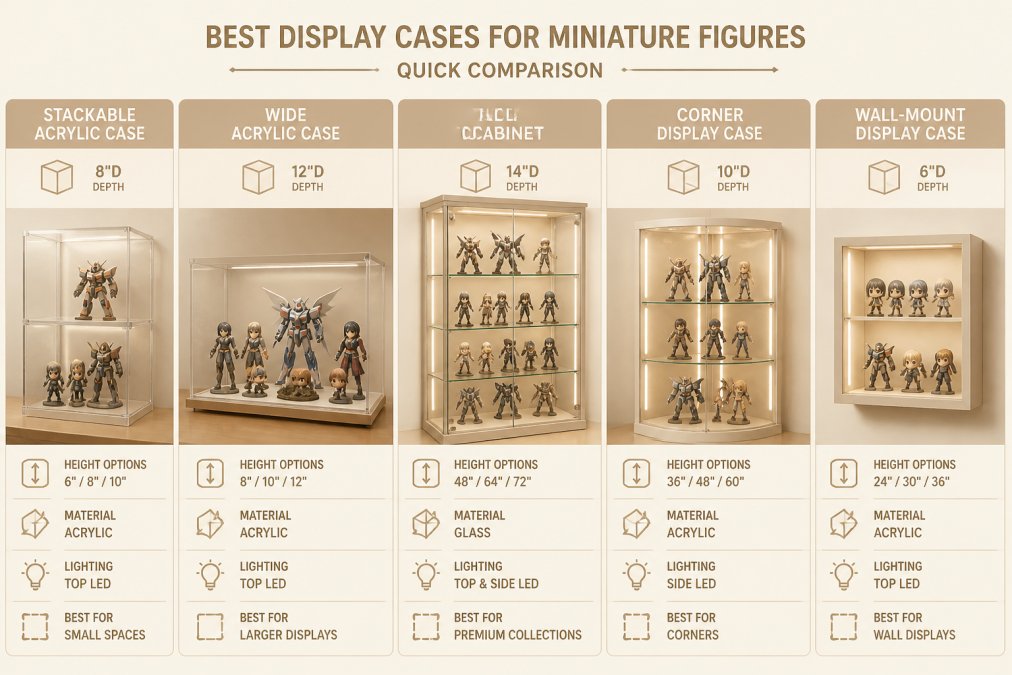
Quick Picks:
- Best for Value and Stackability: Acrylic display cases, affordable, lightweight, and easy to expand as your collection grows
- Best for Large Collections: Floor-standing cabinets like the IKEA BLÅLIDEN, accommodates dozens of figures with adjustable shelving
- Best for Painted Miniature Protection: Sealed display cases with magnetic doors, keeps dust away while maintaining visual access
- Best for Custom Displays: Wall-mounted acrylic cases, saves floor space and creates a gallery-style presentation
How We Evaluated Display Cases
We assessed each option across five criteria: dust protection, visibility, storage capacity, assembly complexity, and long-term durability.
Dust settles even in clean homes, dulling paint and collecting in panel lines. We prioritized cases with sealed construction or magnetic closures that genuinely seal.
We checked visibility from multiple angles, lighting options, and whether glass or acrylic distorts the view.
We looked for options that scale with your collection.
We favored cases that set up in under an hour and stay stable on standard shelving or floors.
Acrylic Display Cases for Miniatures: Clarity, Stackability, and Value
Acrylic cases dominate the market because clear acrylic provides visibility comparable to glass while weighing a fraction as much, making stackable designs practical.
The Crystal Fortress Magnetic Acrylic Display Cases use a magnetic closure system that keeps dust out while eliminating hinges or latches that can fail over time. For painted miniatures where every detail matters, this sealed approach prevents dust from settling on your figures.
Acrylic's main weakness is scratch resistance: over years of handling it develops micro-scratches that cloud visibility. Glass scratches less but weighs more and breaks if dropped, so for collectors who move cases or have pets and children, acrylic's durability advantage outweighs the scratch concern.
Stackable acrylic two-packs or four-packs cost far less than specialty cases but lack sealed construction, leaving figures vulnerable to contact and settling dust.
Miniature Display Cabinet Options: Floor-Standing and Shelving Systems
Floor-standing cabinets give a collection presence and absorb growth without consuming wall space, but success comes down to measurements. Measure your tallest figure with its base and any banner, weapon, or flight stand attached; that number determines whether a shelf holds your models upright.
Listed shelf heights are not usable height: glass doors, door frames, and shelf thickness eat into the opening. A cabinet advertised with 13-inch spacing may give 11.5 to 12 inches of clear opening, so check the assembly instructions.
Weight limits matter more than most buyers expect. A single 54mm white-metal figure can weigh 4 to 8 ounces; 40 of them plus basing material can approach 20 pounds on one shelf.
Anchoring and stability. Any cabinet taller than about 4 feet should be anchored to a wall stud with the anti-tip kit, especially with children or large pets. Shim the feet level before loading it.
Door security and glass handling. Magnetic catches are easy for a toddler or cat to push open, so look for a keyed lock or child-safety latch. When moving a glass-door cabinet, remove shelves and doors first; tempered glass is fragile at the edges.
Cabinet types compared.
- Specialty display cabinets with glass doors and adjustable shelves are the default for collections over 30 figures. Adjustable shelf pins let you set spacing per row, which matters when you mix 28mm infantry with a 6-inch centerpiece. Verify the pin hole spacing (often 1 inch or 32mm) so you can fine-tune.
- Bookcase conversions are the budget route. A bookcase without doors leaves figures exposed to dust and pets; adding aftermarket glass or acrylic doors closes most of that gap at modest cost. Check that the shelf pins are rated for the added door weight.
- Curio and china cabinets bought secondhand often offer the best cost per cubic foot of display space, with glass on multiple sides and built-in lighting. Inspect door seals and shelf pins before buying used, and confirm the interior depth clears your deepest bases.
- Modular cube systems let you build up and out over time, but open-front cubes offer no dust protection unless you add doors. They work best as a secondary display for figures you rotate frequently.
Dustproof Display Cases for Figures: Sealed Protection and Magnetic Doors
Sealed display cases prevent dust infiltration entirely, keeping painted surfaces pristine for years, but typically run two to three times the price of open acrylic stacking cases.
Magnetic door systems eliminate traditional hinges and latches. The Crystal Fortress system holds the door closed with magnets and no mechanical wear points, which matters if you're protecting figures worth $100 or more each.
Sealed cases work best for display-only scenarios; constantly opening and closing one defeats the protection advantage.
Check door seal quality: a rubber gasket that compresses when the door closes provides better dust protection than a simple magnetic snap, which just holds the door shut.
Wall-mounted sealed acrylic cases like the WETANBR Medium-Sized Miniature Display Case save floor space and work well for smaller collections or themed displays, though mounting requires studs or heavy-duty anchors.
Display Cases for Painted Miniatures: Lighting, UV Protection, and Paint Preservation
Painted miniatures face three environmental threats a display case can worsen or mitigate: dust, light, and heat.
How light fades paint. Sunlight contains ultraviolet radiation that breaks down the pigment molecules in acrylic and enamel paints, and the effect is cumulative.
Lighting without damage. LED lighting emits very little UV compared with halogen or incandescent bulbs and runs cooler. Mount strips on an aluminum channel or leave a small air gap, since a strip pressed against acrylic can yellow the plastic. Choose 4000K to 5000K for neutral rendering; 2700K makes reds and skin tones muddy, and 6500K can make metallics look blue.
Dust and cleaning without damage. Dust is abrasive, so blow it off with a rocket blower or canned air held at a distance, then use a soft brush only on stubborn spots; never wipe painted surfaces with a dry cloth.
Heat and enclosure. A sealed case traps heat as well as dust. Direct sun or a nearby radiator can push interior temperatures well above room temperature, softening resin, warping thin plastic, and making paint tacky. Keep sealed cases out of direct sun and away from heat sources.
A preservation routine that works.
- Place the case away from windows and heat sources; indirect light is the single biggest lever.
- Use LED lighting with a small air gap and a neutral color temperature.
- Confirm the case material is UV-filtering if the room gets any direct sun.
- Clean with air first, brush second, and never with a dry cloth on painted surfaces.
- Rotate figures you are actively using out of the sealed case rather than opening it daily.
Which Display Case Should You Choose?
Your collection size, space, and budget determine the best fit:
Under 10 figures, limited space: Stackable acrylic cases are affordable, take minimal space, and let you expand later.
10-30 figures, moderate space: Sealed acrylic or wall-mounted options balance protection and visibility, justifying sealed construction.
30+ figures, dedicated display space: A floor-standing cabinet like the IKEA BLÅLIDEN with adjustable shelves accommodates growth and creates a focal point. Add LED lighting inside.
High-value custom figures: Sealed cases with magnetic doors and internal lighting preserve your work and showcase detail.
| Case Type | Best For | Space Required | Protection Level | Cost Range |
|---|---|---|---|---|
| Stackable acrylic | New collectors, small collections | Minimal | Basic dust protection | Budget-friendly |
| Sealed acrylic with magnetic door | Painted miniatures, valuable figures | Minimal to moderate | Excellent dust seal | Mid-range |
| Floor-standing cabinet | Large collections, long-term display | Significant | Good with sealed doors | Mid to high |
| Wall-mounted sealed cases | Space-conscious collectors, themed displays | Vertical wall space | Excellent dust seal | Mid-range |
At Utopia Toys and Models, we recommend starting with your collection size and working backward. A collector with five hand-painted Gundam models needs different protection than someone with fifty blind box figures, but both can be displayed beautifully.
The most common mistake is buying too small initially. A case that fits your current collection leaves no room for growth, and within six months you're buying a second one.
Protecting your miniature collection is protecting your investment, both in money and in the time you've spent building and painting. The right display case keeps your figures visible, safe from dust, and preserved for years. Visit Utopia Toys and Models to explore our full selection of collectible display solutions, including cases from Crystal Fortress and accessories that complement any setup. We carry the brands collectors trust.
Frequently Asked Questions
What is the best way to display miniature figures?
The best display method depends on your collection size and space. Acrylic stackable cases work well for smaller collections and tight spaces, offering clear visibility and dust protection. Floor-standing glass cabinets suit larger collections and provide a showcase centerpiece. Ensure your figures are on stable bases, position them away from direct sunlight to prevent paint fading, and maintain consistent humidity to protect paint finishes. Consider adding soft LED lighting inside sealed cases to enhance detail visibility without generating heat.
What type of case protects miniatures from dust?
Sealed acrylic cases with magnetic or friction-fit doors provide the best dust protection. Glass cabinets with tight-fitting gaskets also work well. Dustproof cases feature solid panels on all sides except the viewing area, preventing airborne particles from settling on your figures. Wall-mounted acrylic cases with enclosed backs and tops are particularly effective. For maximum protection, choose cases with weatherstripping or magnetic seals that create an airtight barrier without trapping moisture inside.
Are acrylic display cases good for miniature figures?
Yes, acrylic cases are excellent for miniatures. They offer superior clarity compared to some alternatives, are lightweight and stackable, and provide reliable dust protection. Acrylic is more affordable than glass, making it ideal for collectors building multi-case collections. The main consideration is UV resistance: choose acrylic formulated with UV protection to prevent painted miniatures from fading over time. Acrylic cases work especially well for board game miniatures, Gundam models, and action figures that don't require climate control.
How do I choose the right size display case for miniatures?
Measure your tallest figure first, then add 1-2 inches for clearance and base stability. For shelf spacing, standard miniatures (1-3 inches tall) need 4-6 inches between shelves. Count your collection and estimate future growth: a 12-figure case might hold 20-30 with careful arrangement. Consider your display space: tabletop cases work for 6-12 figures, while wall-mounted options suit smaller collections. Floor-standing cabinets accommodate 50+ figures across multiple shelves. Check internal dimensions rather than external size to verify actual usable space.
How should I display painted miniatures without damaging them?
Keep painted miniatures away from direct sunlight and heat sources to prevent paint cracking and fading. Use cases with UV-protective acrylic or glass. Maintain stable temperature and humidity levels, ideally 40-50% humidity, to prevent paint from warping or chipping. Position figures on stable bases or use museum putty to prevent tipping during transport or vibration. For high-value painted models, choose sealed cases that minimize dust exposure. Avoid storing in basements or attics where temperature fluctuations occur. LED lighting inside sealed cases enhances visibility without heat damage.
