

Last Updated: October 28, 2026
Quick Summary
A blind box subscription is not worth it for rare figures because most services deliver sealed boxes and surprise, not guaranteed chase variants. Rarity odds are set by the manufacturer, not the subscription, so a 1:48 ratio never guarantees the figure in 48 boxes.
- Per-item blind boxes let you control pace and budget, while subscriptions trade control for a discount and scheduled delivery.
- A chase variant is a recolored or altered standard figure packed at a lower ratio than the base lineup.
- Compare effective per-box cost after duplicates, not the advertised monthly price, before committing.
- Buy full cases when completing a set, since a sealed case usually contains the full standard lineup with no repeats.
- Authenticity drives resale value more than rarity, so buy from retailers stocking authentic, licensed products and keep receipts.
Table of Contents
- What a Blind Box Subscription Actually Delivers
- Blind Box Rarity Guide: How Chase Variants and Secret Figures Work
- Blind Box Subscription Value: Total Cost vs. Buying Single Figures
- How to Avoid Duplicate Blind Box Figures
- Choosing an Anime Blind Box Subscription
- Authenticity, Resale Value, and Availability
- Where the Boxes and Rare Figures Hold Up Best
- Browse In-Stock Blind Box Figures at Utopia Toys and Models
- Frequently Asked Questions
What a Blind Box Subscription Actually Delivers
A blind box subscription is a recurring shipment of sealed mystery figures, usually tied to one brand or a rotating theme, where the exact contents stay unknown until the box arrives. The honest answer is that most subscriptions are not built around rare figures at all. They are built around a steady supply of sealed boxes and the surprise of opening them.
That distinction matters more than any marketing page admits. A subscription delivers volume and convenience. It does not deliver a guaranteed chase variant, and any service implying otherwise deserves a hard look at its terms. Below is a look at how subscriptions differ from buying singles, how rarity tiers work, and where the real cost sits.
Per-Item Blind Boxes vs. Recurring Subscription Boxes
Per-item blind boxes let you buy one sealed figure at a time, so you control the pace and the budget. Recurring subscriptions trade that control for a discount and a scheduled delivery. If you are chasing a specific character, singles win almost every time.
The catch is commitment. Many subscription services bill monthly with auto-renewal, and canceling mid-cycle can be harder than the signup page suggests. We recommend starting with single boxes from a series you actually want before locking into any recurring plan. You can also check the Arriving Soon One Piece Monkey D Luffy individual blind boxes to see a single-box option in stock.
Blind Box Rarity Guide: How Chase Variants and Secret Figures Work
Rarity in blind boxes runs on published ratios, not luck alone. A chase variant is a recolored or altered version of a standard figure, usually packed at a lower ratio than the base lineup.
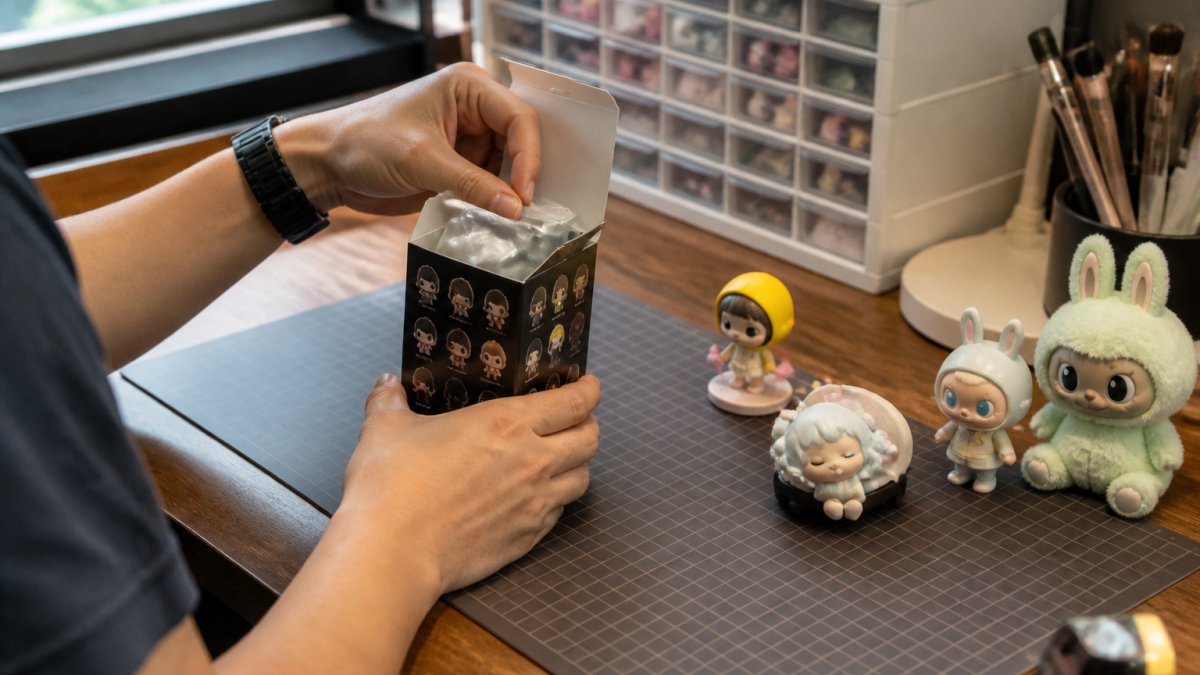
Manufacturers typically print odds on the box or the product listing, expressed as ratios like 1:24 or 1:48.
Read the printed odds before you buy, and treat rarity as a bonus rather than a plan. Collectors who buy for the lineup stay happier than collectors who buy for the chase.
Rarity in blind boxes follows published ratios rather than luck, so here is how the two rare tiers differ.
| Term | What it is | How it is packed |
|---|---|---|
| Chase variant | Recolored or altered version of a standard figure | Lower ratio than the base lineup |
| Secret figure | Unlisted design that replaces one slot in a case | Often at the rarest tier |
| Printed odds | Ratios like 1:24 or 1:48 | One chase per 24 or 48 standard units across a production run |
| Independent draw | Each box is its own draw | A 1:48 ratio does not guarantee the figure in 48 boxes |
Blind Box Subscription Value: Total Cost vs. Buying Single Figures
The value question comes down to math, not marketing. A subscription bundles boxes at a per-unit discount, but you pay for boxes you did not choose. Buying singles costs more per box but lets you target the series and characters you want. For a deeper breakdown, see our model kits vs blind box figures cost comparison.
Run the comparison honestly with a one-year worksheet:
- Annual subscription spend. Multiply the monthly price by 12. Add any signup fee, shipping charge, or tax the service passes through.
- Boxes received. Divide annual spend by the number of boxes per shipment to get your effective per-box cost. Compare that figure to the single-box price for the same series.
- Keep rate. Count how many boxes contain a figure you would have bought anyway. A subscription only beats singles if your keep rate is high enough that the discount covers the boxes you would have skipped.
- Duplicate adjustment. Subtract the resale or trade value of figures you already own. Duplicates are the hidden cost that erases most subscription discounts.
- Chase premium. If a service markets rare-figure access, check whether the odds differ from buying the same series as singles. Most do not; the rarity odds are set by the manufacturer, not the subscription.
A common pattern: subscriptions win for collectors who enjoy every series in the rotation and lose for collectors who chase one or two characters. If you would skip half the lineup, singles are cheaper in practice even at a higher sticker price per box.
Subscription Terms to Read Before You Pay
Before any recurring charge, check these terms in writing:
- Billing cycle and auto-renewal. Confirm whether the plan bills monthly, quarterly, or annually, and whether renewal is automatic. Annual plans often lock in a lower per-box rate but remove your ability to exit after a bad month.
- Cancellation window. Find the cutoff date for canceling before the next charge. Some services require cancellation several days before the billing date; missing it by a day can cost you a full cycle.
- Shipping and handling. Check whether shipping is included or billed per shipment, and whether international or expedited options change the per-box cost.
- Series guarantees. Look for whether the service discloses upcoming series or lets you choose themes. A subscription that will not tell you which series are coming is a gamble on someone else's taste.
- Duplicate and damage policy. Confirm how the service handles repeats, missing figures, and damaged shipments, replacement, credit, or nothing.
- Rarity disclosure. Check whether the service publishes chase odds or secret-figure rates before purchase. If rarity information is only revealed after you open the box, treat the rare-figure angle as marketing rather than a feature.
Collectors may prefer buying what they can see in stock rather than committing to a mystery rotation. Start with single boxes from a series you actually want, confirm the per-box cost and cancellation terms, and only then decide whether a recurring plan earns its place in your budget.
How to Avoid Duplicate Blind Box Figures
Duplicates are the quiet budget killer in blind box collecting. The fix is a simple tracking habit: keep a written list of every figure you own per series, and check it before you buy or trade.
Three habits cut duplicates fast:
- Buy full cases when completing a set. A sealed case usually contains the full standard lineup with no repeats, though chase figures still vary.
- Trade before you rebuy. Collector communities swap duplicates constantly, and a trade costs nothing.
- Track ratios, not hopes. If a series has a large lineup, buying singles randomly will produce repeats long before it completes the set.
A spreadsheet can help track a collection. Log the series, the figure name, and the date. When a duplicate shows up, it becomes trade stock instead of a regret.
Choosing an Anime Blind Box Subscription
Picking an anime blind box subscription starts with the series, not the discount. Match the subscription to characters and franchises you already collect, and confirm the service ships authentic, licensed products rather than unlicensed reprints. Most ranking pages stop at that advice; the useful differentiator is a short evaluation framework you can apply to any service before you pay.
Score each candidate on five points:
- Lineup transparency. Does the service publish which series and characters appear in the rotation, and how far ahead? A service that names the next two or three series lets you judge fit; one that promises only 'anime favorites' does not.
- Licensing proof. Are the figures officially licensed, and can the service show the manufacturer or licensor? Look for brand names you recognize on the product listing and packaging, and treat unbranded or reprint language as a warning sign.
- Rarity disclosure. Does the service publish chase odds or secret-figure rates before purchase? If rarity is only revealed after opening, the rare-figure angle is marketing, not a feature.
- Personalization and duplicate management. Can you choose themes, set preferences, or opt out of series you already collect? Does the service offer a trade or swap mechanism for duplicates? These options separate a curated subscription from a random box.
- Damage and missing-item policy. What happens if a shipment arrives damaged or a figure is missing? A clear replacement or credit policy is a sign the service expects to be held accountable.
Ask three questions before subscribing:
- Which series and characters appear in the rotation, and how often does it change?
- Are the figures officially licensed, and can the service prove it?
- What happens if a shipment arrives damaged or a figure is missing?
If the answers are vague, walk away. A themed line like a Lilith Secret Experiment blind box shows what a focused, character-driven series looks like, and that specificity is what you should demand from any subscription.
Authenticity, Resale Value, and Availability
Authenticity drives resale value more than rarity does. A rare figure with no proof of origin sells for less than a common figure with a clean, licensed pedigree. Counterfeits flood the secondary market, and buyers increasingly ask for original packaging and purchase records.
Availability is the other half of resale. Limited drops and exclusive releases hold value because supply is fixed. Reprints and restocks can soften prices overnight. If resale matters to you, buy from retailers who stock authentic, licensed products and keep your receipts. Our guide on where to buy rare anime figures covers how to spot legitimate sellers and avoid the counterfeit traps that erode a collection's worth.
Where the Boxes and Rare Figures Hold Up Best
Some series reward the subscription model better than others. Character-driven lines with large, rotating lineups and clear rarity tiers suit recurring boxes, because every shipment has a chance at something new. Smaller, tightly themed lines work better as singles, since the full lineup is easy to complete without a subscription.
Themed lines with strong character rosters, like an Ultraman Galaxy Version blind box series, are the kind collectors tend to commit to because the lineup itself stays interesting. Our rule of thumb: subscribe to series you would collect even without a chase figure. If the base lineup does not excite you, no rarity tier will fix that.
Browse In-Stock Blind Box Figures at Utopia Toys and Models
Utopia Toys and Models offers clear availability indicators, including arriving-soon and pre-order status, and carries products from brands like Bandai, Funko, and Kotobukiya.
If you are weighing a subscription against buying singles, check the arriving-soon and pre-order indicators. Build a collection you chose, not one a rotation chose for you.
Frequently Asked Questions
Are blind box subscription boxes worth it for collectors?
It depends on what you want from the hobby. Collectors can weigh the appeal of surprise items against the limits of not choosing the contents. It is a weaker fit if you are chasing one specific rare figure, because you cannot choose the contents. Run the math on blind box subscription value first: compare the annual cost against buying the same number of single boxes you actually want, and factor in how many duplicates you can realistically trade away.
How do blind box figures determine rarity?
Check the product information for any stated rarity details before buying.
Can you get rare figures from a blind box subscription?
A blind box may contain a rare figure if its series includes one, but the contents are unknown until the box is opened.
How can you avoid duplicate blind box figures in a subscription?
Start by tracking what you already own in a simple list or spreadsheet, sorted by series and character. Trading duplicates with other collectors can help you find figures you want.
What should collectors compare before subscribing to a blind box box?
When evaluating a subscription, consider its stated cost, terms, included products, and any rarity information. Utopia Toys and Models provides arriving-soon and pre-order status indicators.

