

Table of Contents
- Why Authenticity Matters in the Collector Market
- How to Spot Bootleg Anime Figures: 8 Physical Signs
- Official Anime Figure Manufacturers to Know
- Where to Buy Rare Anime Figures Without Getting Burned
- Verifying Pre-Owned and Second-Hand Figures
- Digital Verification Tools and Macro-Photography Checks
- Frequently Asked Questions
Last Updated: September 20, 2026
Why Authenticity Matters in the Collector Market
The difference between authentic anime figures and a counterfeit often comes down to details you can only catch by hand. Knowing how to identify authentic anime figures protects both your wallet and your collection's long-term value, because bootlegs rarely hold resale worth and often arrive with warped plastic, toxic-smelling paint, or joints that snap within weeks.
How to Spot Bootleg Anime Figures: 8 Physical Signs
Spotting a bootleg anime figure means checking eight things in order: packaging integrity, box print quality, holographic stickers, sculpting precision, mold lines, paint finish, plastic quality, and manufacturer marks. Run through all eight before you commit to a purchase, especially from a seller you don't know.
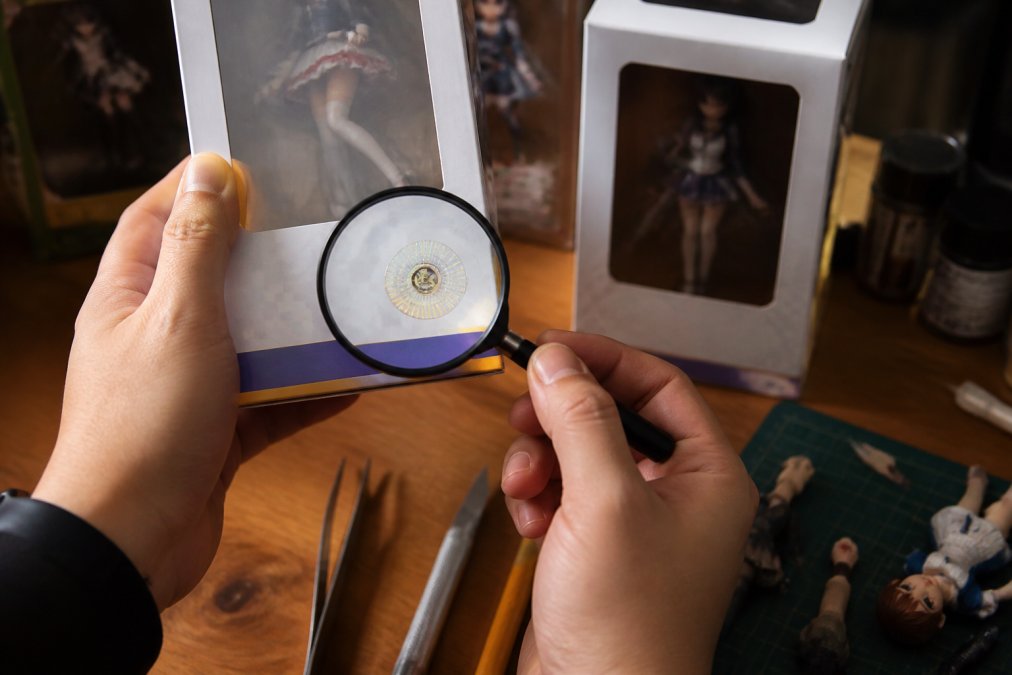
Here's the sequence most experienced collectors use:
- Inspect the box for crushed corners or resealed flaps
- Check print sharpness on the box art and text
- Look for the holographic sticker and its placement
- Examine the sculpt for soft or blurred details
- Scan for mold lines and seam lines
- Check paint bleed around fine details
- Feel the plastic for weight and texture
- Confirm the manufacturer mark and copyright logo
Packaging and Box Quality Inspection
Genuine packaging uses thick, rigid cardboard with clean, sharp edges. Counterfeit boxes often feel flimsy, with blurry text, misaligned artwork, or a barcode that doesn't match the product listing. Look for a resealed flap or a sticker placed over an original seal, both common signs of a repackaged bootleg.
Sculpting Details, Mold Lines, and Paint Finish
Sculpting precision is where bootlegs fall apart fastest. On an authentic figure, hair strands, fabric folds, and facial features stay crisp under close inspection. Knock-offs show soft, melted-looking edges and visible mold lines running across the shoulders or legs. Paint bleed around eyes and small accessories is another giveaway, and a matte finish that should be glossy (or the reverse) usually means the factory used the wrong coating.
Holographic Stickers, Logos, and Serial Numbers
A holographic sticker, official seal, or serial number is one of the strongest single indicators of authenticity, but it isn't foolproof. Counterfeiters have learned to print convincing stickers, so always cross-check the sticker against the manufacturer's own reference images and confirm the serial number matches the barcode on the box.
Official Anime Figure Manufacturers to Know
Knowing the major official anime figure manufacturers makes verification easier, because each one has recognizable packaging, marking, and quality standards. The names most commonly counterfeited, and therefore the ones worth memorizing, are Good Smile Company, Bandai Spirits, Kotobukiya, Alter, Max Factory, and Funko. Each uses distinct box designs, logo placement, sticker systems, and finish quality that you can learn to recognize on sight.
- Good Smile Company, Nendoroids and scale figures ship with a GSC logo, a copyright line crediting the licensor, and a holographic seal on many releases. The faceplates on Nendoroids should click in with a firm, consistent snap; bootleg faceplates often sit loose or require force.
- Bandai Spirits, Look for the blue Bandai Spirits logo (the older red Bandai logo appears on pre-2018 stock). Model kits and figures typically carry a "Made in Japan" or "Made in China" line plus a Bandai Namco copyright mark. Mold lines on genuine kits are thin and uniform.
- Kotobukiya, Sculpting tends toward sharper facial detail and tighter seam placement. Boxes carry the Kotobukiya logo and a licensor copyright block; the plastic on genuine pieces has a slightly cooler, more matte finish than the glossy PVC common on fakes.
- Alter and Max Factory, Both are known for high-end scale figures with detailed bases. Genuine bases usually carry a small manufacturer stamp or engraved logo; bootleg bases are often plain or have a printed sticker instead of a molded mark.
- Funko, Vinyl figures use a heavier PVC/ABS blend with a distinctly glossy texture. The Pop! logo, the number on the box, and the copyright line should all match the figure inside; mismatched numbers are a common bootleg tell.
Where to Buy Rare Anime Figures Without Getting Burned
Buying rare anime figures safely comes down to retailer reputation and transparency. Established specialty retailers that publish clear stock status, ship in protective packaging, and stand behind their inventory remove most of the risk that comes with marketplace listings and unknown sellers.
- Buy from retailers that show real-time stock status instead of vague "available soon" labels
- Ask sellers for serial numbers and unboxing photos before purchase
- Avoid listings priced far below the market rate, a classic price discrepancy red flag
- Check whether the retailer publishes a return or resolution policy for damaged or misrepresented items
Verifying Pre-Owned and Second-Hand Figures
- A copyright line (often "©" plus the licensor and year) on the base, the back of the head, or the underside of a foot
- A manufacturer logo stamped into the base or hidden on a seam
- A production stamp or batch code, sometimes a small number or letter string
- On some releases, a holographic sticker applied to the figure itself or its base
A short video showing the figure rotating under good light is often more useful than a dozen stills, because it reveals surface finish, joint fit, and any wobble that a carefully framed photo can hide. Ask for one before committing on any pre-owned purchase above your comfort threshold.
Digital Verification Tools and Macro-Photography Checks
Digital verification tools have made authentication faster, but they work best alongside a macro-photography comparison. Reverse image search can flag a photo reused from another listing, and some manufacturer and community databases let you look up serial numbers and barcode ranges.
| Check | What to Look For | Red Flag |
|---|---|---|
| Packaging | Sharp print, rigid cardboard | Blurry text, resealed flaps |
| Holographic sticker | Correct placement, matches serial | Misaligned or missing sticker |
| Sculpting | Crisp facial and fabric detail | Soft edges, visible mold lines |
| Paint | Clean edges, correct finish | Bleed around eyes, wrong gloss |
| Plastic | Solid weight, smooth texture | Lightweight, greasy feel |
| Manufacturer mark | Legible copyright logo | Missing or misspelled mark |
Frequently Asked Questions
Where can I get authentic anime figures?
Buy from authorized retailers and specialty collectible shops that stock official anime figure manufacturers like Bandai, Kotobukiya, and Good Smile Company. Check that the seller lists the manufacturer mark, includes original packaging with holographic stickers, and provides clear photos of the actual product. Local hobby shops and established online collectible stores with transparent inventory status are safer than unfamiliar marketplace sellers with prices far below market rate.
What are fake anime figures called?
Fake anime figures are commonly called bootlegs, knock-offs, or counterfeits. Collectors also use the term 'unlicensed' figures, though that usually refers to original designs not based on copyrighted characters. Bootlegs copy official sculpts and packaging but fail on details like paint bleed, mold lines, plastic quality, and missing copyright logos or serial numbers. Spotting them requires checking the manufacturer mark, holographic sticker, and overall finish quality.
Are anime figurines valuable?
Value depends on rarity, condition, and character popularity. Limited releases, discontinued sculpts, and collector-grade figures with original packaging hold the most value on the secondary market. Pre-owned figures in good condition with all accessories and boxes can retain strong resale value. Bootlegs have little to no collector value because they lack official licensing, so verifying authenticity before buying protects both your collection and your investment.
How can I identify a figurine before buying?
Inspect the packaging for a holographic sticker, official seal, and manufacturer copyright logo. Check the figure base for a printed brand name and serial number. Look at paint application for bleed, mold lines for rough seams, and plastic quality for a matte or glossy finish that matches the official product photos. If buying online, request close-up photos of the base, box corners, and any authenticity stickers before committing.
What are the common signs of a bootleg anime figure?
Common signs include blurry or misspelled text on the box, missing holographic stickers, no manufacturer mark on the base, visible mold lines and seam lines, paint bleed around fine details, and plastic that feels lighter or cheaper than the official release. A price far below typical retail is another red flag. Bootlegs often ship without the original inner blister packaging or include accessories that do not match the official product listing.
How do I verify a pre-owned anime figure is authentic?
Ask the seller for photos of the base, copyright logo, and any serial number or barcode. Compare the sculpting precision and color saturation against official product images. Check joint articulation if the figure is poseable, since bootlegs often have loose or misaligned joints. Request the original box and inner packaging if available. A seller who cannot provide clear close-ups of these details is a risk, especially on the secondary market.
Do official anime figure manufacturers include serial numbers?
Many official anime figure manufacturers print a serial number, barcode, or manufacturer mark on the figure base or the packaging. Bandai, Kotobukiya, and similar brands typically include a copyright logo and licensing information. These marks are one of the most reliable ways to confirm authenticity, since bootlegs often omit them or reproduce them poorly. Always check the base and box for these identifiers before buying.
The collector market rewards patience and verification, and counterfeiters count on buyers who skip the checks. If you'd rather not gamble on a marketplace listing, Utopia Toys and Models offers a curated selection of authentic anime figures and model kits from Bandai, Funko, and Kotobukiya, with clear stock indicators and reliable shipping for in-stock items. Get started with Utopia Toys and Models and build a collection you can trust.