

Table of Contents
- Why Smart Blind Box Collecting Beats Impulse Buying
- How to Identify Authentic Blind Boxes Before You Buy
- Blind Box Collecting Budget Tips That Actually Work
- Best Places to Buy Rare Anime Figures and Chase Figures
- Managing Duplicates, Trading, and Community Etiquette
- Display and Preservation: Keeping Figures in Mint Condition
- When to Stop: Sustainable Collecting and Decluttering
- Frequently Asked Questions
Last Updated: September 26, 2026
Why Smart Blind Box Collecting Beats Impulse Buying
Blind box collecting is buying sealed, randomized packages containing one figure from a known set, hidden until you open it. At Utopia Toys and Models, we watch collectors build impressive shelves and others burn out chasing one figure, the difference is almost never luck.
How to Identify Authentic Blind Boxes Before You Buy
Authentic blind boxes share three traits: clean print registration, a sealed inner bag, and a manufacturer mark matching the official release. Fakes usually fail at least one check.
Packaging and Print Quality Checks
Start with the box. Counterfeit packaging looks washed out, with soft logo edges and off-center text. Run your thumb along the seams; genuine boxes are glued cleanly and hold their shape.
Rarity Ratios and Secret Editions: What the Odds Really Mean
Rarity ratios describe how often each figure appears in a production run. A set might list eight standard designs, one chase figure, and one secret edition, with chase and secret appearing far less often.
- Standard figures: the bulk of every case, easy to complete through normal buying
- Chase figures: produced in smaller numbers and often why a set never feels finished
- Secret editions: unlisted variants that replace a standard figure in some cases, so a "missing" figure sometimes is not missing at all
- Rarity ratios: a production statistic, not a per-case guarantee
Blind Box Collecting Budget Tips That Actually Work
A workable budget starts with a number you can lose without regret, not one that feels aspirational. A monthly cap set in advance keeps the hobby enjoyable instead of stressful.
Setting Monthly Spending Limits and a Pull Allowance
Try this structure:
- Pick a monthly total you can spend without touching other obligations.
- Split it: roughly two-thirds for figures, one-third for display and preservation supplies.
- Cap your pull allowance at whatever you are comfortable losing entirely.
- Track every purchase for one month before adjusting anything.
- When a set is complete, stop buying that series and redirect the money to the next one.
The psychology of mystery pulls works against you: each sealed box feels cheap in isolation, which is how a modest habit becomes a weekly expense. Writing the cap down and reviewing it monthly is unglamorous and it works.
Best Places to Buy Rare Anime Figures and Chase Figures
The best places to buy rare anime figures are specialty collectible retailers, official brand storefronts, and reputable secondary market platforms with buyer protection. Each carries a different risk profile, and matching source to purchase keeps you from overpaying.
| Source | Best For | Watch Out For |
|---|---|---|
| Specialty collectible retailers | Sealed cases, current releases | Confirm stock status before ordering |
| Official brand storefronts | Authenticity and pre-orders | Limited runs sell out fast |
| Secondary market platforms | Chase figures and older sets | Verify seller history and photos |
| Trading communities | Duplicates and full sets | Agree on terms before shipping |
| Local shops | Inspecting packaging in person | Smaller selection per visit |
How to Value a Chase Figure Before You Pay
Most guides stop at "check the sold listings." That is the starting point, not the method. A chase figure's price is set by three inputs: how many were produced, how many are actively listed, and how many buyers are still hunting the set, all readable without a paid tool.
- Pull the sold history, not the asking price. Filter to sold and completed listings and look at the last 10 to 15 sales. Asking prices are wishes; sold prices are the market.
- Check the spread between the lowest ask and the median sold price. A wide spread means sellers are guessing and buyers are not biting, wait. A narrow spread means the price is real.
- Count active listings against recent sales. If 40 copies are listed and 3 sold in the last month, supply is outrunning demand and the price will drift down. If 4 are listed and 12 sold, the opposite is true.
- Watch the set's release date. Chase prices typically peak in the first few weeks after release, dip as more cases are opened, then rise again only if the series stays popular and production stops. Buying during the dip is the most reliable way to save money on a chase.
Authentication Checks That Actually Catch Fakes
Packaging checks catch lazy counterfeits. These catch the better ones:
- Manufacturer mark and copyright line. Genuine figures carry a molded or printed mark with the brand name and a copyright year. Fakes often omit the year, misspell the brand, or use the wrong font weight.
- Weight and feel. Counterfeit vinyl is frequently lighter with a slicker, cheaper finish. If a figure feels hollow or the paint is tacky, slow down.
- Paint line consistency. Authentic paint boundaries are crisp and repeatable across the run. Fakes show bleed, overspray, and color drift from official photos.
- Base and peg fit. The figure should seat firmly with no wobble. Poorly molded pegs are a common tell.
- Inner bag and insert. Original releases ship with a specific bag style and a sized cardboard insert. A generic bag or a loose figure in a padded envelope is a red flag.
Buyer Protection: What to Confirm Before You Pay
On any secondary market platform, the payment method is your real insurance. Experienced collectors pay only through channels offering purchase protection and avoid direct transfers, which leave no recourse if the figure never arrives or arrives fake. Before paying, confirm four things in writing: the exact figure and edition, condition including box wear, shipping method with tracking, and return terms if the item is not as described.
Managing Duplicates, Trading, and Community Etiquette
Duplicates are not a failure; they are inventory. Every collector who buys sealed boxes ends up with repeats, and how you handle them decides whether they become dead weight or trade value.
Trading etiquette is mostly about clarity:
- Photograph the exact figure you are sending, not a stock image
- State condition honestly, including box wear and paint flaws
- Agree on shipping method and timing before either side ships
- Use a tracked method and share the number the same day
- Leave feedback after the trade completes, good or bad
Display and Preservation: Keeping Figures in Mint Condition
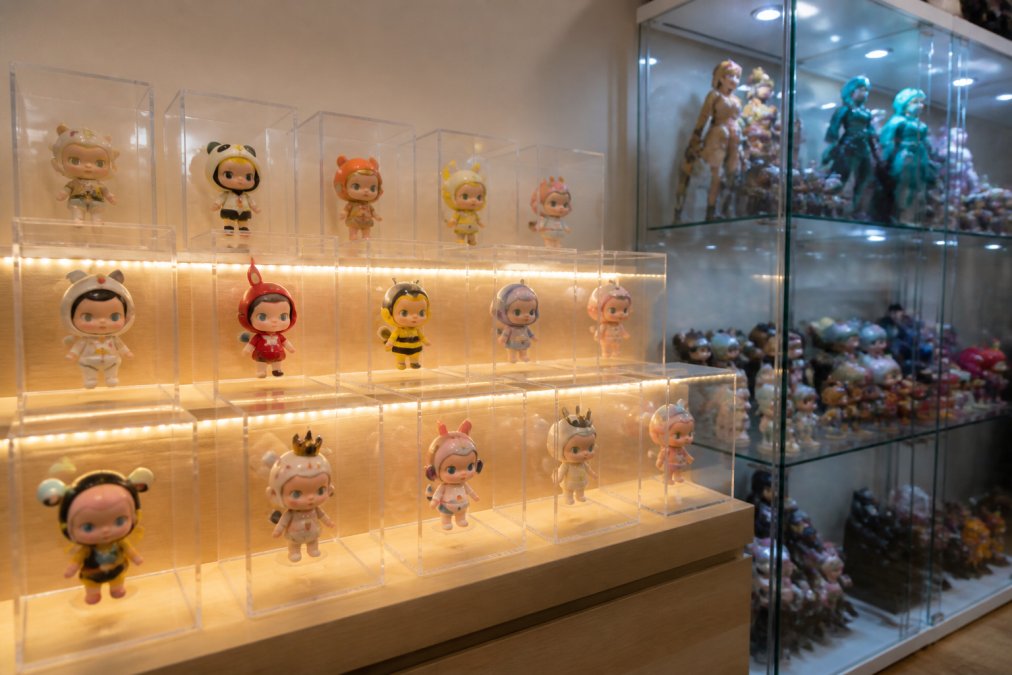
Mint condition is a maintenance habit, not a starting point. Dust, direct sunlight, and heat quietly downgrade a collection, and all three are manageable with the right setup.
When to Stop: Sustainable Collecting and Decluttering
Sustainable collecting means the hobby stays funded by money you can spare and the collection stays sized to the space you actually have. Decluttering is not quitting, it is curation, and most collectors who do it like their shelves more.
The One-In, One-Out Rule and a Shelf Budget
The single most effective habit is a hard shelf limit paired with a one-in, one-out rule. Measure your display space once, decide how many figures it holds comfortably, and treat that number as fixed. When a new figure arrives, an old one leaves, forcing every purchase to compete against what you already own, the opposite of impulse buying.
A Keep, Trade, or Sell Framework
When shelves are full, sort every figure into one of three buckets using concrete criteria, not feelings:
- Keep: figures from a series you would rebuy, figures with sentimental value, and figures that anchor a display. If you cannot name why a figure is on the shelf, it is not a keeper.
- Trade: duplicates, figures from completed sets, and figures with active demand in trading communities. Trade these for figures on your want list before you spend cash.
- Sell: figures from abandoned series, figures you have not displayed in a year, and figures whose market value has risen enough that selling funds something you want more. Check sold listings before you price, and price to move rather than to maximize.
Rotating Displays Instead of Expanding Storage
Rotation is the cheapest way to keep a collection feeling new. Store undisplayed figures in a dust-free bin with silica packets, and swap the display every few months. This keeps the shelf curated, protects figures from long-term light exposure, and removes the pressure to buy more storage. A collection that rotates feels larger than it is, exactly the point.
When to Pause the Hobby Entirely
Clear signals it is time to pause: buying boxes to chase a feeling rather than a figure, hiding purchases, spending money set aside for other obligations, or opening boxes faster than you can display them. None are moral failures, and all are common. The fix is a short pause, a budget reset, and a return to buying only the figures on your want list.
Frequently Asked Questions
Is there a secret to picking the blind box you want?
There is no reliable way to know what is inside a sealed blind box, and sellers who claim otherwise are usually guessing. Randomized packaging is the point of the format. What you can control is where you buy. Reputable retailers sell factory-sealed cases, and some let you buy a full set directly, which removes the guesswork entirely. If completing a series matters more than the surprise, buying the full set is the smarter move than chasing individual pulls.
How can you tell if a blind box figure is authentic?
Check the packaging print quality, the brand logo, and the presence of a licensing mark or holographic sticker. Authentic boxes from major brands like Bandai or Funko use sharp printing, consistent color, and sealed inner bags. Counterfeits often show blurry text, mismatched fonts, or flimsy cardboard. Buy from established retailers rather than unfamiliar marketplace sellers, and inspect the box in person when you can. If a price looks far below every other listing, treat it as a warning sign.
What is the most effective way to manage a blind box budget?
Set a monthly spending limit before you start pulling, and treat it as a hard cap, not a suggestion. Track what you spend per series so you can see which ones actually deliver value for you. Buying a full set or case is often cheaper per figure than chasing singles, and it eliminates the impulse to keep pulling after a bad streak. If you are spending more than planned, pause and reassess which series you genuinely want to complete.
How do you store and display blind box figures to maintain value?
Keep figures out of direct sunlight, which fades paint and yellows plastic over time. Dust is the bigger long-term threat, so acrylic cases or a closed cabinet protect both the figure and its resale condition. Store the original box and insert if you may resell later, since complete packaging supports a higher secondary market price. Tiered shelving and LED lighting let you show off a collection without exposing it to handling damage.