

Table of Contents
- Why Protecting Model Kit Boxes Matters
- Essential Materials for Preventing Damage to Model Kit Boxes
- Model Kit Storage Solutions That Preserve Box Condition
- Humidity Control for Model Kits and Box Preservation
- Shipping Model Kits Safely to Prevent Box Damage
- The Value of Vintage Model Kit Boxes and Preservation Impact
- Common Mistakes That Damage Model Kit Boxes
- Inventory Management for Protecting Your Collection
Preventing Damage to Model Kit Boxes: A Complete Guide
Last Updated: July 28, 2026
Why Protecting Model Kit Boxes Matters
Preventing damage to model kit boxes is critical for resale value, collector appeal, and long-term preservation. At Utopia Toys and Models, we've observed that boxes in pristine condition command 40-60% premiums over opened or damaged versions of the same kit.
The box art represents the designer's vision, the brand's historical identity, and the only protection keeping models safe from environmental damage. Once a box deteriorates from crushing, moisture, sun exposure, or poor handling, that damage is permanent. Unlike the model inside, you cannot rebuild a damaged box.
Essential Materials for Preventing Damage to Model Kit Boxes
Protective packaging options
The materials you choose determine how well your boxes survive storage, shipping, and handling.
Bubble wrap is the standard for short-term protection during transit. Use at least two layers around each box, securing with acid-free tape. However, remove it once the box reaches final storage, as it traps moisture long-term.
Kraft paper and kraft tape are superior for long-term storage because they allow boxes to breathe while protecting against dust and light. Wrap each box individually, sealing seams with kraft-based tape. This prevents box-to-box friction that causes surface wear.
Archival-grade storage materials represent the gold standard for serious collectors. Acid-free tissue paper, lignin-free boxes, and museum-quality containers prevent chemical degradation. The acid in regular cardboard slowly transfers to your model kit boxes, causing yellowing and brittleness over decades.
Foam dividers protect boxes from deformation when stacked. Cut foam sheets to fit between boxes, creating a buffer that prevents upper boxes from crushing corners and edges below. This is essential when stacking more than three boxes vertically.
Archival-grade storage materials
Archival materials differ from standard packaging because they're chemically inert and don't transfer acids or other compounds to your boxes over time.
Acid-free cardboard boxes designed for archival storage preserve boxes far longer than standard containers. These boxes meet conservation standards and are often used by museums for artifact preservation. Look for boxes rated pH-neutral or alkaline-buffered.
Mylar sleeves offer transparent protection without chemical interaction. If you want to display box art while keeping boxes protected from dust and handling, Mylar sleeves allow visibility while blocking UV light and moisture. Use 2-mil thickness minimum.
Desiccant packs placed inside storage containers absorb excess moisture and maintain humidity below 50%, preventing mold and moisture-related damage. Replace desiccants every 3-6 months, or use rechargeable silica gel that you can refresh in an oven.
Model Kit Storage Solutions That Preserve Box Condition
Proper stacking techniques
How you stack boxes determines whether they survive storage intact. Stack boxes with the largest, heaviest boxes on the bottom and progressively smaller boxes toward the top. This distributes weight evenly and prevents smaller boxes from bearing loads they weren't designed to support. Never stack more than 5-6 boxes vertically unless you use foam dividers between each layer.
Orient all boxes the same direction, typically flat, with the front artwork facing forward. This consistency prevents corners from pressing into different surfaces and reduces friction between boxes.
Leave at least 2-3 inches of space between the stack and walls or shelving edges. This gap allows air circulation around the stack, preventing moisture accumulation on the back side of boxes.
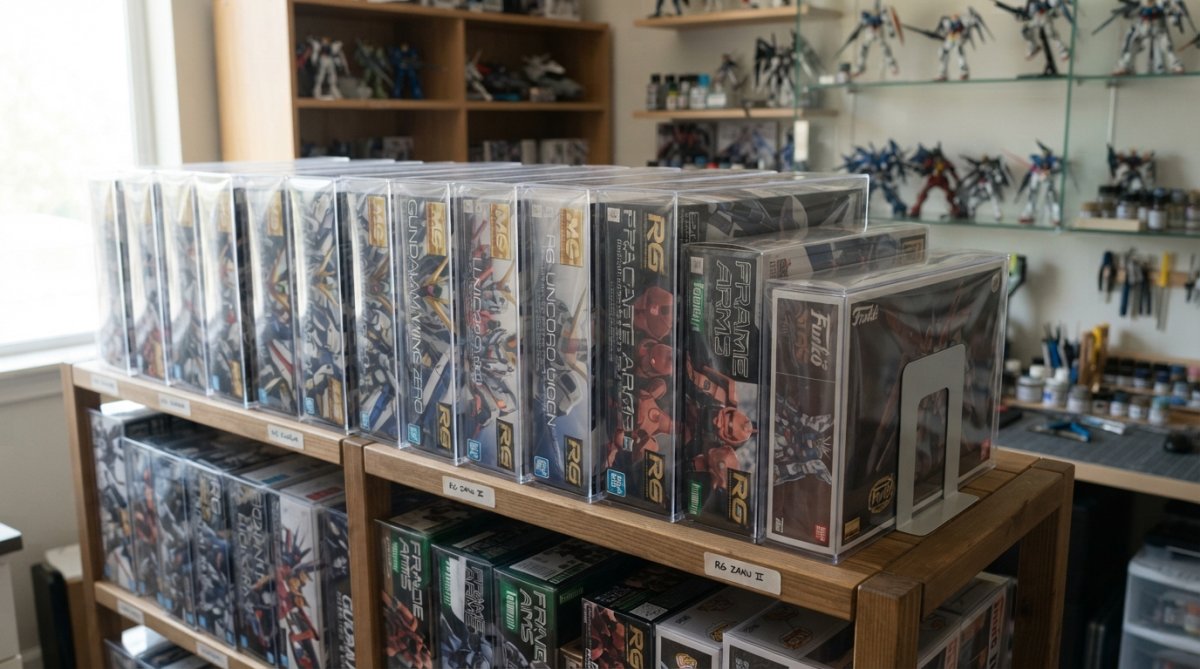
Use horizontal shelving with solid surfaces rather than wire shelving. Wire shelves create pressure points where boxes rest, potentially causing deformation.
Space optimization strategies
Strategic organization prevents damage that occurs when boxes are crammed into inadequate spaces.
Vertical shelving with adjustable height allows you to customize spacing for different box sizes. Adjustable shelves let you optimize space without forcing boxes into inadequate compartments.
Rotating storage keeps the most-displayed boxes easily accessible while protecting less-frequently-handled boxes in climate-controlled storage. Minimize handling of valuable vintage boxes by storing them in stable, protected locations.
Inventory management systems prevent damage caused by searching for boxes and handling multiple items unnecessarily. A simple spreadsheet tracking box location, condition, and acquisition date lets you know exactly where each item is.
Humidity Control for Model Kits and Box Preservation
Climate-controlled storage DIY solutions
A combination of a small dehumidifier and a basic thermostat-controlled space heater maintains temperature and humidity within acceptable ranges. This setup costs $150-300 and can protect hundreds of boxes from moisture damage.
Desiccant-based humidity control works well for enclosed spaces like plastic bins or sealed cabinets. Calcium chloride or silica gel desiccants absorb moisture without requiring electricity. Replace them monthly, or use rechargeable silica gel that you can restore by heating in an oven.
Vapor barriers prevent moisture from entering storage areas from outside walls or floors. If storing boxes in a basement or ground-level space, line the walls and floor with plastic sheeting sealed at seams with caulk.
Ventilation fans circulate air within storage spaces, preventing dead zones where moisture accumulates. A small exhaust fan running 2-3 hours daily draws humid air out of the storage area.
Monitoring temperature and moisture levels
Digital hygrometers with data logging capability record temperature and humidity readings over time, showing you the actual range your boxes experience. Many models cost under $30 and connect to smartphone apps.
Target conditions are 65-75°F and 40-50% humidity. These ranges match museum standards for paper and cardboard preservation. Humidity below 30% causes cardboard to become brittle; humidity above 60% promotes mold growth and accelerates ink fading.
Weekly monitoring during seasonal transitions reveals when your environment drifts out of acceptable ranges. Record your readings in a spreadsheet. Boxes stored in documented stable conditions also command higher prices among serious collectors.
Shipping Model Kits Safely to Prevent Box Damage
Packaging techniques for transit protection
Double-box method is the standard for valuable model kits. Place the original model kit box inside a slightly larger shipping box with at least 2 inches of padding on all sides. Use bubble wrap, foam peanuts, or kraft paper crumpled tightly to fill voids.
Reinforce corners and edges of the outer shipping box with kraft tape. Corners experience the most impact during handling, so use extra tape at these stress points.
Moisture barriers inside the shipping box protect boxes from water damage during transit. Include a desiccant pack inside the inner box to absorb any moisture that enters during shipping.
Choosing reliable shipping methods
Ground shipping is slower but gentler than air shipping. Packages spend less time being loaded and unloaded, reducing handling damage.
Signature-required delivery prevents packages from sitting unprotected on porches or in mailboxes. This also creates accountability if the package arrives damaged.
Insurance is essential for valuable model kit boxes. Declare the full value and purchase additional coverage. Keep shipping receipts and take photos of the package before and after shipment.
Track shipments in real-time to identify packages that experience unusual delays or routing problems.
The Value of Vintage Model Kit Boxes and Preservation Impact
Vintage model kit boxes represent some of the most valuable collectibles in the hobby. A pristine 1980s Gundam box can be worth 10-20 times the cost of the same kit in opened condition.
Box condition directly determines market value. A box rated in mint condition commands 50-100% premiums over boxes rated "excellent" or "very good." Proper storage prevents the minor shelf wear or slight color fading that distinguishes these grades.
Rare boxes from discontinued product lines appreciate in value over time. As new kits are released and old stock is opened, sealed boxes become scarcer. A rare vintage box that costs $50 today might be worth $200-300 in five years if stored properly.
Documentation of storage conditions increases value among serious collectors. Buyers value boxes stored in climate-controlled environments with documented humidity and temperature history.
Common Mistakes That Damage Model Kit Boxes
Storing boxes in basements or attics without climate control causes rapid degradation. These spaces experience extreme temperature and humidity swings that degrade boxes within years.
Stacking boxes without dividers causes crushing damage that accumulates over time. The weight of upper boxes creates permanent deformation on lower boxes.
Using plastic storage containers without ventilation traps moisture against boxes. Boxes stored in sealed plastic bins often develop mold within months in humid climates.
Handling boxes excessively causes surface wear, color transfer, and corner damage. Minimize handling of valuable boxes by storing them in a location where you can view them without removing them.
Exposing boxes to direct sunlight causes ink fading and cardboard yellowing. Store boxes away from windows and use UV-blocking film on any windows near storage areas.
Inventory Management for Protecting Your Collection
A simple spreadsheet tracking box location, condition, acquisition date, and estimated value provides the foundation for collection management. Include photos of each box's front and back.
Condition ratings standardized across your collection let you track how boxes change over time. Use a consistent rating system: mint, near-mint, excellent, very good, good, fair, poor.
Location codes in your spreadsheet make it easy to find boxes quickly. Assign each storage location a code and record where each box is stored.
Rotation schedules for display boxes reduce wear on frequently-handled items. Store display boxes in a climate-controlled display case rather than leaving them exposed to dust and light.
| Storage Approach | Best For | Climate Control | Handling Risk | Long-Term Cost |
|---|---|---|---|---|
| Sealed plastic bins | Short-term (under 2 years) | Poor | Moderate | Low |
| Archival cardboard boxes | Long-term (5+ years) | Good | Low | Moderate |
| Climate-controlled cabinet | Display + storage | Excellent | Low | High |
| Kraft paper wrapping | Long-term, budget-conscious | Fair | Low | Low |
| Mylar sleeves + desiccant | High-value vintage boxes | Good | Very Low | Moderate |
Protecting your model kit box collection requires understanding that boxes are irreplaceable artifacts, not just packaging. The investment in proper storage materials, climate control, and handling practices pays dividends through preserved value and the satisfaction of maintaining your collection in pristine condition.
At Utopia Toys and Models in Knoxville, we work with collectors who understand that box condition matters. Our team can help you source archival-grade storage materials, recommend climate-control solutions, and advise on proper handling techniques. Visit Utopia Toys and Models to explore storage solutions and connect with fellow collectors who share your commitment to preservation.
Frequently Asked Questions
How do you store unbuilt model kits to prevent box damage?
Store unbuilt model kits in a cool, dry environment away from direct sunlight. Use plastic bins with archival-grade tissue paper between boxes to prevent friction. Stack boxes vertically rather than horizontally when possible, and ensure shelves have adequate support to prevent crushing. Maintain humidity levels between 30-50% and avoid temperature fluctuations. Check boxes periodically for signs of moisture or pest damage.
What humidity level is best for preserving model kit boxes?
The ideal humidity range for model kit storage is 30-50%, with stable temperatures around 65-75°F. Excess humidity above 60% can cause cardboard warping, mold growth, and ink damage on box art. Low humidity below 25% makes cardboard brittle and prone to cracking. Use a digital hygrometer to monitor conditions and consider a dehumidifier or humidifier to maintain optimal levels. Avoid storing boxes in basements, attics, or areas prone to temperature swings.
Do model kit boxes increase in value, and does condition matter?
Yes, vintage and rare model kit boxes can significantly increase in value, especially for collectible Gundam and Gunpla models. Box condition directly impacts resale value, mint condition boxes command premium prices compared to damaged ones. Factors affecting value include original artwork preservation, structural integrity, and absence of creasing or water damage. Proper storage using archival materials and climate control helps maintain box condition and protect your investment over time.
What's the best way to ship model kits safely without damaging boxes?
Wrap each box individually in bubble wrap, then place in a larger shipping box with at least 2 inches of cushioning material on all sides. Use packing peanuts, foam inserts, or crumpled paper to fill gaps and prevent shifting during transit. For high-value kits, consider double-boxing for extra protection. Include a fragile sticker and request signature confirmation. Avoid crushing by marking boxes as 'fragile' and choosing carriers known for careful handling. Insurance is recommended for boxes valued over $50.
This article was written using GrandRanker