

Table of Contents
- Set a Realistic Budget for Your Anime Figure Collection
- Understand Figure Types: Scale vs. Prize Figures
- Choose Characters and Series You Genuinely Love
- Best Websites to Buy Anime Figures Authentically
- How to Spot Bootleg Anime Figures
- Display, Storage, and Maintenance Essentials
- Join Collector Communities and Track Your Wishlist
- Conclusion
Last Updated: August 15, 2026
Starting an anime figure collection can feel overwhelming without guidance. This hobby combines art appreciation, fandom passion, and smart collecting strategy. This guide from Utopia Toys and Models walks you through building a collection that brings genuine joy without breaking your budget or filling your space with regrets.
Whether you're drawn to scale figures with intricate paint jobs, affordable prize figures, or rare limited releases, the fundamentals stay the same: set realistic expectations, understand what you're buying, and protect your investment.
Set a Realistic Budget for Your Anime Figure Collection
Before you buy a single figure, determine how much you're willing to spend monthly. This prevents the trap many new collectors fall into: starting enthusiastically, then realizing they've spent far more than intended in just a few weeks.
A realistic monthly budget depends on your priorities. Some collectors spend $30-50 monthly on one or two figures. Others allocate $200+ for premium scale figures or pre-orders. Decide what matters to you before impulse collecting takes over.
Identify your collecting goals. Are you building a complete character series? Collecting figures from a single franchise? Hunting for specific scales or manufacturers like Bandai or Kotobukiya? Your goal directly impacts spending.
Factor in hidden costs beyond the figure itself. Shipping, especially for international releases or pre-orders, adds up quickly. Customs fees apply to overseas orders. Display cases, acrylic risers, LED lighting, and dust covers aren't free. A figure that costs $40 might need another $20-30 in display infrastructure.
Set a hard monthly limit and stick to it. Many experienced collectors recommend starting with $50-100 monthly until you understand your actual spending patterns. Track your spending and keep a wishlist separate from active purchases. This forces you to distinguish between "I want this" and "I'm buying this now." Prioritize: if you can only buy two figures this month, which two matter most?
Understand Figure Types: Scale vs. Prize Figures
Scale figures and prize figures are the two dominant categories in anime collecting, and they serve different purposes.
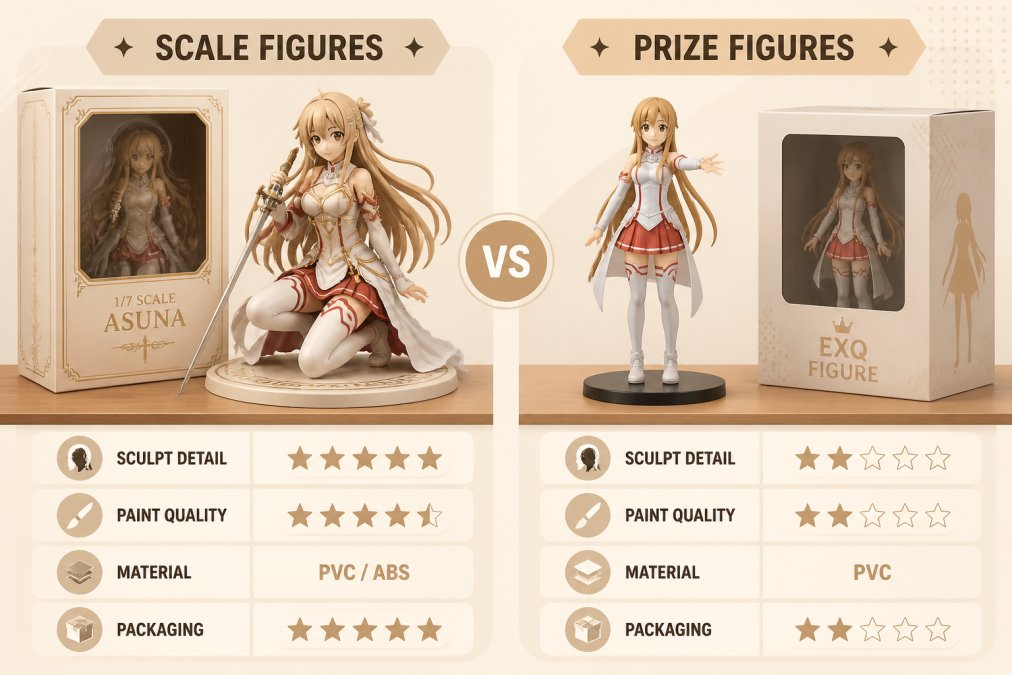
Scale Figures: Quality and Investment
A scale figure is a highly detailed collectible typically produced in limited quantities by manufacturers like Good Smile Company, Max Factory, or Alter. These figures are sculpted with precision, hand-painted with multiple layers, and packaged in premium boxes. Scale figures are measured by ratio: 1/7, 1/8, 1/10 scale refers to the figure's size relative to the character's actual height.
Scale figures command higher prices because of their quality. A typical scale figure costs between $80-200 depending on size, sculptor, and manufacturer. Limited editions or older out-of-print figures fetch significantly more on the secondary market. The trade-off is accessibility: scale figures have smaller production runs, and if you miss the pre-order window, you'll hunt the secondary market at inflated prices.
Consider scale figures your collection's centerpiece, they're investment pieces that hold or appreciate in value. They're also fragile: paint can chip and joints can crack during shipping.
Prize Figures: Affordable Entry Points
Prize figures are mass-produced collectibles distributed through Japanese arcades as game prizes. Manufacturers like Banpresto and Sega make them affordable entry points for new collectors.
Prize figures typically cost $15-40. The trade-off is obvious: less detailed sculpting, simpler paint jobs, and lower-quality materials. But they're accessible and perfect for exploring what you actually enjoy collecting. The secondary market for prize figures is forgiving, if you change your mind, you won't lose much money selling them. They're also more durable for casual handling.
Many collectors use prize figures to fill gaps while hunting for specific scale figures. If you love a character but the scale figure is out of print, a prize figure keeps that character represented in your display.
Choose Characters and Series You Genuinely Love
This is where most new collectors go wrong. They buy figures of popular characters or trending series, then realize they don't actually care about them six months later.
Collect characters and series that genuinely excite you. This is your collection. It lives in your space. If you're only buying because a figure is rare or expensive, you're collecting for the wrong reasons.
Start with one or two series you're passionate about. Deep knowledge helps you identify which characters matter most. Avoid the trap of "I should collect this because it's popular." Niche series you genuinely love produce better collections than trending anime you're forcing yourself to engage with.
Make a wishlist of 10-15 characters across your favorite series and rank them. Buy from the top of your list first. This prevents impulse purchases of lower-ranked figures. Watch for re-releases, older figures get re-released in new paint jobs or scales. Patience saves money and frustration.
Best Websites to Buy Anime Figures Authentically
Buying from legitimate retailers protects you from bootlegs and ensures timely delivery.
Utopia Toys and Models specializes in authentic collectibles from brands like Bandai, Funko, and Kotobukiya. Their inventory is readily available for shipping, with transparent status indicators for pre-orders and arriving items. Their curated selection focuses on quality releases.
Japanese import sites like AmiAmi, Good Smile Company's official shop, and Max Factory's store offer direct access to releases before they hit secondary markets. These sites require patience with international shipping and potential customs fees, but prices are often lower than domestic retailers. Pre-order windows close quickly, so attention is required.
Domestic retailers like Utopia Toys and Models handle import logistics for you. You pay slightly more than Japanese import prices, but you avoid customs complications and shipping delays.
Avoid marketplaces like eBay and Amazon for new figures unless the seller is a verified retailer. Private sellers often unknowingly sell bootlegs. The Federal Trade Commission's guidance on online shopping safety recommends verifying seller credentials and checking return policies before purchasing collectibles.
Secondary market sites like Mercari Japan and Yahoo Auctions work if you're experienced enough to spot bootlegs. New collectors should avoid these until they can confidently authenticate figures.
How to Spot Bootleg Anime Figures
Bootlegs are counterfeit figures that mimic legitimate products. They're cheaper, lower quality, and fund operations that harm legitimate manufacturers. Learning to identify bootlegs protects your investment and supports the artists and sculptors creating original work.
Red Flags in Packaging and Labeling
Legitimate figures come in printed boxes with clear logos, consistent font sizing, and proper color reproduction. Examine the box closely. Are the logos crisp and properly aligned? Do the colors match official product images? Bootleg boxes often have slightly off colors, blurry printing, or inconsistent font weights.
Check for spelling errors or grammatical mistakes on the packaging. Legitimate manufacturers employ quality control. Verify the barcode and product codes by scanning if possible. The box should feel substantial, bootleg boxes use cheaper cardboard that feels thin or flimsy.
Quality Indicators on the Figure Itself
Hold the figure in your hands. Bootlegs feel different. The plastic is often cheaper PVC or ABS that feels slightly waxy or has an odd sheen. Examine the paint job closely. Legitimate scale figures have clean, precise paint lines. Bootlegs have paint bleeding, uneven coverage, and visible brush strokes. Look at the eyes especially, legitimate figures have crisp, detailed eye painting.
Check for mold lines and seams. Legitimate figures have minimal visible seams. Bootlegs often have rough, poorly finished seam lines. Inspect joints and articulation points, they should move smoothly. Look at the base or stand. Legitimate figures have clean, well-finished bases with proper branding.
Compare the figure directly to official product photos from the manufacturer or legitimate retailer. Bootlegs often have noticeably different proportions, colors, or details. Price is a signal: if a figure is selling for 40% below market rate from an unknown seller, it's probably a bootleg.
Display, Storage, and Maintenance Essentials
Your figures are investments. Proper display and storage protect them from damage and degradation.
Protecting Against UV Damage and Dust
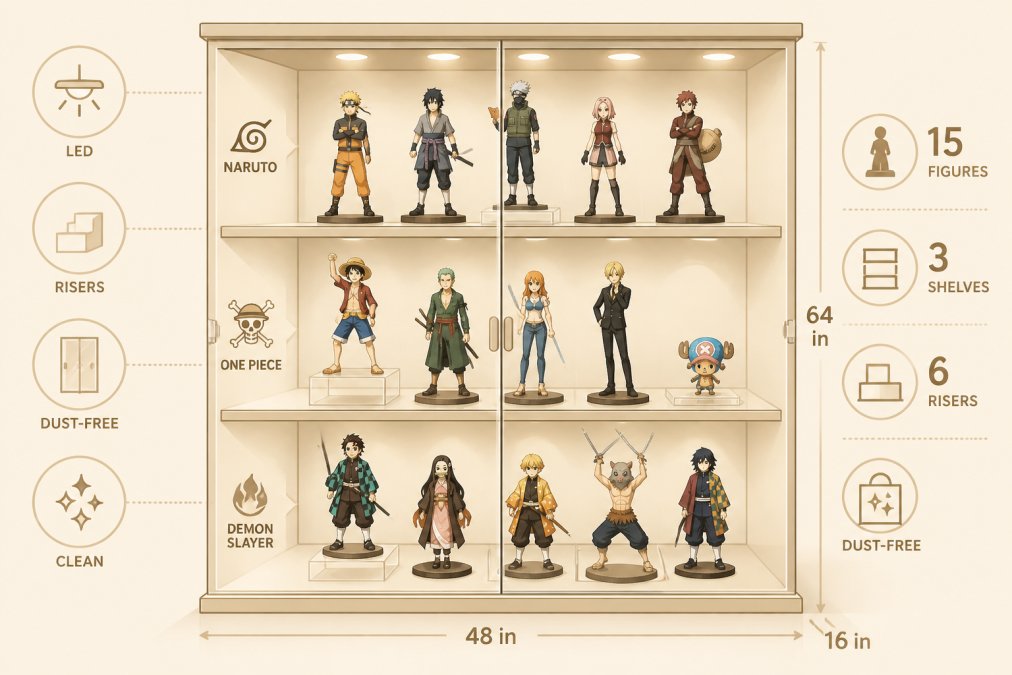
Sunlight damages figures. UV rays fade paint and can cause plasticizer breakdown in PVC figures, leading to yellowing and brittleness. Never display figures in direct sunlight. Use UV-filtering glass or curtains to minimize exposure.
Dust settles on figures and is difficult to remove without damaging paint. Display cases with glass doors protect figures from dust while allowing visibility. A basic glass display case costs $50-150 and pays for itself by extending figure lifespan. LED lighting designed for display cases provides visibility without UV damage.
Store figures you're not displaying in cool, dry conditions. Avoid basements with humidity or attics with temperature extremes. A climate-controlled closet or cabinet is ideal.
Organizing Your Collection Space
Organize by series, character, or scale. Use acrylic risers to create depth in your display. Invest in proper shelving, cheap shelves sag under weight. Label your collection using a spreadsheet or collecting app to track figures, purchase dates, prices, and condition.
Rotate figures occasionally to extend the lifespan of figures not in direct light. Clean figures carefully using a soft brush or compressed air. Never use water or solvents on painted figures.
Join Collector Communities and Track Your Wishlist
Collecting is more enjoyable with community. Online forums, Discord servers, and social media groups connect collectors who share your interests.
Communities help you learn faster. Experienced collectors answer authentication questions, recommend retailers, and share collecting strategies. Participate in trading communities where collectors trade duplicates or figures that no longer fit their collection direction.
Use collecting databases like MyFigureCollection to catalog your collection and track wishlist items. Follow manufacturer social media accounts for early knowledge of upcoming figures. Create a wishlist separate from active purchases, prioritized by importance and budget.
Attend anime conventions or local collecting meetups if available. Meeting collectors in person strengthens community bonds and sometimes offers opportunities to trade or purchase figures directly.
Building an anime figure collection is a rewarding hobby that combines artistry, fandom, and smart collecting strategy. The foundation is straightforward: set a budget you can sustain, understand what you're buying, and protect your figures through proper display and maintenance. Utopia Toys and Models makes this easier by offering authentic figures from trusted manufacturers with reliable shipping and transparent inventory information. Start with characters you genuinely love, learn to authenticate figures, and join communities that share your passion. Your collection will grow intentionally and bring lasting joy.
Frequently Asked Questions
How do I start an anime figure collection on a budget?
Begin with prize figures and lower-scale options to build foundational collecting habits without heavy spending. Set a monthly budget ($30-50 works for many beginners) and stick to it. Focus on one series or character initially rather than collecting across multiple franchises. Buy from authorized retailers to avoid overpaying for counterfeits. As you learn what you genuinely enjoy, you can invest in higher-quality scale figures later. Many collectors find that starting small prevents impulse spending and helps you develop curation skills before scaling up.
How can I tell if an anime figure is a bootleg?
Authentic figures have sharp paint lines, consistent color saturation, and proper manufacturer markings on the box and figure base. Bootlegs typically show uneven paint application, rough seams, and misspelled text on packaging. Check the sculptor's name and manufacturer details against official databases. Examine the box quality, authentic packaging uses high-grade cardboard with crisp printing, while fakes often use flimsy materials. Buy only from authorized retailers to guarantee authenticity. If a deal seems too good to be true, it likely is; counterfeit figures are often priced 30-50% below market rates.
Is it worth keeping anime figure boxes for resale value?
Yes, keeping original boxes significantly impacts resale value. Mint in box (MIB) figures sell for 20-40% more than loose figures on the secondary market. The box protects against UV damage and plasticizer degradation, extending the figure's lifespan. Store boxes in a cool, dry place away from humidity and direct sunlight. If you plan to display loose figures, keep boxes in archival-quality storage containers. For limited editions and rare releases, box retention becomes even more critical, collectors actively seek complete, unopened sets.
What's the difference between scale and prize figures?
Scale figures (like nendoroids and figmas) are produced in limited quantities by manufacturers like Kotobukiya and Good Smile Company, featuring detailed sculpts, multiple points of articulation, and premium paint jobs. They typically cost $60-150+ and hold resale value well. Prize figures are mass-produced carnival/arcade prizes with fixed poses, simpler paint applications, and lower price points ($10-30). Scale figures are investments for serious collectors; prize figures work as affordable entry points or casual display pieces. Understanding this distinction helps you budget appropriately and set realistic expectations for quality and durability.
This article was written using GrandRanker