

Table of Contents
- How to Safely Ship Collectible Figures: Essential Supplies and Techniques
- Collectible Shipping Supplies: What You'll Need
- Step-by-Step Packing Process for Loose and Carded Figures
- Shipping Fragile Items Tips: Securing Delicate Parts
- International Shipping Collectibles: Documentation and Customs
- Shipping Insurance for Collectibles: Protection and Claims
- Common Shipping Mistakes and How to Avoid Them
- Eco-Friendly Packaging Alternatives for Responsible Collectors
How to Safely Ship Collectible Figures: A Complete Guide
Last Updated: July 27, 2026
Learning how to safely ship collectible figures requires more than just throwing your prized possession into a box. The difference between a figure arriving in pristine condition and one showing up damaged often comes down to preparation, materials, and technique. At Utopia Toys and Models, we've handled thousands of collectible shipments, and we've learned exactly what separates successful deliveries from costly disasters.
A single mishandled shipment can mean losing hundreds of dollars on a figure you've been hunting for months. Understanding how to safely ship collectible figures is essential insurance for your collection.
Why Proper Shipping Matters for Collectors
Collectible figures are investments that often appreciate in value over time. A figure in mint condition commands significantly higher prices than one showing signs of wear, creasing, or damage. The shipping environment is hostile to collectibles, boxes get dropped, stacked under heavy items, exposed to moisture, and subjected to temperature fluctuations. Without proper protection, even a short-distance shipment can result in bent packaging, loose joints, or complete breakage.
Collectors who invest time in proper shipping techniques protect their investments and build trust with buyers or recipients.
Collectible Shipping Supplies: What You'll Need
Before you pack a single figure, gather the right materials: protective wrapping, cushioning, and containment.
Protective Materials and Padding Options
Bubble wrap remains the gold standard for collectible protection. For loose action figures, wrap at least two layers around the body, ensuring joints and protruding parts receive extra attention.
Packing peanuts provide void fill, preventing your figure from shifting during transit. Foam sheets are easier to control and compress predictably. Tissue paper protects paint and decals from direct contact with bubble wrap, which can leave imprints on glossy finishes. For carded figures, wrap the figure first in acid-free tissue paper before applying bubble wrap.
Kraft tape reinforces box seams better than standard packing tape, which can fail under pressure or temperature changes. Consider eco-friendly alternatives like biodegradable packing peanuts made from cornstarch, which work identically to polystyrene versions but break down naturally.
Box Selection and Sizing
Use corrugated boxes with double-wall construction; single-wall boxes compress too easily under stacking pressure. The box should have roughly 2-3 inches of space on all sides of your packaged figure after padding is in place.
For standard action figures, a 6x6x6 inch box usually works well. For larger collectibles or multiple figures, calculate the dimensions of your figure plus protective wrapping, then add 4-6 inches total. Test box integrity before packing; a damaged box won't protect your shipment.
| Box Size | Best For | Padding Needed |
|---|---|---|
| 4x4x4 inches | Single small figures, loose accessories | 1-2 inches per side |
| 6x6x6 inches | Standard action figures, Funko Pops | 2-3 inches per side |
| 8x8x8 inches | Large figures, multiple figures, Gundam kits | 2-3 inches per side |
| 10x10x10+ inches | High-value items, double boxing | 3-4 inches per side |
Step-by-Step Packing Process for Loose and Carded Figures
The packing process separates amateur shippers from professionals. Each step builds on the previous one, creating layers of protection.
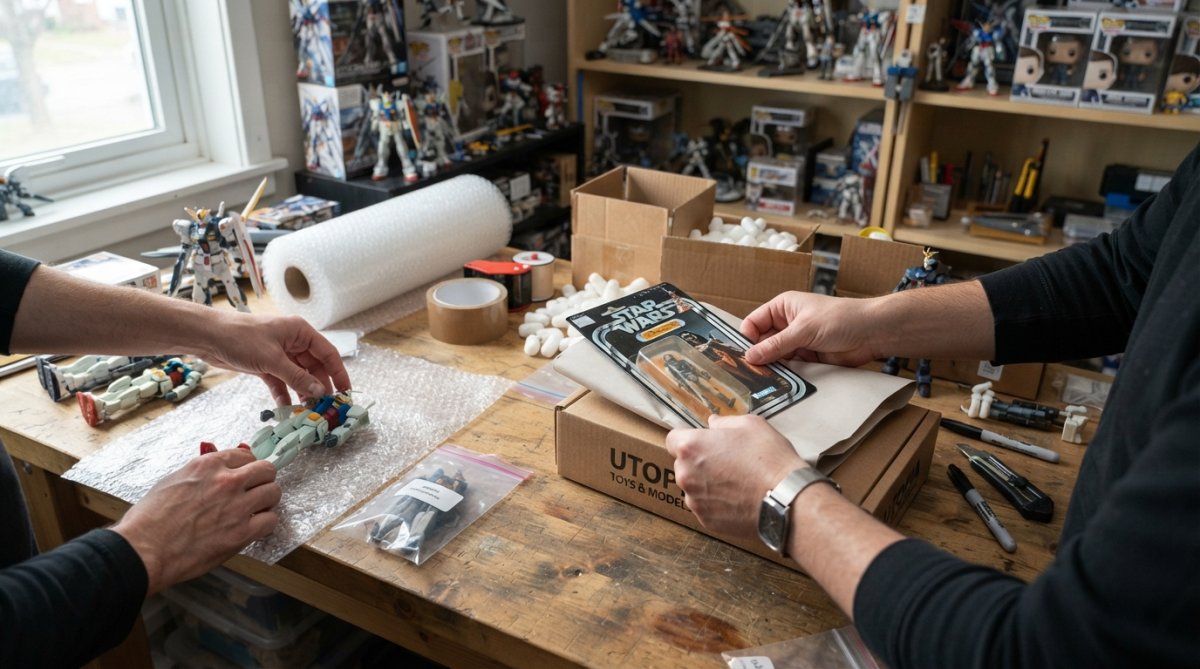
Wrapping Techniques for Loose Action Figures
Start with a clean workspace to prevent dust and debris from scratching paint. Lay out your figure and gather all materials within arm's reach.
For loose figures, wrap the body first by placing it on acid-free tissue paper and securing gently with tape. Apply the first layer of bubble wrap with bubbles facing inward to cushion impact. Wrap around the torso, then wrap each limb individually, allowing extra wrap at joints where figures are most vulnerable. For figures with loose parts, weapons, or interchangeable hands, wrap each piece separately in tissue paper and bubble wrap, then place them in a labeled plastic bag.
Two to three layers of bubble wrap provide the shock absorption necessary for transit. If your figure feels firm when you gently squeeze the wrapped package, you've achieved adequate protection.
Protecting Carded and Boxed Figures
Mint in box (MIB) figures require different handling because the packaging itself is part of the collectible. Never remove a figure from its card or box unless absolutely necessary.
Wrap the entire carded figure in acid-free tissue paper first, protecting the card from direct contact with bubble wrap. Apply two layers of bubble wrap around the card, with bubbles facing inward. Pay special attention to the corners, which experience the most impact during shipping. Apply kraft tape along all edges of the card or box, creating a frame that prevents bending.
Double Boxing Method for High-Value Items
Double boxing provides maximum protection for collectibles worth $100 or more. Start with your primary box containing your figure, packed as described above with adequate padding on all sides. Seal this box completely with kraft tape, reinforcing all seams.
Place this sealed box into a larger second box with at least 2-3 inches of space on all sides. Fill this space entirely with packing peanuts or foam sheets. Add a layer of packing peanuts on the bottom before placing the inner box, then fill around the sides and top. Seal the outer box with kraft tape on all seams, with "FRAGILE" labels on multiple sides.
Shipping Fragile Items Tips: Securing Delicate Parts
Collectible figures often have delicate elements that require specific handling. Loose joints, protruding accessories, and intricate paint details all need individual attention.
Stabilizing Loose Joints and Accessories
Figures with ball-joint articulation or loose limbs are particularly vulnerable during shipping. The vibration and movement during transit can cause joints to separate or move, potentially scratching paint where parts connect.
For figures with loose joints, consider using museum putty or removable adhesive to temporarily stabilize them during shipping. Apply a tiny amount to joints before wrapping, just enough to prevent movement but not so much that it damages paint when removed. Interchangeable parts like hands, weapons, or heads should never be packed loose inside the box. Each piece should be wrapped individually in tissue paper and bubble wrap, then placed in a labeled plastic bag.
Climate-Controlled Shipping for Temperature-Sensitive Collectibles
Temperature fluctuations can damage certain collectibles, particularly those with paint applications sensitive to heat or cold. Vinyl figures, resin models, and figures with glued components can experience paint cracking or adhesive failure when exposed to extreme temperatures.
For temperature-sensitive figures, request climate-controlled shipping options. FedEx and UPS offer temperature-controlled services that maintain packages within specified temperature ranges, typically 60-80°F. Alternatively, use insulated shipping boxes with phase-change materials (PCM packs) that absorb heat when temperatures rise and release it when temperatures drop, maintaining relatively stable conditions inside the box.
Document the shipping method you used when sending a collectible. If the figure arrives damaged and temperature sensitivity might be a factor, this documentation helps support insurance claims.
International Shipping Collectibles: Documentation and Customs
Shipping collectibles across borders introduces additional complexity. International carriers require specific documentation, and customs regulations vary by destination country.
Customs Declaration and High-Value Item Documentation
Every international shipment requires a customs declaration form listing contents, their value, and their purpose. Accuracy is essential; undervaluing items to reduce customs duties is illegal and can result in package seizure.
For high-value collectibles, declare the actual market value using recent comparable sales on secondary markets (eBay, Mercari, etc.) to establish fair market value. Provide detailed item descriptions on customs forms. Instead of writing "toy," write "collectible action figure, Bandai Gundam RX-78-2, 1/144 scale model kit." Specific descriptions help customs officials process shipments faster.
Shipping Insurance for Collectibles: Protection and Claims
Shipping insurance is non-negotiable for valuable collectibles. Standard carrier liability is often insufficient to cover the actual value of high-end figures.
Choosing Coverage Levels and Carriers
USPS Priority Mail includes limited coverage ($100) at no additional cost. For figures worth more than $100, purchase additional insurance. USPS offers declared value coverage up to $5,000 for a reasonable fee. UPS provides up to $300 coverage on ground shipments and $500 on overnight shipments at no extra charge. For extremely high-value collectibles ($1,000+), consider specialized collectibles shipping insurance through third-party providers.
Always declare the full value of your figure for insurance purposes. Under-insuring to save on premiums means you won't be fully compensated if the figure is damaged or lost.
Documentation for Insurance Claims
If your figure arrives damaged, document everything immediately. Take clear photos of the damaged figure, the packaging, and any visible shipping damage to the box. File a claim with the carrier within the timeframe specified in their terms (typically 30 days for USPS, 15 days for UPS/FedEx). Provide the tracking number, declared value, photos of damage, and a written description. Keep all packaging materials until the claim is resolved, as carriers often request to inspect the packaging.
Common Shipping Mistakes and How to Avoid Them
Most shipping failures result from predictable mistakes. Using insufficient box cushioning is the most common error. Budget for adequate materials, typically $3-5 per shipment for a standard figure. Overpacking boxes until they're difficult to seal creates structural weakness; use appropriately sized boxes instead.
Neglecting to reinforce seams with kraft tape is another frequent mistake. Always reinforce all seams with kraft tape. Failing to protect paint and decals from direct contact with bubble wrap causes cosmetic damage that doesn't qualify for insurance claims. Always use tissue paper or kraft paper as a barrier.
Avoid shipping during extreme weather seasons unless using climate-controlled services. Spring and fall typically offer the most stable shipping conditions. On international shipments, undervaluing figures for customs purposes can result in package seizure.
Eco-Friendly Packaging Alternatives for Responsible Collectors
Environmental responsibility doesn't require sacrificing protection. Biodegradable packing peanuts made from cornstarch dissolve in water and decompose naturally while performing identically to polystyrene peanuts. Recycled paper padding and kraft paper void fill provide cushioning without plastic. Crinkle fill made from recycled paper provides excellent void fill and is completely recyclable.
Consider reusing packaging materials from shipments you receive. Bubble wrap, boxes, and packing materials can be reused multiple times before disposal, reducing both environmental impact and shipping costs.
Shipping collectible figures safely requires intentional preparation and quality materials, but the investment pays dividends in protected collectibles and satisfied recipients. Whether you're a casual collector shipping a figure to a friend or a serious hobbyist managing multiple shipments, the techniques covered here will keep your prized possessions secure during transit. Utopia Toys and Models specializes in shipping high-value collectibles from Bandai, Funko, Kotobukiya, and other premium brands; our team uses these exact methods to ensure every figure arrives in perfect condition. Start with quality boxes, adequate padding, and proper documentation, and you'll build a reputation for reliable shipments that collectors trust.
Frequently Asked Questions
What are the best collectible shipping supplies for protecting valuable figures?
Essential collectible shipping supplies include bubble wrap for shock absorption, packing peanuts or air pillows for void fill, sturdy corrugated boxes, packing tape for reinforcement, and fragile labels. For loose figures, use tissue paper or kraft paper as an inner layer before bubble wrap. For carded figures, rigid mailers or flat boxes prevent bending. High-value items benefit from double boxing with extra padding between layers. Consider adding desiccant packets if shipping in humid climates to protect paint and finish.
Should I use double boxing for all collectible figures, or only valuable ones?
Double boxing is recommended for figures exceeding $50 in value, mint in box (MIB) items, or collectibles with delicate handmade parts. The method involves placing the wrapped figure in a smaller box, then placing that box in a larger outer box with 2-3 inches of padding on all sides. This extra shock absorption significantly reduces shipping damage risk. Standard figures can ship safely in single boxes with adequate bubble wrap and void fill, but double boxing provides insurance-level protection for premium collectibles.
How do I document high-value collectibles for international shipping and customs?
For international shipping collectibles, photograph each item before packing and keep receipts or appraisals showing value. Complete customs declarations accurately, undervaluing items can result in seizure or legal issues. List item description, country of origin, and declared value on the customs form. For figures exceeding $500, consider obtaining a professional appraisal. Keep tracking numbers and shipping labels with your documentation. This creates a complete claim file if damage occurs and ensures smooth customs clearance.
What should I do if my collectible figure arrives damaged despite proper packing?
Document damage immediately with photos showing the packaging condition and the figure's damage. File a claim with your shipping carrier within the required timeframe (typically 15-30 days). Include your tracking number, original receipt, photos of packaging, and photos of the damage. If you purchased shipping insurance, submit a separate claim with the insurance provider. Contact the seller or retailer with documentation, many reputable sellers like Utopia Toys and Models will work to resolve issues quickly. Keep all packaging materials until the claim is resolved.
This article was written using GrandRanker