

Table of Contents
- Why Figures Yellow: Understanding Plastic Degradation
- UV Protection for Figures: Your First Defense
- Best Display Cases for Figures: Storage Solutions That Work
- Environmental Factors: Humidity, Temperature, and Ambient Light
- Anime Figure Care: Cleaning and Maintenance Routines
- Step-by-Step: How to Prevent Yellowing on Figures
- Restoration Techniques for Yellowed Figures
- Common Mistakes to Avoid
Last Updated: July 29, 2026
Understanding why figures yellow is the first step toward preserving your collectible collection. At Utopia Toys and Models, we've helped countless collectors protect their prized anime figures, action figures, and model kits from yellowing that degrades even the most carefully curated displays. Learning how to prevent yellowing on figures requires understanding the chemistry behind plastic degradation and implementing practical protection strategies.
Yellowing happens because plastic isn't inert. It changes over time, especially when exposed to light, heat, and air. The good news: most yellowing is preventable if you act now.
Why Figures Yellow: Understanding Plastic Degradation
Most collectible figures use PVC (polyvinyl chloride) or ABS (acrylonitrile butadiene styrene) plastic compounds. Both contain plasticizers, chemical additives that make plastic flexible during manufacturing. These plasticizers migrate out of the plastic over decades, leaving the material brittle and discolored. This process accelerates when figures are exposed to UV radiation, heat, and oxygen.
Oxidation is the enemy. When oxygen interacts with exposed plastic surfaces, it breaks down the polymer chains, creating yellowish-brown discoloration. Brominated flame retardants, which manufacturers add to meet fire safety standards, also contribute to yellowing. PVC figures yellow more aggressively than ABS because PVC contains higher concentrations of plasticizers and flame retardants.
Some figures show visible yellowing within 5-10 years; others remain stable for 20 years or longer. The difference comes down to storage conditions, material composition, and manufacturing quality. Figures stored in dark, cool, humidity-controlled environments age far slower than those displayed under fluorescent lights or near windows.
UV Protection for Figures: Your First Defense
UV radiation is the primary accelerant of plastic yellowing. Sunlight contains ultraviolet rays that penetrate plastic and trigger oxidation. Even indirect sunlight contains enough UV to cause damage over months and years.
Preventing UV exposure is non-negotiable. Never display figures in direct sunlight. Avoid placing displays on windowsills or shelves where afternoon light reaches them. Even a few hours of direct sun per week will cause noticeable yellowing within 12-24 months.
Fluorescent and LED lights emit some UV, though far less than sunlight. Standard household LED bulbs emit minimal UV. However, specialized "daylight" LEDs and some fluorescent shop lights do produce UV radiation. If you're building a display case lighting system, choose warm-white LEDs (2700K color temperature) or verify that your bulbs are UV-free.
Best Display Cases for Figures: Storage Solutions That Work
Choosing the right display case makes the difference between figures that yellow in five years and figures that remain pristine for decades. The ideal case provides three things: UV blocking, environmental control, and visibility.
Plexiglass and polycarbonate are your best materials. Both block most UV radiation when they're acrylic or polycarbonate-based (verify the product specs, as not all clear plastics block UV equally). Glass is superior to plastic for UV blocking but adds weight and fragility. Acrylic display cases are widely available and reasonably priced.
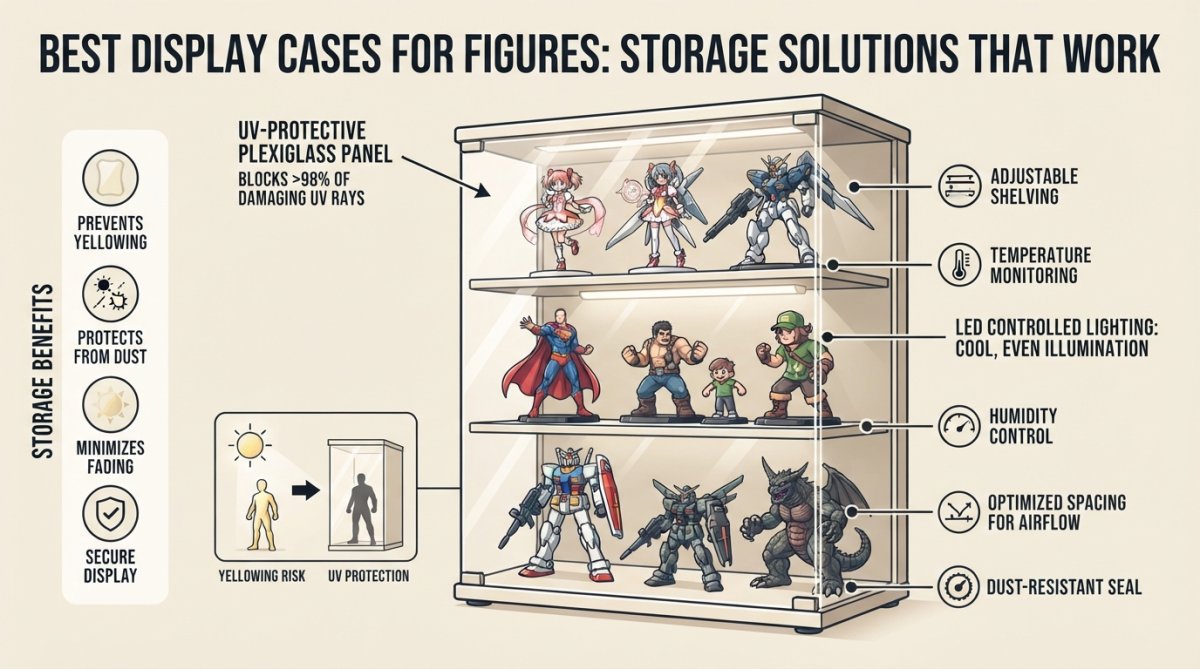
Look for cases that advertise "UV-blocking" or "UV-protected" explicitly. Some cases have UV-blocking films applied to interior surfaces; others use UV-blocking acrylic, which is more expensive but maintains perfect transparency.
Enclosed cases are superior to open shelving. Open shelves expose figures to ambient light continuously. An enclosed case reduces light exposure dramatically and protects against dust, smoke, and humidity fluctuations. Check that the case closes tightly and that any ventilation holes are minimal.
Environmental control inside the case is your second line of defense. Use small silica gel packs or a dehumidifier to maintain humidity between 30-50%. Temperature stability matters too, avoid cases near heating vents, air conditioning units, or windows where temperature fluctuates daily. A stable, cool environment (65-72°F) is ideal.
Environmental Factors: Humidity, Temperature, and Ambient Light
Beyond UV, three environmental factors determine how quickly your figures age: humidity, temperature, and ambient light quality.
Humidity control is often overlooked. High humidity (above 60%) promotes oxidation and can cause paint to bubble or flake. Low humidity (below 20%) makes plastic brittle and can cause paint to crack. The sweet spot is 40-50% relative humidity. Measure humidity with an inexpensive digital hygrometer and place it inside your display case. If humidity climbs above 55%, add silica gel packs or a small electric dehumidifier.
Temperature stability prevents stress on plastic. Rapid temperature changes cause plastic to expand and contract, creating microscopic cracks where oxidation accelerates. Keep your display area at a consistent temperature. Avoid basements and attics. A climate-controlled closet or interior room is ideal.
Ambient light accumulates damage even when it's not bright. A figure in a dimly lit room for eight hours a day receives more total light exposure than one in bright light for two hours. Reduce ambient light exposure by choosing darker display locations or using blackout curtains around your display area.
Smoke damage is a silent killer. Cigarette and cooking smoke contain oxidizing compounds that accelerate plastic yellowing. If anyone smokes in your home, move displays to a separate, sealed room.
Anime Figure Care: Cleaning and Maintenance Routines
Regular maintenance prevents dust accumulation and catches early discoloration before it spreads. A simple cleaning routine takes minutes and extends figure lifespan significantly.
Safe surface cleaning requires gentle technique. Use a soft microfiber cloth, never paper towels or rough fabrics, which scratch plastic. Dampen the cloth slightly with distilled water (tap water leaves mineral deposits). Wipe gently in one direction, supporting the figure from behind.
For stubborn dust in crevices, use a soft-bristled toothbrush or specialized electronics cleaning brush. Never use soap, alcohol, or chemical cleaners on figures. These dissolve paint and can damage the plastic itself. Distilled water is sufficient for 99% of cleaning needs.
Inspect figures monthly for early signs of yellowing. Look at the underside, back, and areas that receive indirect light. Early detection lets you move the figure to a better location before discoloration spreads visibly. Document the condition with photos taken under consistent lighting to track changes over time.
Handle figures minimally. Every time you pick up a figure, you risk dropping it or stressing joints. Store figures in a position where you rarely need to move them.
Step-by-Step: How to Prevent Yellowing on Figures
Implementing how to prevent yellowing on figures requires a systematic approach. Follow these steps in order. The process takes a few hours initially, then requires only monthly maintenance.
Step 1: Assess Your Current Display Setup
Examine where your figures are currently stored. How much direct light do they receive daily? Is the location near a heat source? What's the humidity level? Is there smoke in the environment?
Use a light meter app on your phone to measure illumination levels. Figures in darkness register near zero. Figures in indirect room light typically show 50-200 lux. Figures in direct sunlight exceed 10,000 lux. Document the current condition of your figures with photos under consistent lighting.
Step 2: Implement UV-Blocking and Light Control
If figures are currently on open shelving, move them to an enclosed display case with UV-blocking acrylic or glass. This is the single most impactful change you can make. If you must use open shelving, install UV-blocking film on nearby windows and switch to warm-white LEDs (2700K) for lighting.
Step 3: Optimize Storage Environment
Purchase a digital hygrometer and place it in your display area. Monitor humidity for one week to establish baseline levels. If humidity consistently exceeds 55%, add silica gel packs or a small dehumidifier. Ensure the display location maintains stable temperature year-round. Avoid basements, attics, and rooms near heating vents or air conditioning units.
Step 4: Establish a Cleaning Schedule
Set a monthly reminder to inspect figures visually. Check for dust accumulation and early yellowing signs. Every three months, gently clean figures using a damp microfiber cloth and distilled water. Document condition with photos every six months.
| Task | Frequency | Time Required | What to Monitor |
|---|---|---|---|
| Visual inspection | Monthly | 10 minutes | Early yellowing, dust, paint condition |
| Gentle cleaning | Quarterly | 20 minutes | Dust removal, surface condition |
| Photo documentation | Every 6 months | 15 minutes | Yellowing progression, discoloration changes |
| Humidity check | Monthly | 2 minutes | Humidity level, silica gel saturation |
| Temperature verification | Monthly | 2 minutes | Stable conditions, heat source proximity |
Restoration Techniques for Yellowed Figures
If your figures have already yellowed, several restoration approaches exist. Not all are safe, and some carry significant risk.
Hydrogen peroxide treatment, also called retro-brighting, is the most common DIY restoration method. The process involves exposing yellowed plastic to hydrogen peroxide (typically 3% or 6% concentration) under UV light. The hydrogen peroxide oxidizes the yellowed compounds, bleaching them back to the original color.
Test patch protocol is mandatory. Before treating an entire figure, test the method on a hidden area, the back, underside, or a removable part. Apply hydrogen peroxide, expose it to UV light for 24-48 hours, and observe the results. If the test area shows improvement without damage, you can proceed cautiously with the full figure.
Watch for these warning signs: paint lifting, plastic becoming brittle, discoloration worsening, or the plastic developing a chalky texture. If any occur, stop immediately.
When to avoid DIY restoration: If your figure has painted details, avoid hydrogen peroxide treatment. The chemical can lift paint or cause it to fade unevenly. Figures with glued parts may suffer joint failure. Rare or irreplaceable figures should never be treated, the risk of permanent damage outweighs the benefit of removing yellowing.
Common Mistakes to Avoid
Most collectors make the same preventable errors. Learning from others' mistakes saves your collection.
Mistake 1: Displaying figures on open shelves under room lighting. Cumulative exposure to ambient light causes yellowing over years. Solution: Use enclosed display cases with UV-blocking materials.
Mistake 2: Storing figures in basements or attics. These locations experience seasonal temperature and humidity swings that accelerate degradation. Solution: Store figures in interior rooms with stable temperature and humidity.
Mistake 3: Using standard acrylic cases without UV blocking. Not all clear acrylic blocks UV equally. Solution: Verify that your case material explicitly blocks UV radiation.
Mistake 4: Neglecting humidity control. High humidity accelerates oxidation and promotes mold. Low humidity makes plastic brittle. Solution: Monitor humidity monthly and maintain 40-50% relative humidity.
Mistake 5: Handling figures frequently. Each time you pick up a figure, you risk dropping it or stressing joints. Solution: Store figures in a position where you rarely need to move them.
Mistake 6: Attempting hydrogen peroxide treatment on painted figures. The chemical can lift paint or cause uneven fading. Solution: Never use hydrogen peroxide on figures with detailed paint work.
Mistake 7: Storing figures in sealed bags or wrapping. This traps moisture and creates an environment where yellowing accelerates. Solution: Store figures in breathable containers or open shelving within an enclosed case.
According to research on plastic polymer degradation, the combination of UV exposure and high temperature increases yellowing rates exponentially. A figure exposed to both conditions simultaneously yellows 10-15 times faster than one stored in darkness at cool temperatures. This underscores why prevention through proper storage is critical.
Protecting your collectible figures from yellowing requires understanding the chemistry of plastic degradation and implementing practical prevention strategies. UV-blocking display cases, environmental control, and regular maintenance keep figures pristine for decades.
At Utopia Toys and Models, we work with collectors who understand that prevention is far easier than restoration. Whether you're collecting anime figures from brands like Bandai and Kotobukiya or building a Gundam model kit collection, proper storage protects your investment. Start by assessing your current display setup, move figures to a UV-blocking enclosed case, and monitor humidity and temperature monthly. These steps take minimal effort but deliver dramatic results. Your collection is worth protecting, implement these strategies today and preserve your figures for the next 20 years.
Frequently Asked Questions
Why do plastic figures turn yellow?
Figures yellow due to a combination of factors: PVC and ABS plastic naturally degrade when exposed to UV radiation and oxygen. Plasticizer migration, where chemical compounds leach from the plastic, accelerates discoloration. Brominated flame retardants and oxidation reactions cause the polymer structure to break down over time. Environmental factors like heat, humidity, and smoke exposure speed up this degradation process significantly.
How does UV protection for figures prevent yellowing?
UV radiation is one of the primary triggers for plastic oxidation and discoloration. UV-blocking display cases, plexiglass covers, and UV-filtering films create a protective barrier that absorbs or reflects harmful ultraviolet light before it reaches your figures. By reducing UV exposure, you slow the chemical degradation process dramatically. Combining UV protection with reduced ambient light exposure provides the most effective prevention strategy for long-term preservation.
Can yellowed figures be restored?
Yes, yellowed figures can sometimes be restored using retro-brighting techniques, most commonly hydrogen peroxide treatment. This method works by breaking down the oxidized polymer layer. However, success depends on the plastic type, yellowing severity, and how long discoloration has occurred. Always test on a hidden area first. Severe cases may require professional restoration. Dismantling figures for treatment carries risks of damage, so weigh restoration benefits against potential harm.
What's the best way to store figures to prevent yellowing?
Store figures in a cool, dark environment with controlled humidity (ideally 40-50%) and stable temperature. Use enclosed display cases with UV-blocking plexiglass to minimize light exposure and protect against dust and smoke damage. Keep figures away from direct sunlight, heat sources, and areas with high humidity or smoke. Avoid open shelving in bright rooms. For long-term storage, acid-free materials and sealed containers help reduce oxidation. Check periodically for early signs of yellowing to catch degradation early.
This article was written using GrandRanker