

Table of Contents
- What Are Entry Grade Kits?
- Entry Grade vs High Grade: Key Differences
- Tools Needed for Model Kits: Do You Really Need Nippers?
- Entry Grade Gundam Assembly Time and Build Experience
- Customization and Durability: What You Can Do After Assembly
- Who Should Buy Entry Grade Kits?
- The Verdict: Is It Worth Your Money?
Last Updated: August 16, 2026
What Are Entry Grade Kits?
Entry Grade (EG) kits are Bandai's simplified model kit line designed for builders new to the hobby or seeking quick, low-pressure assembly. These plastic injection-molded kits feature snap-fit construction, parts connect without glue and remove from runners without specialized nippers. The design prioritizes accessibility over complexity, making entry grade kits an intentional stepping stone into model building.
Entry grade kits attract two audiences: absolute beginners testing whether model building appeals to them, and experienced builders seeking a relaxing evening project. Entry grade kits maintain surprising detail despite simplified assembly. Color separation creates visual definition without paint, panel lines are molded directly into plastic, and stickers provide additional detail. The result looks substantially better than the minimal assembly steps suggest. Most kits complete in 45 minutes to 2 hours, delivering gratification quickly, a deliberate design choice that matters enormously for someone deciding if this hobby is worth their time.
Entry Grade vs High Grade: Key Differences
High Grade (HG) kits represent the middle tier of Bandai's lineup and are the standard entry point for serious hobbyists. Understanding where entry grade diverges from High Grade clarifies whether EG is right for you.
Articulation differs dramatically. Entry grade kits feature basic joint movement sufficient for simple poses; High Grade kits include sophisticated mechanical design with multiple articulation points at shoulders, hips, knees, ankles, and waist. An HG holds complex action poses; an EG looks best in neutral standing positions.
Assembly complexity follows the same pattern. Entry grade uses fewer parts and simpler construction; runners are designed for easy removal. High Grade includes smaller parts, more assembly steps, and requires nippers for clean separation. Customization potential shifts accordingly. Entry grade kits are designed to look finished straight from the box; painting is possible but not expected. High Grade kits are built with customization in mind, with painters targeting specific areas and modelers expecting to spend as much time finishing as assembling.
Price reflects this complexity gap. Entry grade kits typically cost $10-29, while High Grade kits range higher. The real question isn't which is objectively better, but which matches your actual goals. If you want to understand whether model building appeals to you, entry grade makes sense. If you're already confident you'll enjoy the hobby, High Grade offers more engagement and room to grow skills.
Tools Needed for Model Kits: Do You Really Need Nippers?
Entry grade's defining feature is that you genuinely don't need nippers. Parts twist or snap off runners cleanly without cutting tools, removing a significant barrier to entry both in cost and learning curve.
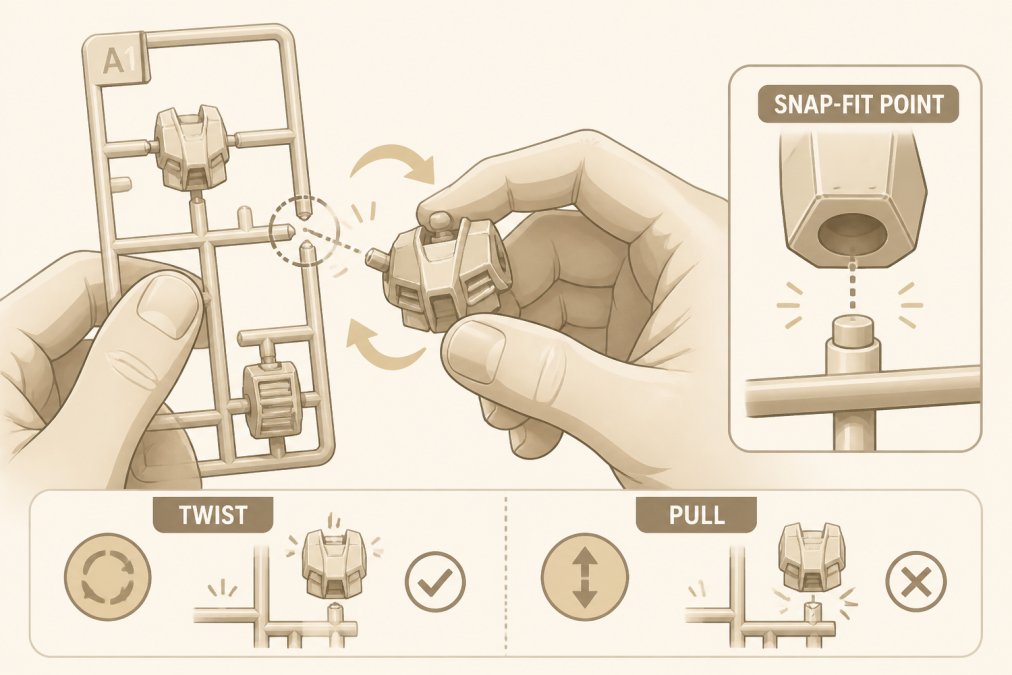
Small plastic tabs called gate marks remain where parts connected. On entry grade kits, these marks are visible but small enough that most builders accept them. If you want a cleaner finish, nippers let you cut closer, then sand smooth, optional refinement, not a requirement. A hobby knife and fine sandpaper accomplish what nippers would do, if desired.
This changes with High Grade or higher. HG kits have larger gate marks and more complex runners, making nippers genuinely necessary for a clean build. Entry grade lets you defer this tool investment while deciding whether to commit deeper into the hobby.
The practical toolkit for entry grade includes: the kit, instruction manual (included), and optionally a hobby knife, fine sandpaper, and soft brush. Glue and paint are not required. This accessibility is intentional, Bandai designed entry grade kits to remove friction from the first build experience.
Entry Grade Gundam Assembly Time and Build Experience
Most entry grade kits complete in 45 minutes to 2 hours, with time depending on your pace and whether you apply all stickers. This speed is a feature, not a limitation. For builders with limited free time, completing a full project in a single sitting carries real value.
Assembly logic is straightforward by design. Instructions use clear pictorial steps rather than dense technical drawings. Parts are color-separated, so color tells you what goes where. Connections use snap-fit or twist-lock mechanisms providing tactile feedback when seated correctly. You know immediately if something is assembled wrong.
This clarity makes entry grade kits genuinely forgiving for first-time builders. There's minimal risk of building something incorrectly that can't be easily disassembled and corrected. Low stakes reduce anxiety for someone evaluating whether model building is enjoyable or frustrating.
The build experience differs from High Grade. With HG, you manage dozens of small parts and make micro-decisions about assembly sequence. With entry grade, you follow a simpler path. This can feel liberating or underwhelming depending on what you seek from the hobby. For newcomers, simplified assembly often feels satisfying, you see progress quickly, each step produces visible results, and within an hour you have a finished model. This rapid feedback loop is psychologically rewarding. For experienced builders, the same simplicity can feel too guided, though some embrace it as a low-friction way to build multiple models or explore designs they wouldn't purchase in HG form.
Customization and Durability: What You Can Do After Assembly
Entry grade kits arrive substantially finished, but "finished" doesn't mean "unchangeable." Post-assembly customization is possible, though it requires accepting that EG kits are engineered for a specific aesthetic.
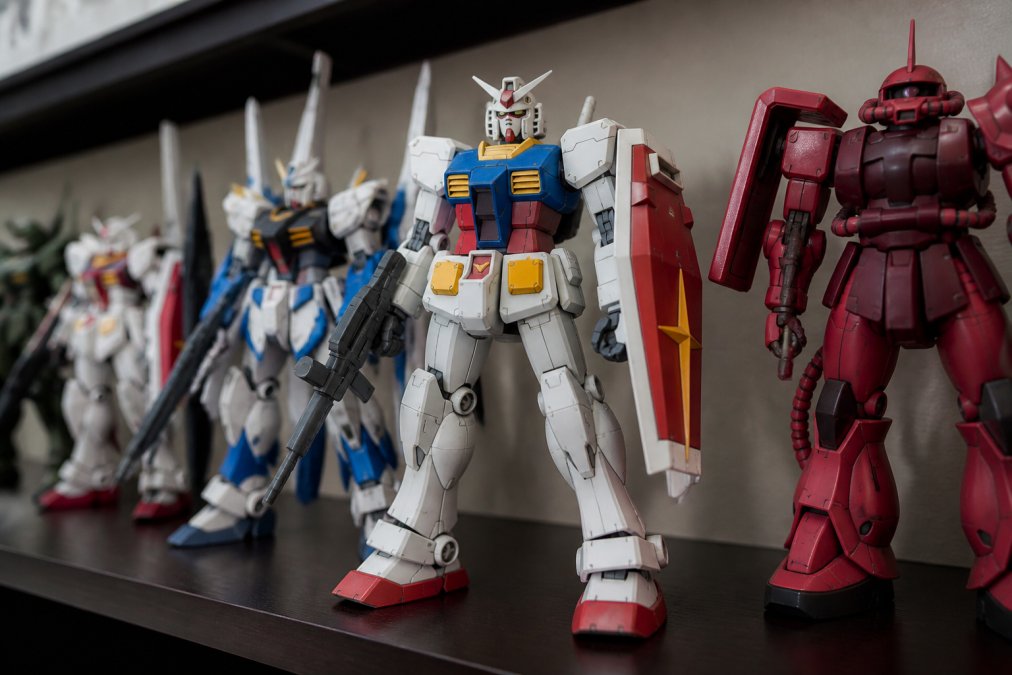
Panel lining, adding thin black or gray lines to panel seams for depth, works on entry grade kits but requires careful technique. Panels are smaller and closer together than on HG kits, so margin for error is tighter. Done well, panel lining transforms visual impact; done poorly, it looks sloppy. Many EG builders skip this step entirely.
Painting is another option. Entry grade plastic takes paint reasonably well if primed first. Some builders hand-paint specific armor sections or add weathering effects. This requires equipment, primer, paint, and top coat, adding cost and complexity. It's possible but not the intended use case.
Durability is a genuine strength. Snap-fit construction creates tight, stable connections that don't weaken over time. Models can be posed and repositioned without risk of joint failure, making entry grade excellent for younger builders or anyone prioritizing a model that handles regular handling. The plastic resists yellowing and brittleness, so a model built today will look substantially the same in five years if kept from direct sunlight and extreme temperatures.
For builders seeking highly customized, painted models, entry grade represents a starting point rather than a final destination. For those prioritizing quick builds, stable assembly, and a model that holds up to handling, entry grade delivers exactly what it promises.
Who Should Buy Entry Grade Kits?
Entry grade kits solve a specific problem: they lower the barrier to discovering whether model building appeals to you. If you're genuinely uncertain about committing time and money to the hobby, entry grade is the rational choice.
This applies most clearly to absolute beginners. You get a complete model-building experience without investing significantly in tools or time. If you dislike the experience, you haven't lost much. If you enjoy it, you have a clear path to more complex kits.
Entry grade also appeals to experienced builders with specific use cases. Some collectors purchase EG kits to own designs they'd never buy in HG form. Others use them as painting practice projects, lower stakes than practicing on expensive HG kits. Some builders enjoy the meditative simplicity of a quick EG build between longer projects.
Parents buying for younger children often choose entry grade. Simpler assembly, no required tools, and quick completion make EG kits appropriate for kids aged 8 and up. Models are durable enough to handle play without falling apart.
Gift givers benefit from entry grade's accessibility. If buying for someone interested in model building but uncertain of their commitment level, an EG kit is a thoughtful, low-risk choice that costs less than committing to an expensive HG kit.
Entry grade is less ideal if you're already confident you'll enjoy the hobby and want to start with the standard experience. Jumping directly to High Grade gives you more complexity, articulation, and customization potential from the beginning.
The Verdict: Is It Worth Your Money?
Entry grade kits deliver genuine value within their intended scope. They accomplish exactly what Bandai designed them to do: provide an accessible, quick, satisfying model-building experience requiring minimal tools and prior knowledge.
For absolute beginners, entry grade kits are worth buying. Cost is low enough that investment risk is minimal. Assembly is positive, quick, clear, and rewarding. You'll have a finished model that looks good and holds up to handling. Most importantly, you'll have real data about whether model building appeals to you before committing to more expensive kits and tools.
For experienced builders seeking quick projects, entry grade is worth buying selectively. If there's a specific design you want or a use case that fits, EG kits deliver value. Be intentional about why you're building rather than buying out of habit.
The trade-off is clear: entry grade sacrifices complexity, articulation, and customization potential in exchange for accessibility and speed. This trade-off is worth making if accessibility matters to your situation.
At Utopia Toys and Models, we stock a curated selection of entry grade kits from Bandai alongside High Grade options and specialized tools for builders at every level. If you're uncertain whether to start with entry grade or jump to High Grade, our team can help evaluate your specific situation and recommend the right entry point. We maintain transparent inventory status so you know exactly what's in stock and ready to ship.
Entry grade kits are worth buying if you're genuinely unsure about the hobby. They're worth skipping if you're already committed and want more complexity from the start. They're worth returning to if you discover you enjoy quick builds or want to own specific designs.
Entry grade kits represent an intentional design choice to make model building accessible. If you're ready to explore the hobby without significant upfront investment, start with an entry grade kit from Bandai. Utopia Toys and Models carries a diverse selection of entry grade models ready to ship, along with High Grade options and tools you'll want as your skills develop. Visit our site to browse current inventory and transparent pre-order status, ensuring you get the exact kit you're looking for without delays.
Frequently Asked Questions
Are entry grade kits worth it for beginners?
Yes, entry grade kits are excellent for beginners. They require no glue, no nippers, and snap together in under an hour. The affordable price point means you can start without a major investment, and the snap-fit assembly teaches you model building fundamentals. Many hobbyists use entry grade kits to learn before moving to more complex grades.
Do you need tools to build entry grade model kits?
No. Entry grade kits are designed to be tool-free. Parts twist off the runners by hand without nippers, and snap-fit assembly requires no glue. A hobby knife is optional for cleaning gate marks if you want a polished finish, but it's not mandatory. This makes entry grade kits truly accessible to anyone.
How long does it take to build an entry grade kit?
Most entry grade kits take 30 minutes to 1 hour to assemble. The simplified parts count and snap-fit design mean faster builds than High Grade or Master Grade kits, which can take 3-8 hours. This quick build time makes entry grade kits perfect for a relaxing weekend project or gift for someone new to model building.
What's the difference between entry grade and high grade kits?
Entry grade kits have fewer parts, simpler assembly, and no glue required. High Grade kits offer more detail, better articulation, and more customization potential, but require nippers, glue, and significantly more build time. Entry grade costs less and builds faster, making it ideal for beginners. High Grade suits experienced builders seeking complexity and detail.
This article was written using GrandRanker