

Table of Contents
- Why Collecting Gundam Models Matters
- Gunpla Grades Explained: Finding Your Starting Point
- Essential Tools for Building Gundam Models
- Beginner Gunpla Kits That Build Confidence
- How to Build Your First Gundam Model
- Display, Storage, and Collection Management
- The Real Cost of Collecting Gundam Models
- Mindfulness, Community, and Why This Hobby Matters
Last Updated: August 4, 2026
Why Collecting Gundam Models Matters
Collecting Gundam models combines artistic expression, mechanical problem-solving, and genuine community connection. The focused, hands-on nature offers respite from screen fatigue and constant connectivity, functioning as active meditation. Beyond individual experience, collecting connects you to a thriving global community. Online forums, local meetups, and social media groups dedicated to Gunpla create spaces where builders share techniques, showcase custom work, and troubleshoot challenges together, fostering genuine friendships and creative collaboration.
Gunpla Grades Explained: Finding Your Starting Point
Understanding Gunpla grades is essential before purchasing your first kit, as each grade represents a different level of complexity, detail, and price point.
Entry Grade (EG) represents the most beginner-friendly option. These kits feature simplified construction with fewer parts, minimal articulation, and straightforward assembly taking 30-60 minutes. They cost significantly less than higher grades, making them ideal for testing whether the hobby appeals to you.
High Grade (HG) dominates the middle tier and represents the most popular choice among both new and experienced builders. HG kits offer substantially better articulation than Entry Grade, with more detailed parts and complex assembly requiring 2-4 hours. These models strike an effective balance between accessibility and depth.
Real Grade (RG) introduces significantly higher detail and articulation than HG, with more numerous small parts and internal frame structures. Assembly typically requires 4-6 hours and demands more precision with tools like nippers and hobby knives.
Master Grade (MG) and Perfect Grade (PG) occupy the premium tier. MG kits feature extensive detail and numerous small parts, while PG represents the absolute top in size, complexity, and price. These grades demand serious time investment, 8-15+ hours for MG, 20+ hours for PG, plus advanced skills. Most collectors recommend mastering HG and RG before attempting MG or PG.
| Grade | Part Count | Build Time | Best For | Typical Price Range |
|---|---|---|---|---|
| Entry Grade | 50-80 | 30-60 min | Complete beginners | $10-20 |
| High Grade | 100-150 | 2-4 hours | New builders, hobbyists | $20-40 |
| Real Grade | 120-180 | 4-6 hours | Experienced builders | $30-50 |
| Master Grade | 200-300+ | 8-15 hours | Advanced collectors | $60-100+ |
| Perfect Grade | 500+ | 20+ hours | Expert builders | $150-250+ |
Essential Tools for Building Gundam Models
Building Gundam models without proper tools transforms an enjoyable hobby into a frustrating exercise. You don't need an expensive toolkit to start; a few quality basics cover 95% of what beginning builders need.
Nippers, Hobby Knives, and Sanding Supplies
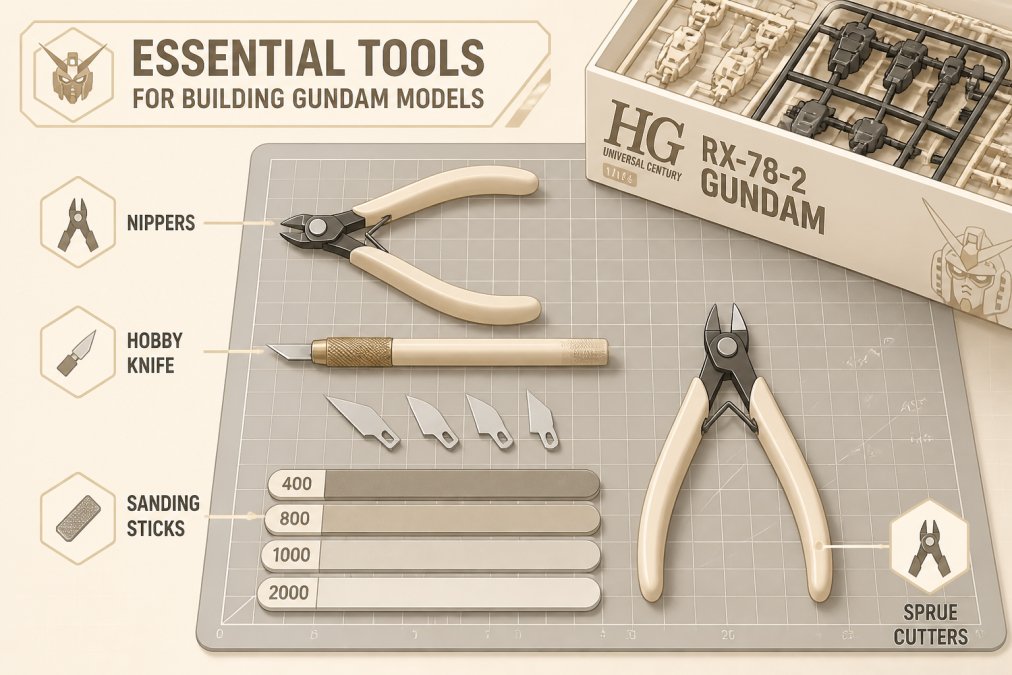
Nippers are the single most critical tool. These specialized clippers cut plastic parts cleanly from the sprue (the plastic frame holding parts together). Quality nippers cost $15-40 and last for years. Proper technique involves positioning the nipper perpendicular to the part and applying steady pressure rather than forcing the cut, leaving minimal gate marks requiring only light sanding.
Hobby knives handle detailed work that nippers cannot, trimming excess plastic and removing stubborn gate marks. A basic hobby knife set costs $10-20. Sanding supplies (400-grit, 600-grit, 1000-grit) smooth gate marks and surface imperfections. Many builders create their own sanding sticks by gluing sandpaper to wooden sticks.
Paints, Decals, and Finishing Products
Panel lining involves applying thin lines of dark paint into recessed panel lines molded into Gundam models, creating depth and definition. Panel line markers cost $3-8 each and are far more forgiving than liquid paint for beginners.
Decals (water-slide transfers) add insignias and design details that bring models to life. Official Gundam decal sheets come included with most kits, but aftermarket decals offer superior quality.
Top coat (clear protective spray) seals the finished model and provides a professional appearance. Matte top coat reduces plastic shine and creates a realistic finish, while gloss top coat enhances colors. Spray cans cost $8-15 and cover multiple models.
Utopia Toys and Models offers a selection of these supplies, ensuring you have access to tools for your builds.
Beginner Gunpla Kits That Build Confidence
Selecting the right first kit makes an enormous difference in whether you enjoy the hobby or abandon it after one frustrating experience.
RX-78-2 Gundam (High Grade) remains the most recommended first kit. This iconic design features clean construction, good articulation, and straightforward assembly that teaches fundamental building skills. Barbatos Lupus (High Grade) offers a more modern aesthetic while maintaining beginner-friendly construction. Unicorn Gundam (High Grade) introduces slightly more complexity while remaining manageable.
Avoid purchasing a Master Grade or Perfect Grade as your first kit, the complexity will overwhelm you. Choose a design you genuinely find appealing, and focus on finishing one model before starting another.
How to Build Your First Gundam Model
The building process follows a logical progression that becomes intuitive after your first kit.
Removing Sprues and Managing Gate Marks
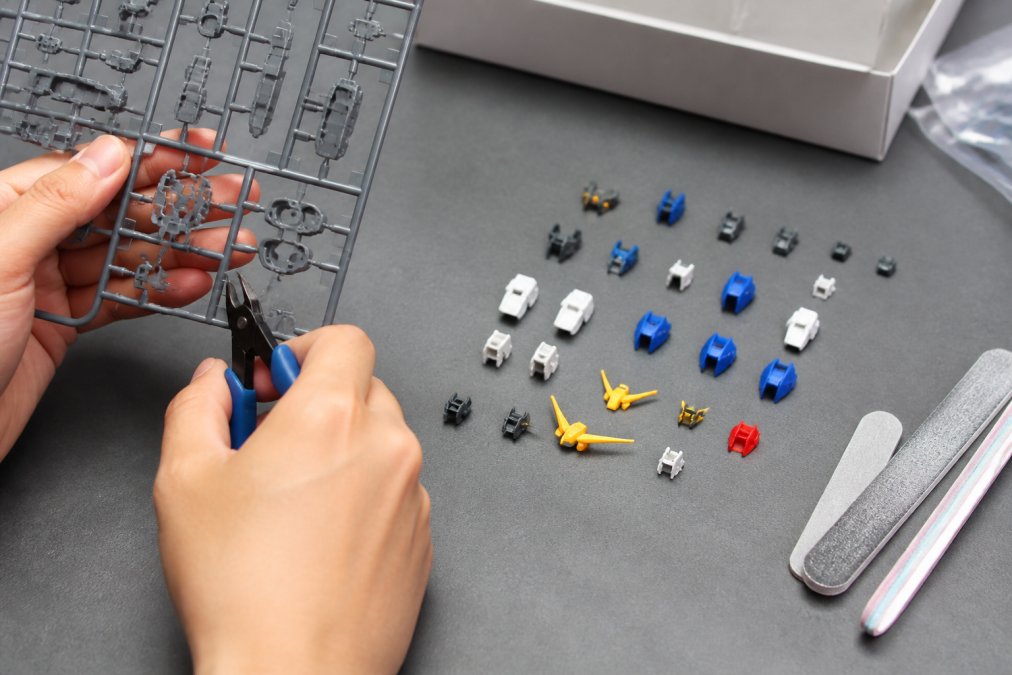
Begin by organizing all parts before cutting anything. Lay out the instruction manual and identify each part by its designated number. Cut parts from the sprue using proper nipper technique, positioning the cutting edge perpendicular to the part and placing the nipper's cutting line on the outer edge of the gate rather than directly against the part itself.
After cutting, examine each part for gate marks, small nubs of plastic remaining where the part connected to the sprue. Use a hobby knife to carefully trim these marks flush with the surface. Once trimmed, use progressively finer sanding sticks (starting with 400-grit, progressing to 1000-grit) to smooth the area until it's invisible. This gate mark cleanup takes the most time during assembly, but it's where beginners see the biggest quality improvement.
Assembly, Panel Lining, and Decal Application
Follow the instruction manual precisely during assembly. Test articulation as you build; many kits feature ball joints and rotating connections that should move freely once assembled. If a joint feels stiff, backtrack and check for assembly errors rather than forcing it.
Once assembly is complete, let the model rest for a few hours before applying panel lines and decals. Apply panel lines using a fine-tipped panel line marker, holding it at a slight angle and drawing along recessed lines. Work slowly and deliberately; rushed lines look sloppy.
Apply decals after panel lining is complete and fully dry. Follow included instructions carefully; most decals require soaking in water before application. Apply top coat as the final step, spraying in thin, even coats rather than one thick coat, which can obscure detail and create drips.
Display, Storage, and Collection Management
How you display and store your Gundam models affects their longevity and your enjoyment of the hobby. Models exposed to sunlight fade over time, while improper storage causes damage.
Display cases protect models from dust while keeping them visible. Glass or acrylic cases with shelving accommodate multiple models and cost $30-80. Keep unbuilt kits in their original boxes in a cool, dry location away from direct sunlight. Store finished models in display cases or closed shelving to prevent dust accumulation.
Collection management becomes relevant once you own multiple models. Many collectors maintain spreadsheets tracking which kits they own, which they've built, and which they're planning to build. Photography creates a visual record and provides motivation during future builds.
The Real Cost of Collecting Gundam Models
Understanding the financial commitment helps you approach the hobby sustainably.
Initial toolkit investment typically ranges from $50-150 for basic tools that cover everything a beginner needs. This is a one-time expense lasting for years.
Per-model costs depend entirely on the grade you're building. Entry Grade kits cost $10-20. High Grade models cost $20-40 and represent the most popular choice. Real Grade kits cost $30-50, while Master Grade and Perfect Grade models cost significantly more. Many collectors budget $30-50 monthly for new kits.
Optional expenses add up if you pursue advanced techniques. Airbrushes and compressors ($100-300) enable professional-quality painting but aren't necessary for satisfying results.
Mindfulness, Community, and Why This Hobby Matters
The mental health benefits of collecting Gundam models extend beyond simple stress relief. The focused, repetitive nature of model building activates the same neural patterns as meditation, creating genuine psychological benefit.
Mindfulness through building occurs because the activity demands full attention. You cannot build a model while distracted; attempting to do so results in mistakes and broken parts. This forced focus provides a break from constant digital stimulation.
Community connection transforms collecting from solitary activity into something deeply social. Online communities like r/Gunpla and dedicated forums connect builders worldwide. Local communities organize meetups where hobbyists display collections, share techniques, and build together.
Creative expression through customization offers another dimension that keeps the hobby engaging long-term. After mastering basic assembly, many builders pursue custom painting, modifying proportions, or creating original designs.
Research indicates that hands-on hobbies like model building provide measurable stress reduction and improved mental wellbeing. The combination of focused attention, creative expression, and community connection creates a genuinely beneficial practice. The hobby also develops practical skills that transfer to other areas, improving fine motor control, technical comprehension, and analytical thinking.
Collecting Gundam models as a hobby offers far more than building plastic toys. The combination of creative expression, mindfulness, and genuine community creates a practice that enhances mental wellbeing while producing beautiful display pieces. At Utopia Toys and Models, we understand that new builders need reliable access to quality kits, tools, and supplies, which is why we maintain extensive inventory of High Grade, Real Grade, and Master Grade models from Bandai, plus all the tools and finishing supplies you need. Whether you're starting with your first Entry Grade kit or adding Master Grade models to an established collection, Utopia Toys and Models provides the curated selection and reliable shipping that serious hobbyists depend on. Begin your journey with a High Grade kit today and discover why this hobby transforms people's lives.
Frequently Asked Questions
Is collecting Gundam models an expensive hobby to maintain?
Costs vary widely depending on your approach. Entry Grade and High Grade Gunpla kits offer affordable entry points, while Master Grade and Perfect Grade models cost significantly more. Beyond the kits themselves, you'll invest in tools like nippers and hobby knives, plus optional supplies for customization. Many collectors start with budget-friendly kits and gradually expand their collection. The hobby scales to your budget, you control spending by choosing which grades to pursue and how often you purchase new models.
What essential tools do I need to start building Gundam models?
At minimum, you need nippers to cleanly remove parts from the sprue, a hobby knife for cleaning gate marks, and sandpaper or sanding sticks for smoothing. Most builders also use panel lining markers to add detail to panel lines. As you progress, you might add top coat spray for finishing, water slides or dry transfers for decals, and display cases for protection. Start with basic tools and add supplies as your skills and interests develop. Quality nippers make the biggest difference for beginners.
What are the different Gunpla grades, and which should beginners choose?
Gunpla grades range from Entry Grade (simplest, lowest cost) through High Grade, Real Grade, Master Grade, and Perfect Grade (most complex, highest cost). Entry Grade kits have fewer parts and snap together easily, making them ideal for beginners. High Grade models offer better articulation and detail while remaining manageable. Real Grade kits have highly detailed inner frames but require more precision. Beginners should start with Entry Grade or High Grade to build foundational skills before tackling more complex grades. Bandai designs each grade to match specific skill levels.
Why do people collect Gundam models as a hobby?
Collectors are drawn to Gundam models for multiple reasons: the satisfaction of hands-on assembly, the meditative focus required during building, creative customization opportunities, and the joy of displaying finished models. Many find the hobby provides stress relief and mindfulness benefits. The community aspect matters too, builders share progress online, exchange tips, and celebrate completed collections. For anime fans, owning a physical model of a favorite mobile suit deepens their connection to the franchise. The hobby combines creativity, craftsmanship, and fandom in a tangible way.
This article was written using GrandRanker