

Table of Contents
- Best Tools for Gunpla Model Kits: Quick Comparison
- Essential Tools for Beginners Building Gunpla
- Best Nippers for Gunpla: Side Cutters and Precision Options
- How to Remove Nub Marks from Gunpla: Knives and Sanding
- Best Panel Lining Markers for Gunpla Detailing
- Essential Gunpla Building Techniques: Tools and Workflow
- Tool Kits vs. Individual Purchases: Which Approach Works Best
- Storage and Organization Solutions for Gunpla Tools
Best Tools for Gunpla Model Kits: 2026 Guide
Last Updated: July 7, 2026
Building Gundam model kits requires precision, patience, and the right equipment. Whether you're assembling your first High Grade kit or tackling a complex Master Grade project, having access to the best tools for gunpla model kits makes the difference between a rushed assembly and a polished final build. At Utopia Toys and Models, we've worked with countless modelers and understand exactly which tools deliver results.
Best Tools for Gunpla Model Kits: Quick Comparison
| Tool Category | Best Overall | Budget Pick | Premium Option |
|---|---|---|---|
| Nippers | DSPIAE ST-A 3.0 | Tamiya Sharp Pointed Side Cutter | GodHand SPN-120 Ultimate Nipper |
| Hobby Knives | X-Acto #11 Precision Knife | Standard craft knife | Specialized carving set |
| Sanding | Gunprimer Raser The Black | Basic sanding sticks | Motorized sanding tool |
| Surface Prep | Sanding sticks (multiple grits) | Sandpaper sheets | Professional sanding block |
| Assembly | Tamiya Extra Thin Cement | CA adhesive | Plastic cement kit |
Essential Tools for Beginners Building Gunpla
Most beginners can build their first kit with four core tools: nippers for removing parts from runners, a hobby knife for trimming nub marks, sanding sticks for smoothing surfaces, and plastic cement for bonding pieces. New modelers often make the mistake of buying the cheapest option available. A low-quality nipper will crush plastic instead of cutting cleanly, leaving stress marks that require extensive sanding.
Beyond the core four, beginners benefit from a cutting mat to protect work surfaces and a small ruler for checking alignment during assembly.
Best Nippers for Gunpla: Side Cutters and Precision Options
Nippers are the workhorse of any gunpla toolkit. The difference between a $15 nipper and a $60 nipper becomes immediately obvious with your first cut.
Premium Single-Blade Nippers
The GodHand SPN-120 Ultimate Nipper 5.0 represents the top tier of cutting precision. This tool features a single-edged blade design that minimizes stress marks on plastic parts. The special tool steel construction maintains sharpness across hundreds of cuts, and the ergonomic soft grip reduces hand fatigue during extended building sessions.
GodHand tool engineering specifications
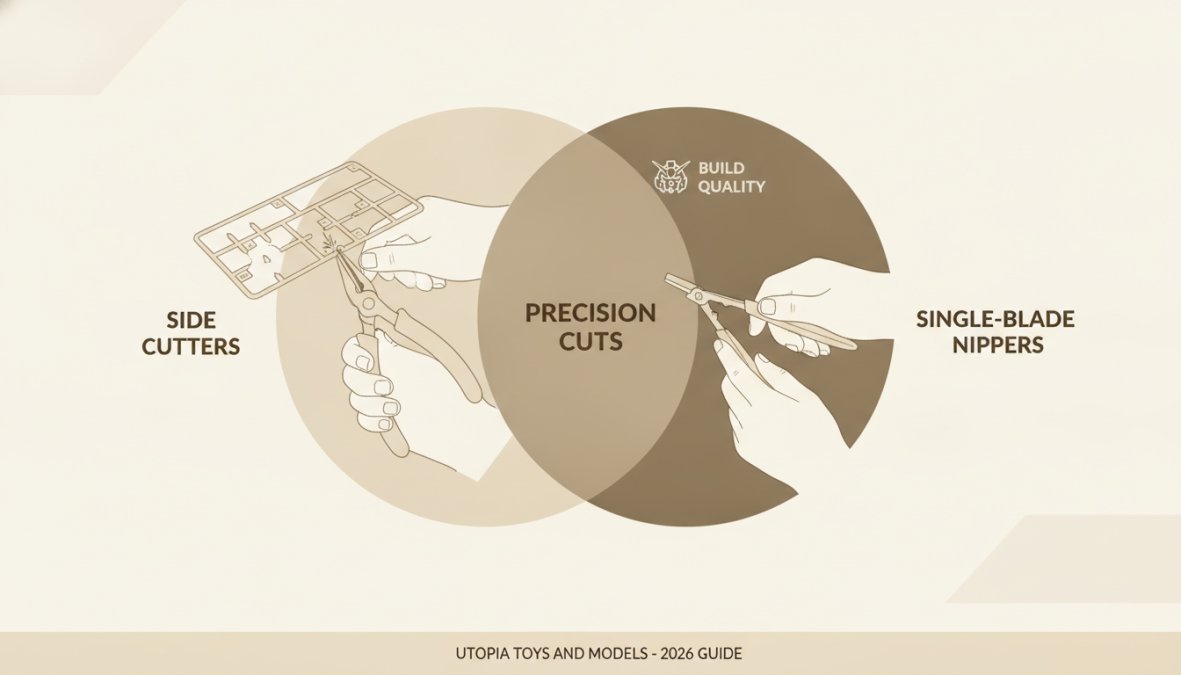
Single-blade designs concentrate cutting force on a smaller contact area, resulting in cleaner separation from the runner. Advanced modelers who paint their kits find that premium nippers reduce the sanding work required before priming. At $61.75, these nippers represent a significant investment, but for modelers building more than five kits annually, the time savings justify the expense.
The DSPIAE ST-A 3.0 Single Blade Nipper offers a compelling alternative at $33. Chrome vanadium steel construction provides durability comparable to premium options, and the spring-loaded mechanism ensures consistent cutting pressure.
Budget-Friendly Side Cutters
The Tamiya Sharp Pointed Side Cutter (74035) has remained a standard choice for over a decade. At $36.99, it delivers reliable performance without premium pricing. The slim, pointed jaw design excels at accessing tight spaces on complex runners. Side cutters function with shear force rather than concentrated pressure, leaving slightly larger stress marks but handling tougher plastics more reliably. Beginners often prefer side cutters because they're more forgiving of technique mistakes.
How to Remove Nub Marks from Gunpla: Knives and Sanding
Nub marks, the small plastic remnants left where parts attach to runners, are the most visible indicator of build quality. Professional-looking kits have clean, flush gates with no visible stress marks.
Hobby Knives for Precision Trimming
The X-Acto #11 Precision Knife is the industry standard for nub cleanup. The lightweight aluminum handle provides excellent control, and replaceable fine-point blades cost just pennies. The #11 blade works by scraping rather than cutting, removing thin layers of plastic with repeated passes at a shallow angle.
Sanding and Surface Preparation
Sanding transforms rough plastic surfaces into glass-smooth finishes. The Gunprimer Raser The Black represents professional-grade sanding equipment at $39.99. Most modelers work through multiple grit progressions: 400-grit for initial nub removal, 600-grit for smoothing, 1000-grit for pre-primer finishing.
Sanding sticks offer a budget-friendly alternative at $2-5 each. The tradeoff is that they wear out quickly and require more physical effort than powered equipment.
Best Panel Lining Markers for Gunpla Detailing
Panel lining, the process of darkening recessed panel lines to enhance detail, separates basic builds from display-quality models. Gundam markers designed specifically for plastic models offer superior results compared to generic markers. These implements feature fine tips that fit precisely into panel lines without bleeding onto surrounding surfaces.
Panel lining mistakes are recoverable. If you make a mark outside the intended line, light sanding or careful scraping removes it.
Essential Gunpla Building Techniques: Tools and Workflow
Assembly and Gate Removal Process
Professional modelers follow a consistent workflow: remove parts from runners with nippers, trim nubs with hobby knives, sand surfaces smooth, wash plastic to remove mold release residue, assemble major sections, panel line details, paint if desired, and final assembly.
Cut parts approximately 2-3mm away from the actual gate initially. Position your nipper so the cutting force pushes away from the part, not into it. Then use a hobby knife to remove the remaining stub, finishing with light sanding for a completely flush surface.
Tool Maintenance and Blade Replacement
Maintaining your tools extends their lifespan significantly. Nippers require occasional cleaning to remove plastic dust that accumulates in the joint. A quick wipe with a dry cloth after each session prevents buildup. Store nippers in a protective case or with blade guards installed.
Hobby knife blades dull predictably. Most modelers replace blades every 30-45 minutes of active use. Sanding tools accumulate plastic dust that clogs the sandpaper surface. Tapping the sanding block gently against your workbench dislodges loose dust. When sandpaper stops cutting efficiently, replacement is necessary.
Plastic cement bottles require careful storage. Store bottles upright with caps tightly sealed to prevent evaporation.
Tool Kits vs. Individual Purchases: Which Approach Works Best
Pre-assembled tool kits provide convenience and ensure you have all essentials before your first build. Kits typically cost $40-80 and include nippers, hobby knife, sanding sticks, and basic cement. The limitation is that they often include compromises, a $50 kit might contain a mediocre nipper paired with an adequate hobby knife.
Purchasing tools individually requires more research but allows you to prioritize spending. Invest heavily in your nipper since you'll use it on every single build. Budget less on sanding sticks since they're consumable items.
| Approach | Initial Cost | Flexibility | Learning Curve | Best For |
|---|---|---|---|---|
| Pre-assembled Kit | $40-80 | Limited | Low | First-time builders |
| Individual Purchases | $60-120 | High | Medium | Modelers planning multiple kits |
| Premium Individual Tools | $100-150+ | Very High | Medium-High | Experienced modelers |
The hybrid approach works well for many modelers: buy a basic kit for immediate use, then gradually upgrade individual tools as you identify your preferences.
Storage and Organization Solutions for Gunpla Tools
As your collection grows, organization becomes essential. Small plastic toolboxes designed for craft supplies work well for basic collections. Compartmented designs prevent tools from shifting during transport and protect blades from damage.
For larger collections, modular storage systems offer flexibility. Wall-mounted pegboard systems keep frequently used tools visible and within arm's reach of your work surface. Many experienced modelers maintain separate storage for consumable items like sanding sticks, sandpaper sheets, and replacement blades.
Climate control matters more than many modelers realize. Plastic cement becomes less effective in cold temperatures and evaporates rapidly in heat. Store your toolkit in a climate-controlled space, ideally between 60-75 degrees Fahrenheit.
Building Gundam model kits transforms from frustrating to rewarding when you have the right equipment. The best tools for gunpla model kits don't need to be the most expensive, they need to match your skill level and building frequency. Utopia Toys and Models stocks an extensive selection of nippers, hobby knives, sanding implements, and specialty markers from trusted brands like DSPIAE, GodHand, and Tamiya. Start with quality fundamentals, invest in upgrades as your skills develop, and watch your builds transform into display-quality models.
Frequently Asked Questions
What are the essential tools I need to start building Gunpla?
Every Gunpla modeler needs nippers or side cutters for removing parts from runners, a hobby knife like an X-Acto for trimming nub marks, tweezers for precision handling, and sandpaper or sanding sticks for surface finishing. These four tool categories form the foundation for any beginner-friendly Gunpla building setup. Adding panel lining markers and a cutting mat enhances your workflow as you gain experience.
Are expensive nippers worth the investment for Gunpla building?
Premium single-blade nippers like the GodHand SPN-120 produce significantly cleaner cuts with minimal stress marks, reducing sanding work afterward. However, mid-range options such as the DSPIAE ST-A 3.0 offer excellent price-to-performance value for intermediate modelers. Beginners can start with budget side cutters and upgrade once they understand their building style and precision needs.
How do I choose between side cutters and single-blade nippers for Gunpla?
Side cutters like the Tamiya Sharp Pointed model work well for general part removal and are durable for long-term use, making them ideal for beginners. Single-blade nippers provide flush, precision cuts that minimize nub marks and reduce post-processing. Choose side cutters for versatility and durability; choose single-blade nippers if achieving the cleanest finish is your priority.
What's the best way to remove nub marks on Gunpla parts?
Start with a hobby knife to trim excess plastic, then use progressive sanding with sanding sticks starting at coarser grits and finishing with finer ones for a smooth surface. Tools like the Gunprimer Raser The Black provide professional-grade finishing. Proper nippers minimize initial nubs, reducing the overall sanding burden and achieving better final results.
Do I need panel lining markers for Gunpla, and what's the difference between brands?
Panel lining markers like Gundam markers enhance detail and depth on your model, though they're optional for basic builds. Gundam-specific markers are formulated for plastic model compatibility and offer consistent flow. Standard hobby markers work too but may require more careful application. They're worth adding once you're comfortable with basic assembly and finishing techniques.
This article was written using GrandRanker