

Table of Contents
- Top Anime Figure Brands: Quick Comparison
- Scale Figure vs Prize Figure Differences
- How to Spot Fake Anime Figures
- Best Places to Buy Authentic Anime Figures
- Understanding Grading, Condition, and Resale Value
- Pre-Order vs Aftermarket Strategy for Collectors
- Display, Preservation, and Material Care
- Conclusion
Last Updated: August 11, 2026
Top Anime Figure Brands: Comparison and Quick Picks
Finding the right anime figure brand matters, the difference between a collectible that appreciates and one that disappoints often comes down to the manufacturer. At Utopia Toys and Models, we help collectors navigate the anime figure landscape by breaking down what separates the best anime figure brands from the rest.
The market has fractured into distinct tiers. Premium manufacturers like Alter and Max Factory dominate the high-end segment with meticulous paint application and sculpt detail. Mid-tier brands like Kotobukiya and Good Smile Company balance quality with accessibility. Entry-level options from Bandai Spirits serve collectors building their first collections.
Quick Picks:
- Best Overall: Alter, unmatched paint quality and dynamic sculpting
- Best Value: Good Smile Company, diverse product range with consistent quality
- Best for Articulation: Bandai Spirits (S.H.Figuarts line), exceptional poseability
- Best for Scale Figures: Max Factory, intricate detail work and character accuracy
- Best for Exclusive Content: Aniplex+, direct access to limited releases
| Brand | Product Focus | Price Range | Best For |
|---|---|---|---|
| Alter | Premium scale figures | Pricing depends on the specific figure, its scale, and release. | Discerning collectors prioritizing paint and sculpt |
| Max Factory | Scale figures & figma | Pricing depends on the specific figure, its scale, and release. | Collectors wanting articulation and detail |
| Good Smile Company | Nendoroids, figma, scale | Pricing depends on the specific figure, its scale, and release. | Diverse collectors seeking varied figure types |
| Kotobukiya | Scale figures & model kits | Pricing depends on the specific figure, its scale, and release. | Those appreciating statues and assembly options |
| Bandai Spirits | Action figures & statues | Pricing depends on the specific figure, its scale, and release. | Fans of mecha and popular anime franchises |
| FREEing | Large-scale figures | Pricing depends on the specific figure, its scale, and release. | Collectors with display space for impact pieces |
| MegaHouse | Scale figures & collectibles | Pricing depends on the specific figure, its scale, and release. | One Piece fans and shonen series enthusiasts |
Scale Figure vs Prize Figure Differences
Understanding the gap between scale figures and prize figures fundamentally changes how you approach collecting and preservation. Scale figures are pre-painted, limited-production collectibles manufactured by established brands using high-quality materials and rigorous quality control. Prize figures are mass-produced, lower-cost figures distributed through arcade machines and lottery systems. This distinction affects authenticity, resale value, durability, and material stability over decades.
Quality and Production Standards
Scale figures represent the collector's gold standard. Manufacturers like Alter, Max Factory, and Kotobukiya invest in custom molds, multiple paint layers, and careful quality control. A typical scale figure arrives in a window box with protective packaging, detailed base design, and often includes interchangeable parts. The sculpt captures character likeness with anatomical precision. These figures appreciate or hold value on the secondary market because supply is intentionally limited.
Prize figures take a different approach. Produced in massive quantities, sometimes 50,000+ units per design, they're engineered as affordable collectibles. Paint application is simpler, using fewer color layers. Articulation is minimal. They're packaged in basic cardboard or plastic sleeves. Prize figures depreciate quickly and rarely hold collector-grade value.
Material Composition and Long-Term Degradation
The material difference between scale and prize figures determines whether your collection survives intact for decades or deteriorates within years. Scale figures from reputable manufacturers use carefully formulated PVC or ABS plastic with stabilizers designed to resist plasticizer leaching. Plasticizers are chemical compounds added to PVC to make it flexible; over time, especially in warm or humid conditions, these chemicals migrate to the surface, creating sticky residue that attracts dust and damages paint. Premium manufacturers like Good Smile Company and Max Factory specify stabilizer packages to minimize this process, resulting in figures stable for 20+ years in proper storage.
Prize figures often use lower-cost PVC formulations with minimal stabilizer investment. Prize figures are more prone to plasticizer leaching within 5-10 years, especially in warm basements or humid climates. Once leaching begins, the process is irreversible. The sticky surface attracts dust, paint flakes or discolors, and plastic becomes brittle.
Ideal storage conditions are 65-75°F and 40-50% relative humidity. In these conditions, scale figures maintain integrity for decades; prize figures degrade noticeably within 10-15 years. In poor conditions (70%+ humidity or 85°F+ attics), prize figures become unusable within 5 years, while scale figures remain stable for 15-20 years.
Practical Implications for Collectors
If you're building a collection for long-term display, scale figures are the rational choice. The upfront cost premium is offset by material longevity and resale value. A scale figure from Alter or Max Factory purchased today will likely be displayable and valuable in 20 years; a prize figure requires climate-controlled storage to avoid sticky surfaces and paint loss.
Prize figures work for casual fans wanting character representation without financial commitment, or for collectors testing interest before upgrading to scale figures. Scale figures are an investment in permanence; prize figures are consumables.
How to Spot Fake Anime Figures
Bootleg identification has become essential as counterfeit operations grow more sophisticated. Knowing what separates authentic imports from bootleg copies protects both your wallet and collection integrity.
Paint Application and Sculpt Detail Quality
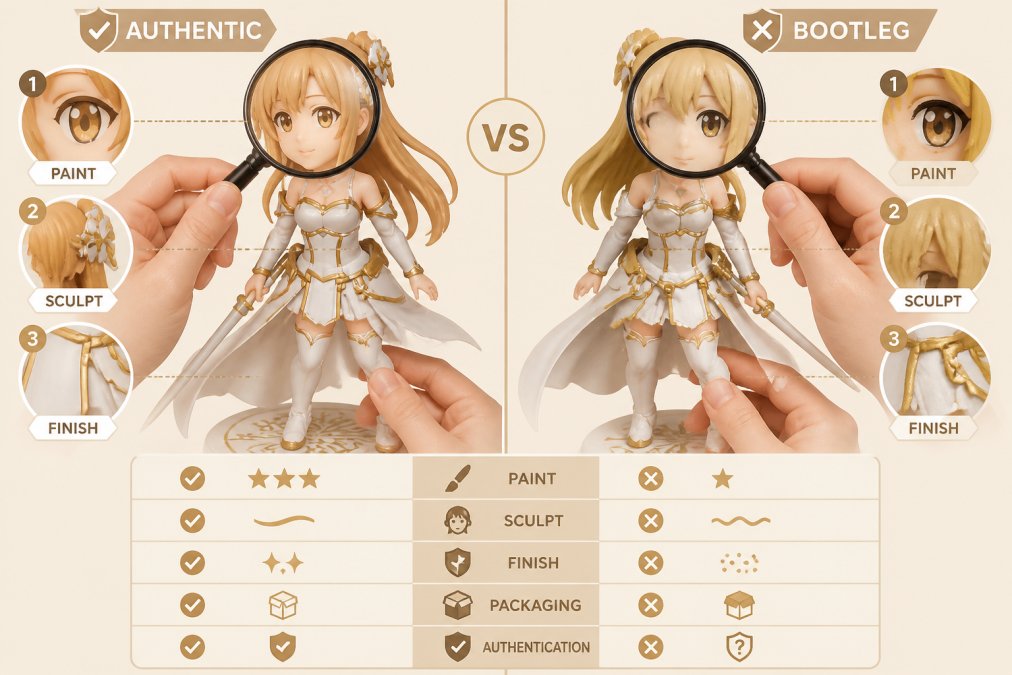
Genuine figures from established brands show clean, precise paint lines with consistent color saturation. Paint edges align with sculpted details rather than bleeding or appearing sloppy. Bootlegs display uneven paint coverage, visible brush strokes, and slightly off-tone colors.
Examine sculpt detail closely. Authentic figures maintain sharp definition in facial features, fabric folds, and hair strands. Eyes have clear pupils with proper highlights. Bootlegs show soft or blurry detail, particularly in small features. Hair sculpting appears less refined. Check the base design, legitimate manufacturers invest in custom bases matching the figure's aesthetic. Bootleg bases feel hollow or poorly balanced. The manufacturer's name should appear clearly; bootlegs either omit or misspell it.
Packaging and Authentication Markers
Official anime figure brands use high-quality cardboard with vibrant printing and proper color registration. Text should be crisp and perfectly aligned. Bootleg packaging shows printing defects: fuzzy text, color misalignment, or inconsistent ink saturation.
Inside the box, inspect the instruction sheet or product information card. Authentic figures include detailed Japanese text, proper formatting, and clear product codes. Bootlegs often have translation errors or missing information. Verify the product code against the manufacturer's official website.
Check for hologram stickers or security features specific to premium brands. Good Smile Company and Max Factory include authentication markers on packaging. If the figure claims to be from a premium brand but lacks these markers, it's likely counterfeit. The plastic wrapping should feel thick and professional.
Best Places to Buy Authentic Anime Figures
Purchasing from authorized retailers eliminates most bootleg risk. Official manufacturer websites like Good Smile Company's shop, Max Factory's store, and Aniplex+ sell directly to collectors with guaranteed authenticity. These sources often offer exclusive items unavailable elsewhere.
Utopia Toys and Models stocks a curated selection of authentic figures from industry-leading brands like Bandai, Funko, and Kotobukiya with transparent availability information. Most items ship immediately from inventory. The transparent status indicators show exactly what's in stock versus arriving soon.
Established specialty retailers with strong reputations maintain rigorous authentication protocols. Look for retailers that clearly display manufacturer partnerships and have operated for multiple years with consistent positive feedback. These vendors invest in proper shipping materials and insurance for high-value figures.
Avoid marketplace platforms where third-party sellers operate without verification. If a figure's price seems too good to be true, significantly below retail from established brands, it probably is.
Understanding Grading, Condition, and Resale Value
Collector-grade figures follow a standardized condition scale that determines resale value. Mint in Box (MIB) means the figure remains sealed in original packaging. Near Mint (NM) indicates the figure was removed and displayed but shows no handling wear. Excellent (EX) means minor signs of display with no damage. Good (G) shows obvious wear but maintains structural integrity. Fair (F) indicates significant wear or minor damage.
Resale value correlates directly with condition and manufacturer reputation. A Max Factory scale figure in MIB condition typically retains 70-85% of original retail value. The same figure in EX condition holds 50-65%. Limited edition releases and exclusive figures appreciate beyond original retail if genuinely scarce. Aniplex+ exclusives and convention-only releases command premiums on the secondary market.
Document your collection's condition with photographs. When selling, detailed photos showing paint quality, base condition, and packaging state justify your asking price. Keep original boxes and packaging, the box alone can add 20-30% to resale value.
Pre-Order vs Aftermarket Strategy for Collectors
Pre-ordering and aftermarket purchasing represent two fundamentally different economic strategies with distinct cost structures and timing trade-offs.
Pre-Order Economics and Risk
Pre-ordering directly from manufacturers or authorized retailers guarantees you receive figures at retail price before they sell out. Pre-orders typically ship 3-6 months after placement. The financial advantage is straightforward: you lock in retail price. If a figure retails for $120 and sells out, aftermarket prices often climb to $180-$250. By pre-ordering, you save $60-$130 per figure.
However, pre-orders carry risks. Retailer reliability is primary, a retailer that ghosts customers, cancels pre-orders without notice, or ships damaged figures destroys trust. Utopia Toys and Models maintains transparent communication for pre-order status, providing regular updates if production delays occur. Production delays are common, pushing back release dates 2-4 months due to supply chain issues or quality control holds. Cancellation risk exists if a figure is cancelled before production. Opportunity cost is subtle but real, money locked in pre-orders for 6 months cannot be deployed to purchase figures currently available.
Aftermarket Purchasing and Secondary-Market Pricing
Aftermarket purchasing means buying figures already shipped and available for immediate delivery. You receive your figure within days rather than months.
Aftermarket pricing follows predictable patterns. Figures that remain in stock at retailers (common releases with large production runs) sell at or near retail price. Figures that sold out but had moderate production runs (10,000-30,000 units) typically command 20-40% premiums. Figures with small production runs or exclusive releases (under 5,000 units) often appreciate 50-150% above retail. Figures from defunct manufacturers can appreciate 100-300% or more.
The key variable is production volume and time since release. Figures released 2-3 years ago are more likely to command premiums because supply has been absorbed by collectors.
Decision Framework: When to Pre-Order vs. Wait
Pre-order if:
- The figure is from a franchise with strong collector demand
- The manufacturer has a track record of limited production runs (Alter, Max Factory, Aniplex+ exclusives)
- You're confident you want the figure
- The retailer has demonstrated reliability and transparent communication
Wait for aftermarket if:
- The figure is from a brand known for large production runs (Bandai Spirits, MegaHouse)
- You're uncertain about the character or figure design
- You want to examine reviews before committing
- You prefer immediate gratification over 6-month waits
Hybrid approach (optimal for most collectors): Pre-order figures you're certain about from trusted retailers. For figures you're unsure about, wait 2-3 months for aftermarket availability and reviews. You'll pay slightly above retail for some figures ($5-$20 premium), but avoid pre-ordering figures you don't want.
Secondary-Market Timing and Resale Value
Figures purchased at retail and held for 2-3 years often appreciate if they had limited production runs. A $150 scale figure can sell for $200-$250 aftermarket 2-3 years later, representing a 33-67% return. Conversely, figures from large production runs depreciate or stagnate.
Smart collectors pre-order limited releases from established brands, hold them for 2-3 years, then sell at appreciation. This strategy turns collecting into a self-funding hobby where profits from sold figures fund new purchases.
Display, Preservation, and Material Care
Proper display extends figure lifespan and maintains aesthetic appeal. Position figures away from direct sunlight, which fades paint and warps PVC plastic. Consider display cases with UV-filtering glass. Indirect LED lighting shows off paint application without heat damage.
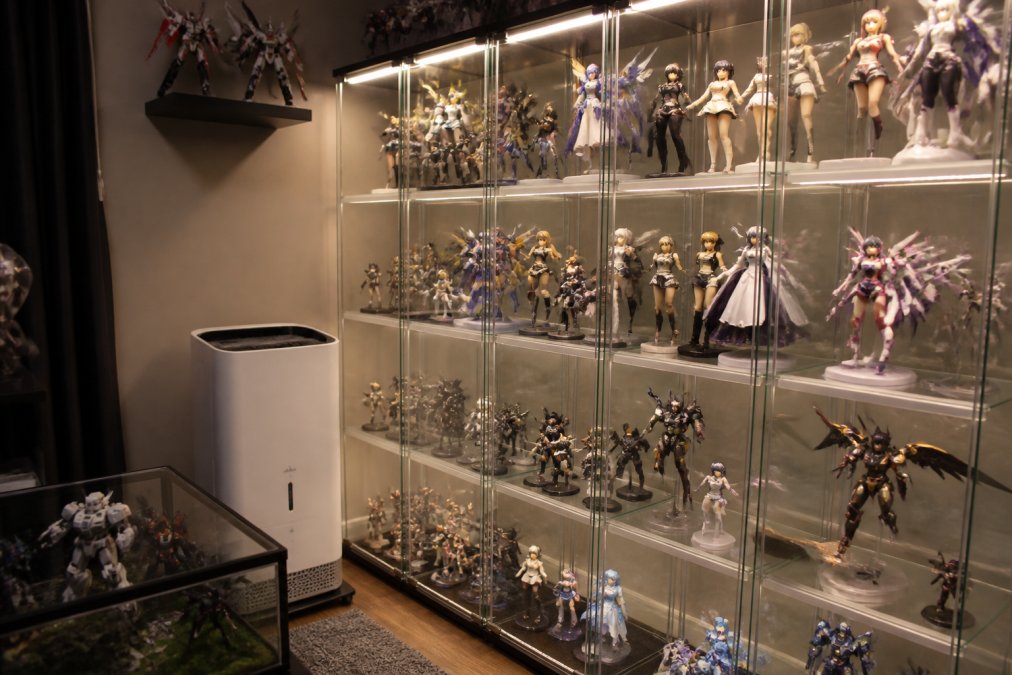
Environmental control prevents material degradation. Ideally, maintain temperatures between 65-75°F and humidity between 40-50%. Basements with high moisture or attics with temperature swings accelerate plasticizer leaching.
Handle figures carefully during setup. Wear clean, dry hands to avoid transferring oils onto painted surfaces. Support figures from the base rather than gripping limbs. Move articulated joints slowly to avoid stress fractures.
Dust regularly using soft brushes designed for collectibles. Never use compressed air, which can dislodge small parts. Slightly dampened microfiber cloths work better than dry brushing. Allow figures to air dry completely before returning to display.
Store figures you're not displaying in climate-controlled spaces with original packaging if possible. For long-term storage, use acid-free tissue paper inside the box to prevent material interaction that could cause discoloration.
Building a meaningful anime figure collection requires understanding the brands, materials, and authentication markers that separate investment-grade pieces from casual collectibles. The best anime figure brands for collectors, Alter, Max Factory, Good Smile Company, and Kotobukiya, consistently deliver quality that justifies collector-grade pricing. When you're ready to purchase, Utopia Toys and Models provides access to these premium brands with reliable shipping and transparent inventory status, eliminating guesswork from finding authentic figures that will appreciate and endure for decades.
Frequently Asked Questions
What are the best anime figure brands for serious collectors?
Top-tier brands include Alter, known for exceptional sculpting and paint application; Good Smile Company, which produces Nendoroids and figma with strong secondary market value; Max Factory, recognized for articulation and detail; and Kotobukiya, offering both pre-painted figures and customizable model kits. Bandai Spirits delivers wide franchise coverage through S.H.Figuarts and Metal Build lines. The best brand depends on whether you prioritize static scale figures, articulated action figures, or specific character licenses.
How can you tell if an anime figure is authentic versus a bootleg?
Authentic figures feature precise paint application with clean lines and consistent color saturation, while bootlegs show sloppy brushwork and color bleeding. Examine the sculpt detail closely: genuine figures have sharp facial features and intricate texturing, whereas counterfeits appear soft or blurry. Check packaging quality, including text clarity and logo accuracy. Authentic imports come in window box packaging with proper manufacturer branding. Buy from authorized retailers to guarantee authenticity and avoid the risk of receiving counterfeit products.
What's the difference between scale figures and prize figures?
Scale figures are high-end collectibles with precise proportions (1/7, 1/8, 1/10 scale), detailed sculpting, and premium paint work, typically costing $100-400+. Prize figures are lower-cost alternatives won at arcades or purchased as blind boxes, featuring simpler sculpts and basic paint applications, usually under $50. Scale figures prioritize collector-grade aesthetics and resale value, while prize figures offer affordable entry points for casual collectors. Understanding this distinction helps you choose figures matching your budget and display standards.
Should I pre-order anime figures or wait for the aftermarket secondary market?
Pre-ordering guarantees access to limited-edition releases and often includes exclusive bonuses, but requires upfront payment and carries shipping risk. The aftermarket secondary market offers flexibility to shop selectively, inspect condition before purchase, and sometimes find discounted figures. However, rare figures often appreciate in value after release, making pre-orders a better investment strategy for sought-after pieces. Consider pre-ordering highly anticipated releases from reputable retailers with transparent stock updates, while using the secondary market for figures with stable pricing or when you want to verify condition first.
This article was written using GrandRanker